مقالة علمية بعنوان (Nanotechnology)
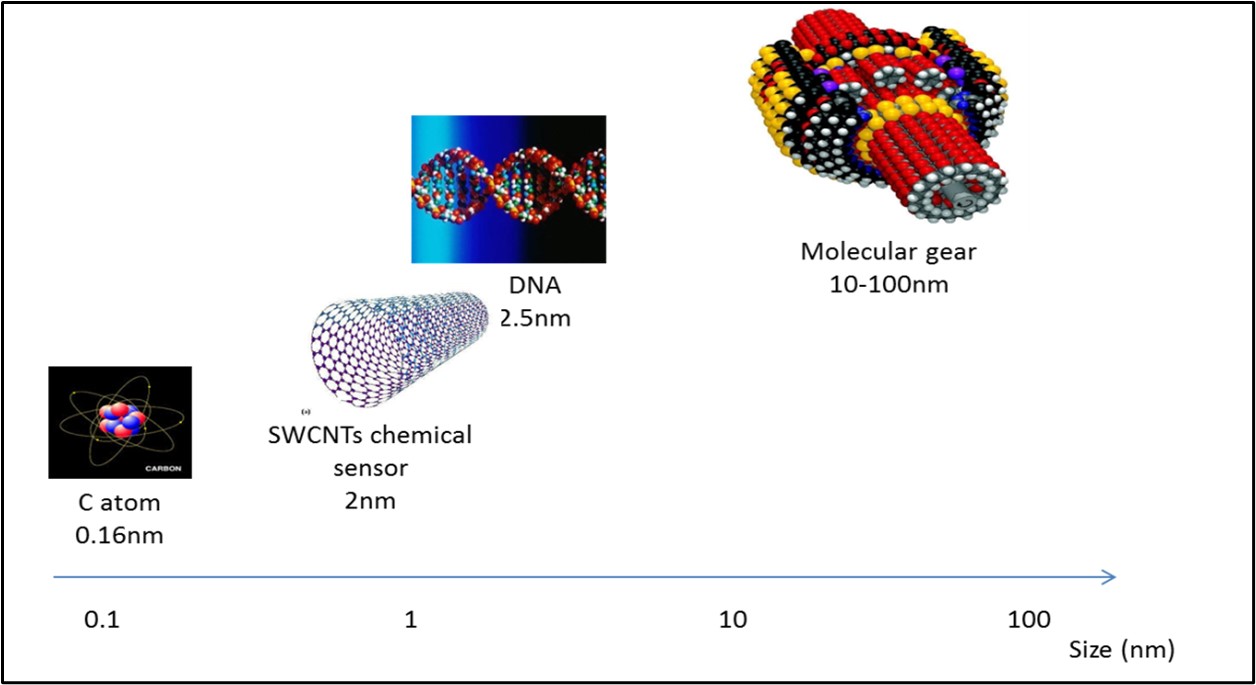
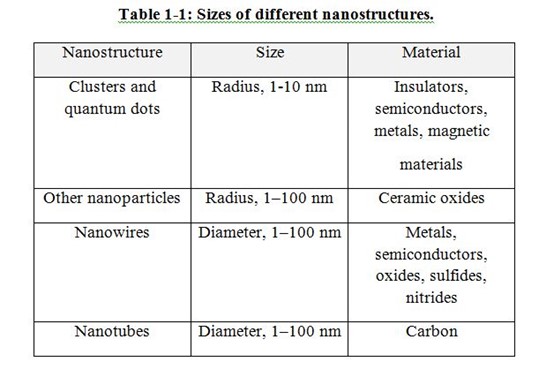
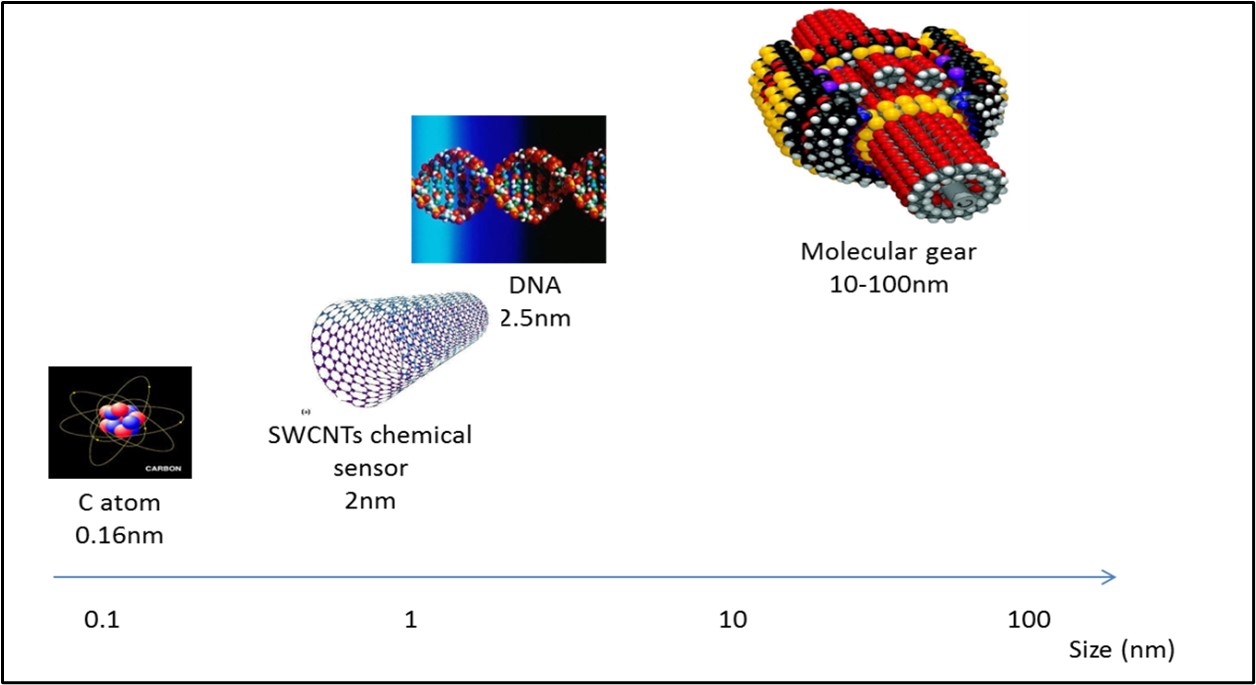
Nanotechnology is the study and control of matter at dimensions of roughly 1 to 100 nanometers (nm). Nanotechnology primarily deals with the synthesis, characterization, and applications of materials on a nanoscale. Nanomaterials exhibit novel and significantly changing chemical and physical properties due to their size and structure . The physical and chemical properties of nanomaterials can differ significantly from those of the atomic-molecular, or of bulk materials of the same composition. By creating nanometer-scale structures, it is possible to control the fundamental properties of materials, such as their charge capacity, melting temperature, magnetic properties, and even their color, without changing the materials. Nanostructures constitute a bridge between molecules and infinite bulk systems. Nanostructures include clusters, quantum dots, nanoparticles, nanowires, and nanotubes . Different nanostructures are shown in Table 1-1. These new properties of nanomaterials lead to enhanced catalysts, photoactivity, increased strength, and many other interesting characteristics . Figure 1-1 shows the various dimensions of nanomaterials.<br />One of the main environmental applications of nanotechnology is in the treatment of wastewater. As freshwater sources become increasingly scarce due to overconsumption and contamination, scientists have begun to consider seawater as another source for drinking water. The majority of the world’s water supply has too much salt for human consumption and desalination is an option, but it is an expensive method to remove the salt to create new sources of drinking water. CNTs membranes have the potential to reduce desalination costs. Similarly, nanofilters could be used to remediate or clean up ground water or surface water contaminated with chemicals and hazardous substances.<br /><br />م.م. هالة ثامر محمد