مقالة علمية للتدريسية م.م ضحى صلاح صاحب بعنوان : استخدام الكائنات الدقيقة في المعالجة الحيوية للتربة والمياه الملوثة
Soil and water pollution is considered one of the most serious environmental problems threatening human health and living organisms. Industrial and agricultural expansion has led to an increase in pollutants such as chemicals, heavy metals, and petroleum-based pesticides. Therefore, bioremediation has emerged as a modern and effective solution for treating these pollutants using microorganisms such as bacteria, fungi, and algae.
Bioremediation is defined as the process of using microorganisms to degrade or transform pollutants into less harmful or non-toxic substances. These organisms have a natural ability to use certain pollutants as a source of energy or nutrients, which helps break them down and reduce their impact on the environment.
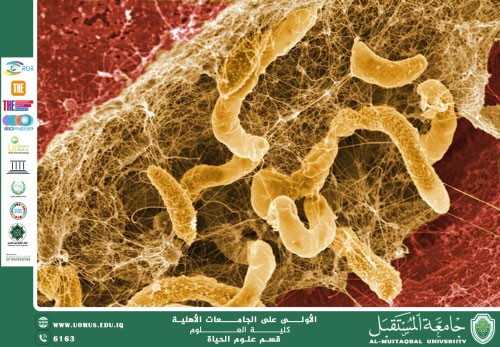
First, bacteria play an important role in breaking down organic pollutants such as oil, pesticides, and chemicals. Some types of bacteria produce specific enzymes that decompose complex compounds into simpler ones that can be more easily degraded in the environment.
Second, fungi are used in bioremediation due to their ability to decompose complex organic compounds that are difficult to break down, such as certain pesticides and industrial materials. Fungi are characterized by long hyphae that enable them to spread through the soil, reach pollutants, and degrade them.
Third, microorganisms are used in the treatment of contaminated water, such as wastewater, where bacteria break down organic matter in the water and convert it into less harmful substances. This process also helps reduce unpleasant odors and improve water quality before reuse or discharge into the environment.
In addition, some microorganisms can help remove heavy metals from soil and water by absorbing them or converting them into less toxic forms. This method is environmentally friendly compared to traditional chemical or physical methods.
In conclusion, bioremediation using microorganisms is an important environmental technique that helps reduce pollution and maintain ecological balance. It is also a relatively economical and safe method compared to other approaches, making it a promising solution for treating contaminated soil and water in the future.
جامعة المستقبل الجامعة الاولى في العراق
الهدف الرابع : التعليم الجيد