Viral hemorrhagic fever
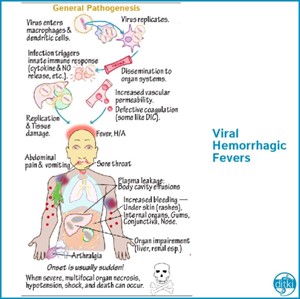
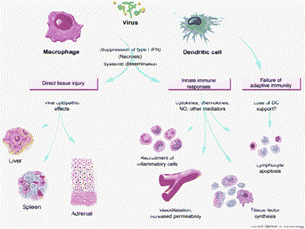
Viral Hemorrhagic Fever (VHF) is a group of acute zoonotic diseases with high mortality rates caused by seven different families of viruses that infect both humans and animals. Most of the VHF is transmitted to humans by different types of vectors like rodents, bats, ticks, voles, and mosquitoes. <br />Viral Hemorrhagic Fever (VHF) refers to severe febrile illness with abnormal vascular regulation, vascular damage, and hemorrhagic manifestation that are caused by several viruses of different families. In the latest classification by the International Committee on Taxonomy of Viruses, the major VHF causing viruses are classified under seven divergent families: Hantaviridae, Nairoviridae, Phenuiviridae,Filoviridae, Paramyxoviridae, Arenaviridae, and Flaviviridae. These viruses share similar characteristic features such as the enveloped single-stranded RNA as genetic material, target primary dendritic/monocyte/macrophage cells, undergo cytoplasmic replication, and produce gastrointestinal and neurological symptoms. Severe cases are interlinked with high viremia levels in the blood. While humans are considered to be the accidental hosts, many arthropods and rodents serve as effective reservoirs for the virus transmission. VHF is transmitted to humans either by arthropod bite or through indirect contact with infected fluids (fecal matter, urine, saliva, and other fluids) of the patients suffering from VHF. Pathogens implicated in viral hemorrhagic fevers are able to replicate within macrophages and dendritic cells, allowing for rapid dissemination within the host. Macrophages are triggered to release cytokines and chemokines, which cause increased vascular permeability and a procoagulant state. These viruses can also trigger mechanisms resulting in disseminated intravascular coagulation. Infected dendritic cells are impaired, and the loss of its appropriate function can lead to lymphocytic apoptosis.<br /><br />MSc Ata'a Khalil Hussein