Reactive oxygen species and Cancer
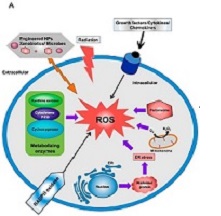
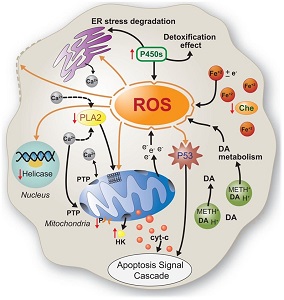
Reactive oxygen species (ROS) are commonly used to define the reactive molecules and free radicals originating from molecular oxygen, by-products of normal cellular metabolism, have long been associated with cancer. High levels of ROS can cause damage to lipids, proteins, and DNA, it was thought that ROS were oncogenic, promoting genomic instability and tumorigenesis. Although ROS may contribute to an unstable genome, a role for ROS as signaling molecules to promote cancer cell proliferation, survival, angiogenesis, and metastasis has emerged. ROS are very reactive molecules that may undergo several reduction reactions to harm normal cells. Detoxification of ROS is fundamental for all cells to survive. Living organisms have evolved a variety of defense mechanisms to provide a balance between generation and elimination of ROS to endure the oxygen-rich cellular environment. The inequality between the systemic production of ROS and the ability of cells to instantly detoxify the reactive intermediates or to restore the resultant impairment is often called as “oxidative stress” (OS). <br />ROS signal transduction involves oxidation–reduction reactions, often causing reversible protein structure and function alterations that contrive a subsidiary cellular response. In cancer cells, the mitochondria exhibit accelerated metabolism demanding more ROS concentration, which amplifies the tumorigenic behavior and accelerates the piling up of additional mutations promoting metastasis. Genetic modifications are considered to promote tumorigenesis either by acting as direct DNA mutagen, or by halting genomic stability through topoisomerase II activation. Downregulation of the p53 tumor suppressor led to increased ROS production. In cancer cells high levels of reactive oxygen species can result from increased metabolic activity, mitochondrial dysfunction, peroxisome activity, increased cellular receptor signaling, oncogene activity, increased activity of oxidases, cyclooxygenases, lipoxygenases and thymidine phosphorylase, or through crosstalk with infiltrating immune cells.<br /><br /><br />MSc Ata'a Khalil Hussein