Bile salt deficiency: cholelithiasis
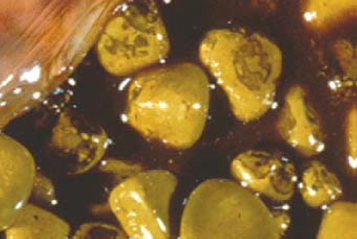
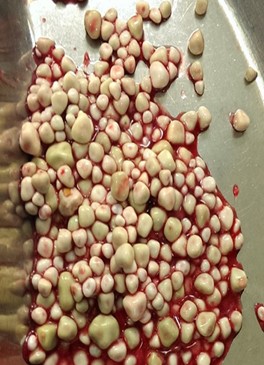
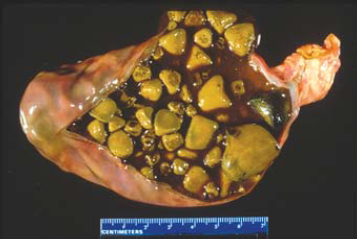
The movement of cholesterol from the liver into the bile must be accompanied by the simultaneous secretion of phospholipid and bile salts. If this dual process is disrupted and more cholesterol enters the bile than can be solubilized by the bile salts and phosphatidylcholine present, the cholesterol may precipitate in the gallbladder, leading to cholesterol gallstone disease—cholelithiasis. This disorder is typically caused by a decrease of bile acids in the bile, which may result from 1) gross malabsorption of bile acids from the intestine, as seen in patients with severe ileal disease; 2) obstruction of the biliary tract, interrupting the enterohepatic circulation; 3) severe hepatic dysfunction, leading to decreased synthesis of bile salts, or other abnormalities in bile production; or 4) excessive feedback suppression of bile acid synthesis as a result of an accelerated rate of recycling of bile acids. Cholelithiasis also may result from increased biliary cholesterol excretion, as seen with the use of fibrates. [Note: Fibrates, such as gemfibrozil, are derivatives of fabric acid. They are used to reduce triacylglycerol levels in the blood through up-regulation of fatty acid β-oxidation.] Laparoscopic cholecystectomy (surgical removal of the gallbladder through a small incision) is currently the treatment of choice. However, for patients who are unable to undergo surgery, oral administration of chenodeoxycholic acid to supplement the body’s supply of bile acids results in a gradual (months to years) dissolution of the gallstones.<br /><br />By: Asst. Lec. Ahmed B. Mahdi