
THE QUALITIES THAT MAKE A GOOD ANESTHESIOLOGIST
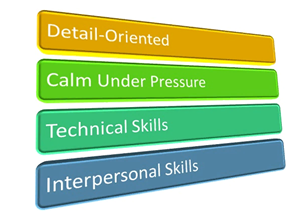
To excel in this branch of medicine, which happens to be one of the highest-paying medical specialties, there are certain qualities you need. Among the most important characteristics an anesthesiologist should have are a detail-oriented nature, serenity even in stressful situations, technical dexterity and people skills.<br /> <br />A Detail-Oriented Personality<br />One of the most important qualities for an anesthesiologist is being detail-oriented, according to the American Society of Anesthesiologists. You must be precise not only in the type and amount of anesthesia medications you administer but also in where and how you give these medications.<br />Monitoring the patient throughout the time they are under anesthesia is necessary for the patient’s safety. An anesthesiologist must pay attention to several different indicators of patient wellbeing at once, including devices like a pulse oximeter that measures your oxygen levels, the Cleveland Clinic reported. Safely monitoring patients also means looking out for symptoms that could indicate a reaction to anesthesia known as malignant hyperthermia.<br />The Ability to Be Calm Under Pressure<br /> <br />What happens if things do go wrong with the patient’s vital signs? You must make decisions quickly, without panicking, so achieve the best outcome. This means you have to be capable of remaining calm even under the most stressful of circumstances. It means planning ahead what you must do to fix any of the possible scenarios that could arise in the course of the medical procedure, including signs of overdose and changes in vitals that could indicate the level of anesthesia is insufficient.<br />Even when everything is going right with a procedure, the work of an anesthesiologist can still be stressful. The patient’s life is in your hands. Giving a patient too much anesthesia could harm or even kill them, but problems can also occur if the patient has an unexpected reaction to the kind of medication that is used.<br />That said, the technological advancements and extensive training of anesthesiologists have made going under anesthesia much safer now than in decades past. The rate of anesthesia-related fatalities was in the range of one in every 10,000 to 20,000 patients during the 1960s and 1970s, but today, only around one in 200,000 patients die from anesthesia, the Cleveland Clinic reported.<br />Technical Skill in Administering Medications<br />Administering anesthesia and analgesia is itself a medical procedure, one that requires technical skill to perform properly. Naturally, you need to learn how to do things like draw blood, place epidurals and create airways correctly though your medical studies and training. However, starting out with good hand-eye coordination and strong manual dexterity, or skill in working with your fingers, is valuable for aspiring anesthesiologists, the United States Bureau of Labor Statistics reported.<br />Interpersonal Skills<br />On the surface, anesthesiologist may seem like the career in medicine that least requires interpersonal skills. After all, unlike most physicians, your patients will be unconscious for much of the time you spend with them, right?<br />Although it’s true that your patients will be unconscious, asleep, or drowsy during much of the time you spend monitoring them, how you manage patient expectations and anxieties before and after you administer anesthesia is important. So are any interactions you may have with alert patients during their procedures, especially if those patients express feeling pain or if something goes wrong with the procedure or with the patient’s vital signs. If anything, the fact that anesthesiologists don’t spend enough time with patients before they prepare for a procedure to develop the kind of doctor-patient relationship other physicians have makes your interpersonal skills even more crucial, because you have to establish that trust in much less time, The Houston Chronicle reported.<br />Many patients are nervous about medical procedures, particularly ones that could be uncomfortable. Some patients have full-blown anxiety about surgeries and painful medical situations. Having the kind of reassuring and caring personality that helps alleviate their fear is important to patient satisfaction. No patient wants someone who is cold, disengaged or lacking in compassion to be the one in charge of making sure they aren’t in pain. Your warm personality and confidence will help patients feel at ease long before the anesthesia kicks in.<br /><br /><br />MSc Sura Hasan Al-Zubaidi