electromagnetic spectrum
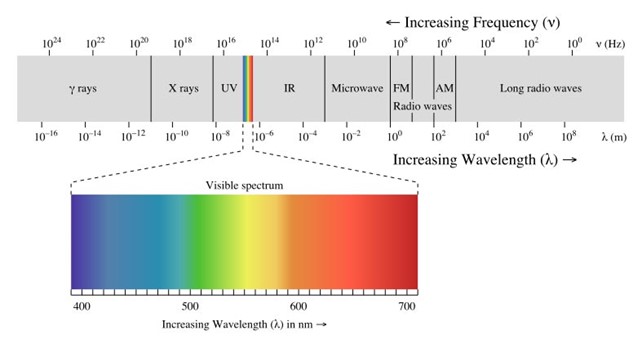
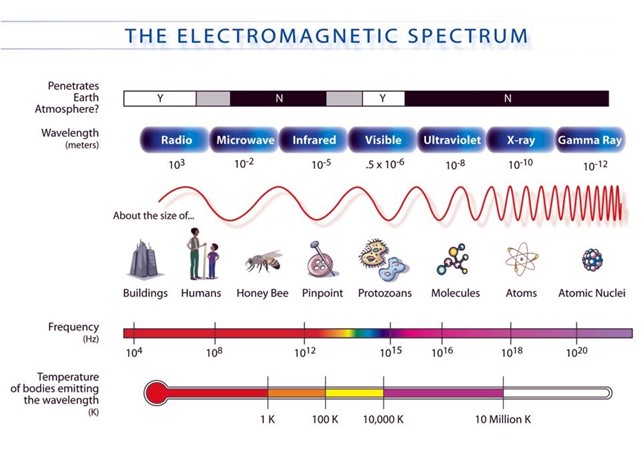
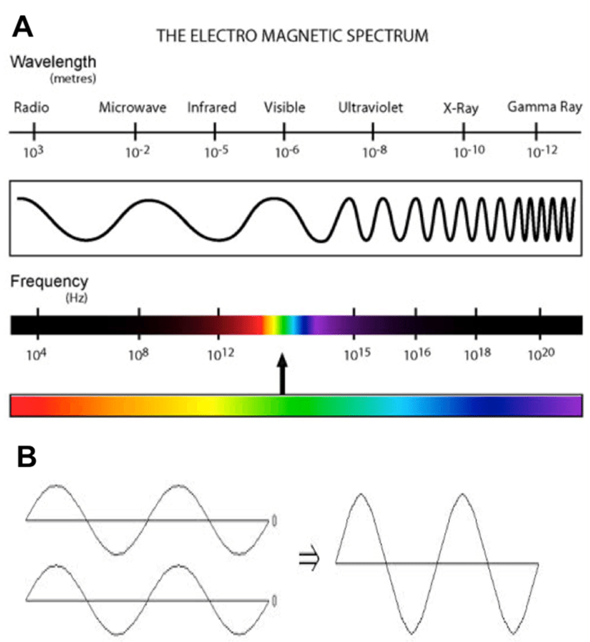
The electromagnetic spectrum is a general term that includes all possible frequencies of electromagnetic radiation.The electromagnetic spectrum (usually called the spectrum only) is also known as the lines of rays emanating from a black body at a certain temperature (each line has a specific wavelength and frequency).<br />Each chemical element has a spectrum that distinguishes it, that is, it has a set of series lines that distinguish it from others, and this spectrum is called an "emission spectrum". The spectrum of radiation emitted by a body changes with the change in body temperature, and the black color is chosen in particular because it is “ideal” in absorbing radiation and is also ideal in emitting radiation. The spectrum of the elements is usually in the visible light range.<br />The electromagnetic spectrum extends from low frequencies such as those used in radio, through medium frequencies such as visible light rays, to high frequencies such as X-rays, and ends with gamma rays. It is considered that the limit of the shortest wavelength is the Planck length, and the largest possible wavelength is the size of the entire universe. <br />The spectrum is the complete set of electromagnetic waves. In scientific research, we are usually interested in the spectra of the elements, as each element is characterized by a distinct spectrum, such as a people's fingerprint, and appears in the form of contiguous parallel light lines of different distinctive colors.<br /><br />The spectra of the elements lie mainly in the visible light range of the electromagnetic spectrum - between red light, which has a wavelength of about 700 nanometers, and violet light, which has a wavelength of about 400 nanometers.<br />The electromagnetic spectrum consists of waves:<br />• radio waves<br />• microwave<br />• Infrared<br />• Visible spectrum (red, orange, yellow, green, blue, violet)<br />• ultraviolet Rays<br />• X-ray<br /><br /><br />MSc Hawraa Abdalkareem