Stomach م.م دعاء ساهي
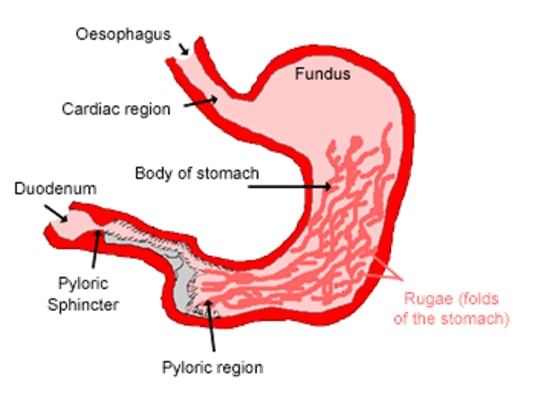
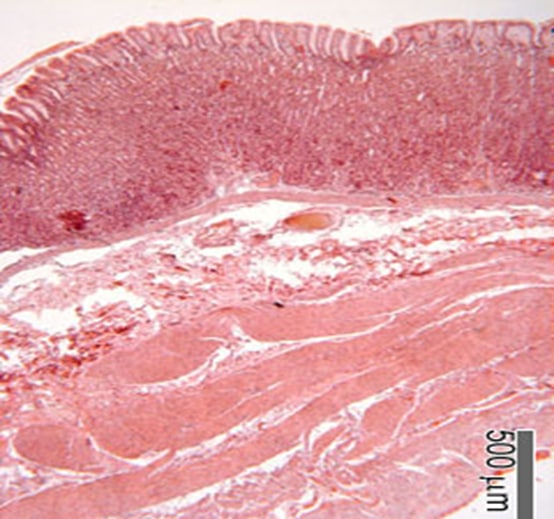
Structure of the stomach<br /> Food starts to be digested and absorbed in the stomach, although absorption is mostly limited to water, alcohol and some drugs. The stomach is an expandable, muscular bag, and it keeps swallowed food inside it by contracting the muscular pyloric sphincter. Food can stay in the stomach for 2 hours or more. Food is broken down chemically, by gastric juice, and mechanically, by contraction of the three layers of smooth muscle in the muscular externa layer. The broken up food at the end of this process is called chyme.<br />Gastric juice is secreted by gastric mucosal glands, and contains hydrochloric acid, mucus, and proteolytic enzymes pepsin (which breaks down proteins), and lipase (which breaks down fats).<br />When the stomach is empty, and not distended, the lining is thrown up into folds called rugae. After eating, these folds flatten, and the stomach is able to distend greatly.<br /> <br /><br />The stomach has three anatomical regions:<br />1. cardiac, which contains mucous secreting glands (called cardiac glands) and is closest to the oesophagus<br />2. fundus, the body or largest part of the stomach which contain the gastric (fundic) glands<br />3. pyloric, which secretes two types of mucus, and the hormone gastrin.<br />Compare the glands present in these three regions.<br />The pyloric region ends at the pyloric sphincter. This sphincter relaxes when the formation of chyme is completed, and the chyme is squirted into the duodenum.<br />Layers of the stomach.<br />This shows an image through the wall of the body of the stomach at low power. You should be able to identify the three major layers seen here - the mucosa, submucosa and muscularis externa.<br />The mucosa is full of gastric glands and pits, and there is a prominent layer of smooth muscle - the muscularis mucosa. The contraction of this muscle helps to expel the contents of the gastric glands.<br />The muscularis externa layer has three layers of muscle. An innner oblique layer , a middle circular and an external longitudinal layer. The contraction of these muscle layers help to break up the food mechanically. <br /> <br /><br /><br />The structure of the oesophagus was covered in the topic 'oral'. The oesophagus forms a junction with the stomach, which is called the oesophageo-gastric junction.<br />