Virulence factors in bacteria
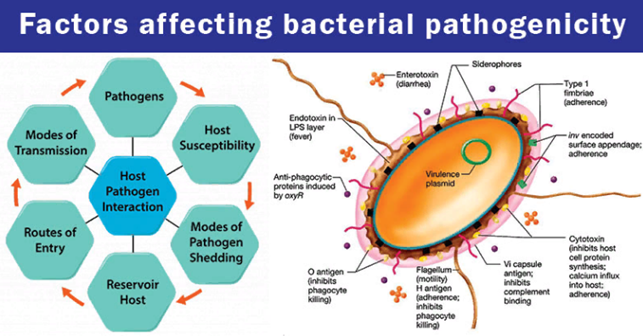
A pathogen’s ability to infect or damage its host tissues is determined by the virulence factors. These are often molecules synthesized by the bacteria or virus and encoded in their genome, but may also be acquired from the environment via transmissible genetic elements.<br /><br /> <br /><br />Examples of virulence factors<br />The virulence factors of bacteria and viruses can differ drastically, due to the obvious differences in their composition. A bacteria’s virulence factors can be based on, for example, the capsule and flagella, which would not apply to a virus. However, a virus’s virulence factors can depend on the proteins it co-opts the host cell to synthesize those virulence factors.<br />Many bacterial capsules prevent the immune system, such as macrophages and neutrophils, from detecting the bacteria. The capsules’ ability to evade the immune system can let the bacteria go undetected unless antibodies are developed to match the capsular antigens.<br />Movement and attachment are also important considerations for bacterial virulence. The flagella, which aids in movement, can help bacteria spread. The flagellum is a key virulence factor in urinary tract infections because it helps the bacteria spread up the urethra. Pili are shorter filaments that aid in attachment. Greater ability to adhere to tissues improves the bacteria’s infectivity.<br />One of the more significant virulence factors of bacteria is exotoxins. When released by bacteria, exotoxins can interrupt and dysregulate important cellular processes. They can also aid in the bacterial proteins’ capacity to invade tissues. Similarly, viral virulence factors can consist of efficient replication and protein synthesis to increase virulence.<br />Virulence factors and treatments<br />Finding treatment options for pathogens is a constant struggle, especially in the age of antibiotic resistance. It is becoming increasingly common that virulence factors are identified at the molecular and genetic level, which opens up the possibility of targeting virulence factors as a form of treatment against pathogens.<br />Many antibiotics kill both pathogenic and commensal, not harmful, bacteria, which can lead to adverse side effects. Since commensal bacteria will not likely share a pathogenic bacteria’s virulence factors, drugs targeting virulence factors can theoretically prevent many of these deleterious effects. Similarly, infections caused by or related to biofilms are not always treatable by antibiotics and could instead be treated by virulence factor-related drugs.<br />Many virulence factors focus on the evasion of the host immune system. Some of these, such as meningococcal sepsis and some pneumonia, can debilitate an otherwise healthy patient. While the principle of these virulence mechanisms as therapeutic targets is sound, there is not much experimental evidence of the merit of this approach.<br />Less specific drugs are not the only way that virulence factors can be targeted. Some virulence factors are believed to be comprised of, or heavily dependent on, the nutritional status of the host both before and during infection.<br />Therefore, proper nutritional care of patients can prevent virulence factors from being as successful as they would otherwise be. This is especially true for diseases that commonly have a lack of appetite as a symptom, such as COVID-19.<br /><br />Msc. Sura Hasan Hasnawi<br />[email protected]<br /><br />