
Fourth Consensus Guidelines for the Management of Postoperative Nausea and Vomiting
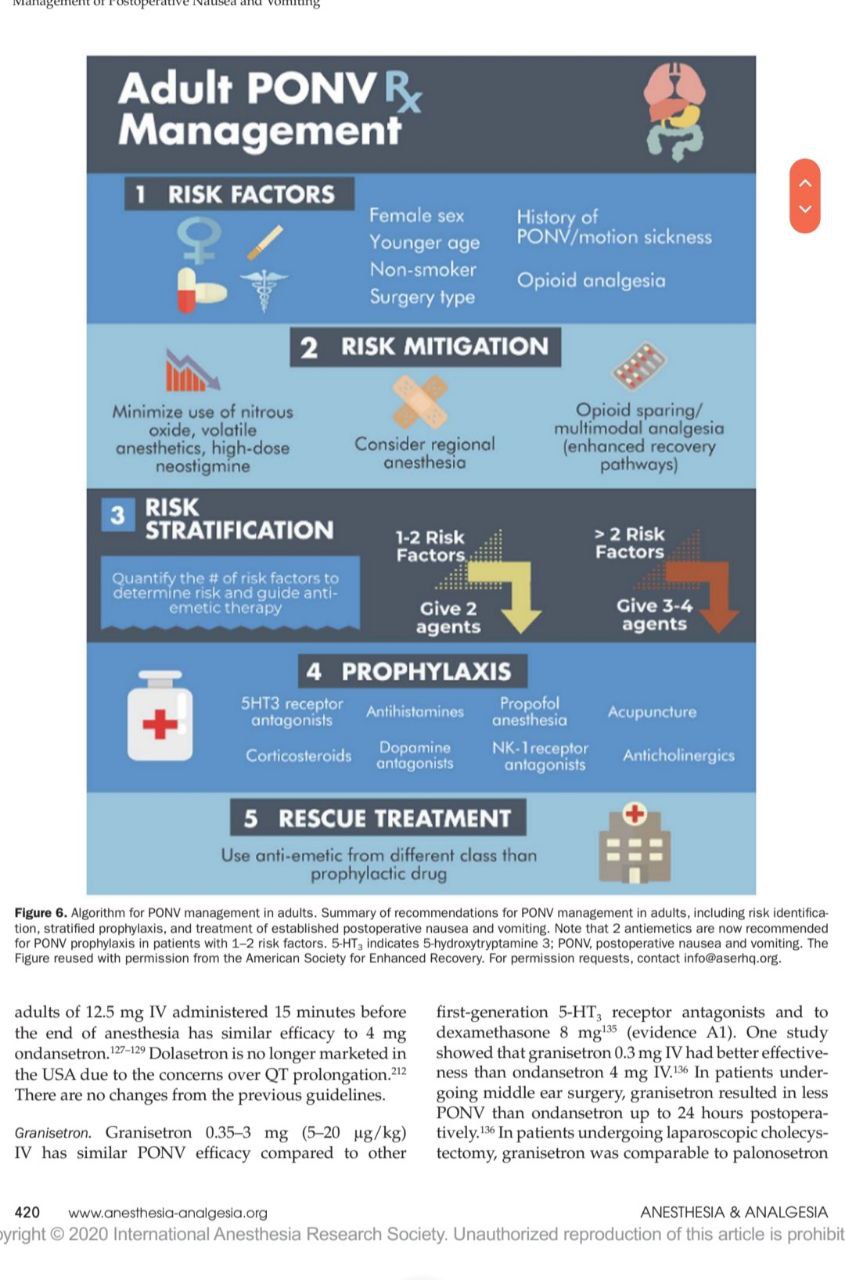
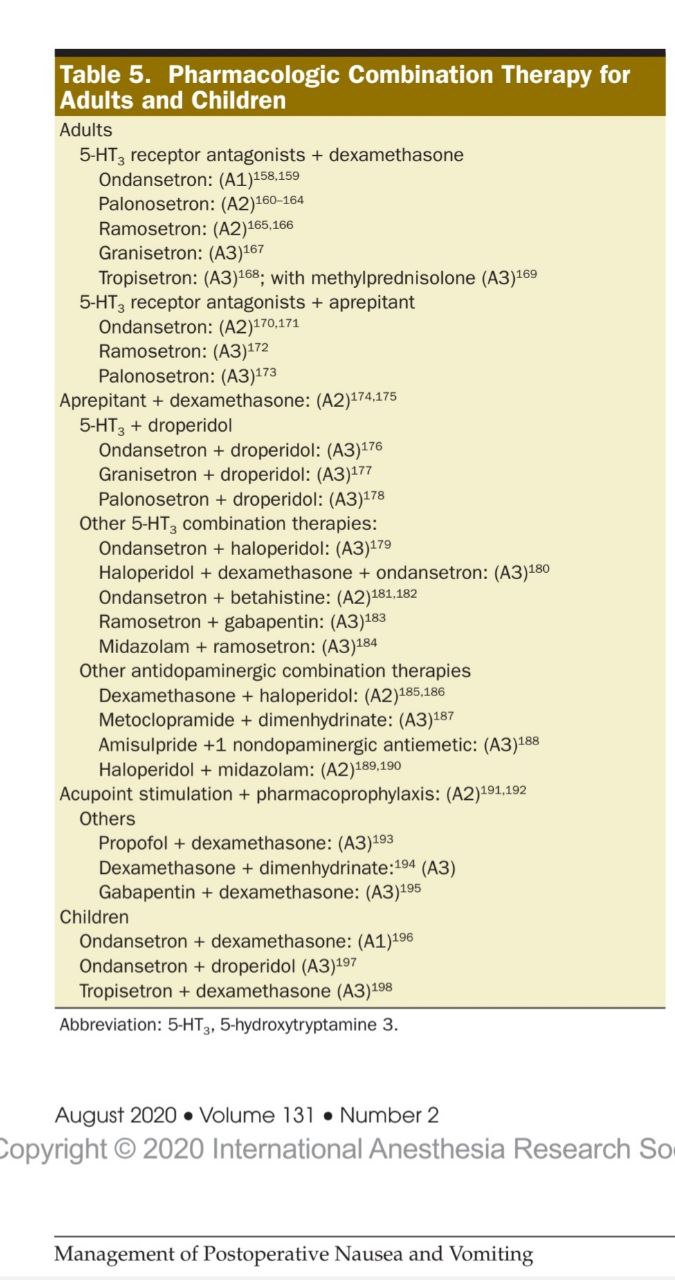
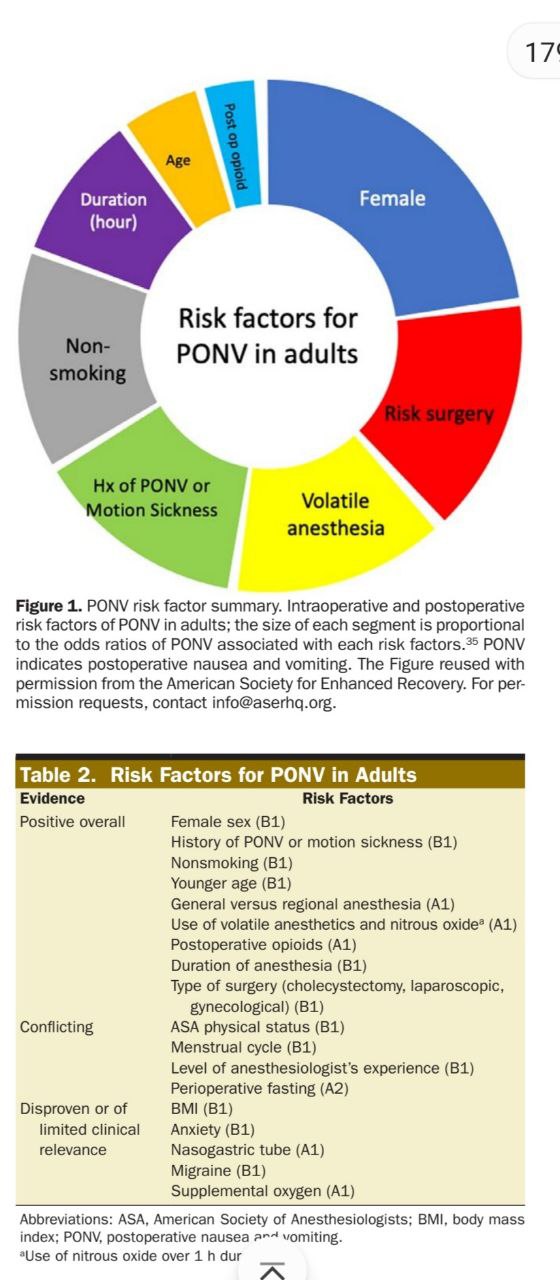
Nausea and vomiting are two of the most common adverse events in the postoperative period with an estimated incidence of 30% in the general surgical population and as high as 80% in high risk cohorts.14 This can be a highly distressing experience and is associated with significant patient dissatisfaction.15,16 In addition, the occurrence of postoperative nausea and vomiting (PONV) is also associated with a significantly longer stay in the postanesthesia care unit (PACU),17 unanticipated hospital admission,18 and increased health care costs.19 Optimal management of PONV is a complex process.<br />There are numerous antiemetics with varying pharmacokinetics, efficacy, and side-effect profiles, thus the choice of an antiemetic will depend on the clinical context. The benefit of PONV prophylaxis also needs to be balanced with the risk of adverse effects.<br />At an institutional level, the management of PONV is also influenced by factors such as cost-effectiveness, drug availability, and drug formulary decisions. While there are several published guidelines on the management of PONV, they are limited to specific patient populations,6,7 do not address all aspects of PONV management in sufficient detail,5,13 or are not up to date with current literature.<br />Our group has previously published 3 iterations of the PONV consensus guideline in 2003, 2009, and 2014,1–3 with the aim of providing comprehensive, evidence-based clinical recommendations on the management of a PONV in adults and children.<br />A systematic literature search identified over 9000 published studies since the last consensus guideline (literature search up to October 2011). In addition, the establishment of enhanced recovery pathways (ERPs) has led to a significant paradigm shift in the approaches to perioperative care. We therefore present this update to incorporate the findings of the most recent studies into our recommendations.<br /><br />By: Dr. Miaad Adnan