Obstetrical Anesthesia
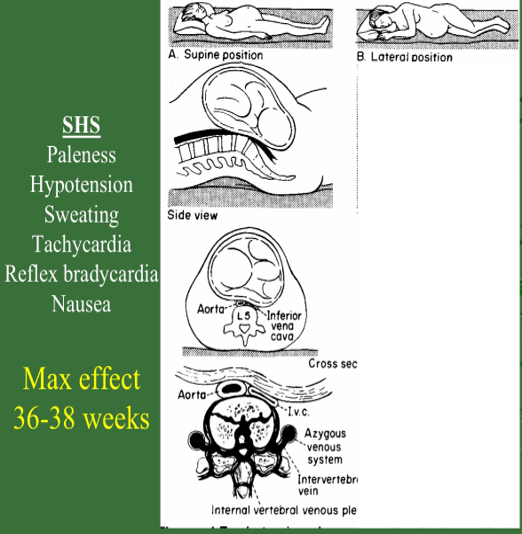
From early in the 1st trimester of pregnancy, a woman’s physiology changes rapidly , under the influence of increasing progesterone and oestrogen production.<br /><br />Physiological Changes-CVS<br />Almost all the changes seen are due to high levels of progesterone and include:<br /><br />35% Total Blood Volume<br /> heart rate 15 beats/min<br />40% CO<br />30% SV <br />15% SVR<br />Sys BP decreased 10-15% (second trimester), dias BP decrease<br />500ml/min blood flow to uterus<br /> venous return from legs<br />AORTOCAVAL COMPRESSION (mechanical)<br /><br />Impact of CVS changes<br />Patients with pre-existing cardiac disease may decompensate either during labor or immediately post delivery. This corresponds to the time of maximal CO<br />Approx 400 – 600ml blood loss occurs at delivery<br />Supine hypotensive syndrome<br /><br />Physiological Changes – Resp.<br /> oxygen consumption ~ 20% (100% in labor) due to increased metabolic rate<br /> minute ventilation ~ 50% (due to increased RR 15% and tidal volume 30-50%)<br /> arterial pCO2<br /> FRC 10-25% causing a decrease in oxygen reserves<br /><br /><br />Impact of Resp. changes <br />Uptake of inhalational agents is faster<br />Decreased FRC and increased oxygen consumption increase the risk of hypoxia with apnea<br />Pre-oxygenation prior to GA less effective<br /><br />Physiological Changes- Airway<br />Venous engorgement of airway mucosa<br />Edema of airway mucosa<br />Worsening of Mallampati score in labor<br /><br />Impact of Airway Changes<br />Trauma to upper airway with suctioning, intubation<br />Increased incidence of difficult/failed intubation x10<br />Require smaller ETT<br /><br />By Dr. Miaad Adnan