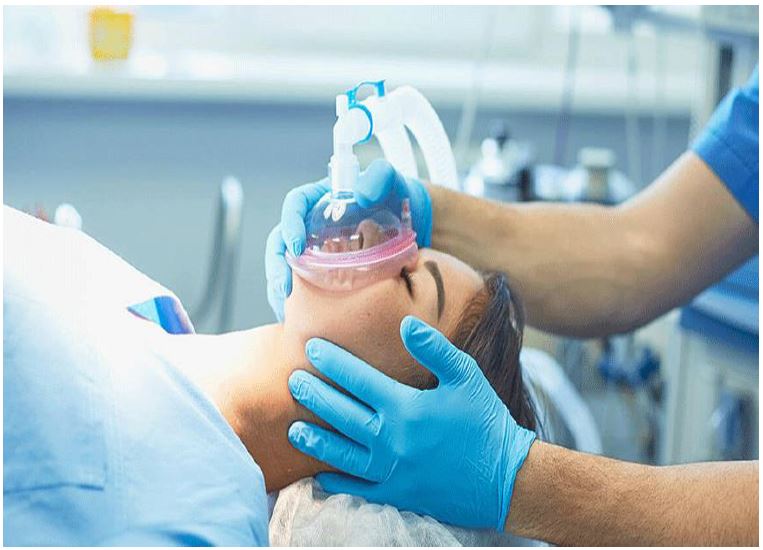
Anesthesia in general
What is anesthesia<br />Anesthesia is a medical procedure in which the patient is given certain medications that cause the patient to lose his senses and feelings. Either the anesthesia is local in a specific area of the body, where the anesthetic drug is given in that area, or it is general anesthesia that affects the whole body and is performed in major surgeries.<br />general anesthesia<br />It is given by giving drugs, whether by inhalation or intravenous injection. In general, the effect of these drugs on the brain leads to 4 stages of inhibition of the central nervous system, including:<br />The disappearance of the feeling of pain (analgesia): the patient does not feel pain, but he still retains the memory completely, but in the last stages of this stage, a gradual loss of memory (amnesia) occurs.<br />Excitement: During this stage, the patient has a complete loss of memory, but he gets delirious with uttering strange words and sentences that he does not remember after the end of the anesthesia.<br />Surgical anesthesia stage: This stage begins with a slowing of the respiratory rate and heartbeat and may extend in depth until the complete loss of spontaneous breathing (apnea).<br />Medullary depression: as a result of inhibition of the respiratory center in the brainstem and the vasomotor center. Without external support for the respiratory and circulatory systems, the patient will die.<br />What are the drugs used in general anesthesia?<br />INHALED ANESTHETICS, volatile anesthetics include halothane, enflurane, isoflurane, desflurane, sevoflurane; And gaseous anesthetics, xenon and dinitrogen oxide (N2O).<br />Intravenous drugs (INTRAVENOUS ANESTHETICS) include some benzodiazepines such as diazepam, midazolam and lorazepam, some barbigurates such as thiopental and methohexital, and some morphine derivatives such as fentanyl in addition to other drugs that do not belong to a specific chemical group such as propofol, ketamine and etomidate.<br />What are the medications used in local anesthetics?<br />Cocaine is considered one of the first drugs used in local anesthesia, but due to addiction considerations, its use has become limited only to some<br />ENT operations. The drugs used in local anesthesia are chemically divided into two main types:<br /> Esters group: These include cocaine, procaine tetracaine, and benzocaine.<br /> Amides group: These include lidocaine, bupivacaine, mepivacaine, ropivacaine, and articaine.<br />Symptoms of anesthesia<br />Common symptoms: The most common side effects of bad anesthesia are nausea, muscle aches and dizziness, which are less serious and can be easily treated.<br />Complications of anesthesia<br />1. Nausea.<br />2. Muscle aches.<br />3. High temperature.<br />4. Death in rare cases<br /><br />By: B.M.T. nowfal Ajme