Preoperative pregabalin to prevent postoperative nausea and vomiting in laparoscopic cholecystectomy
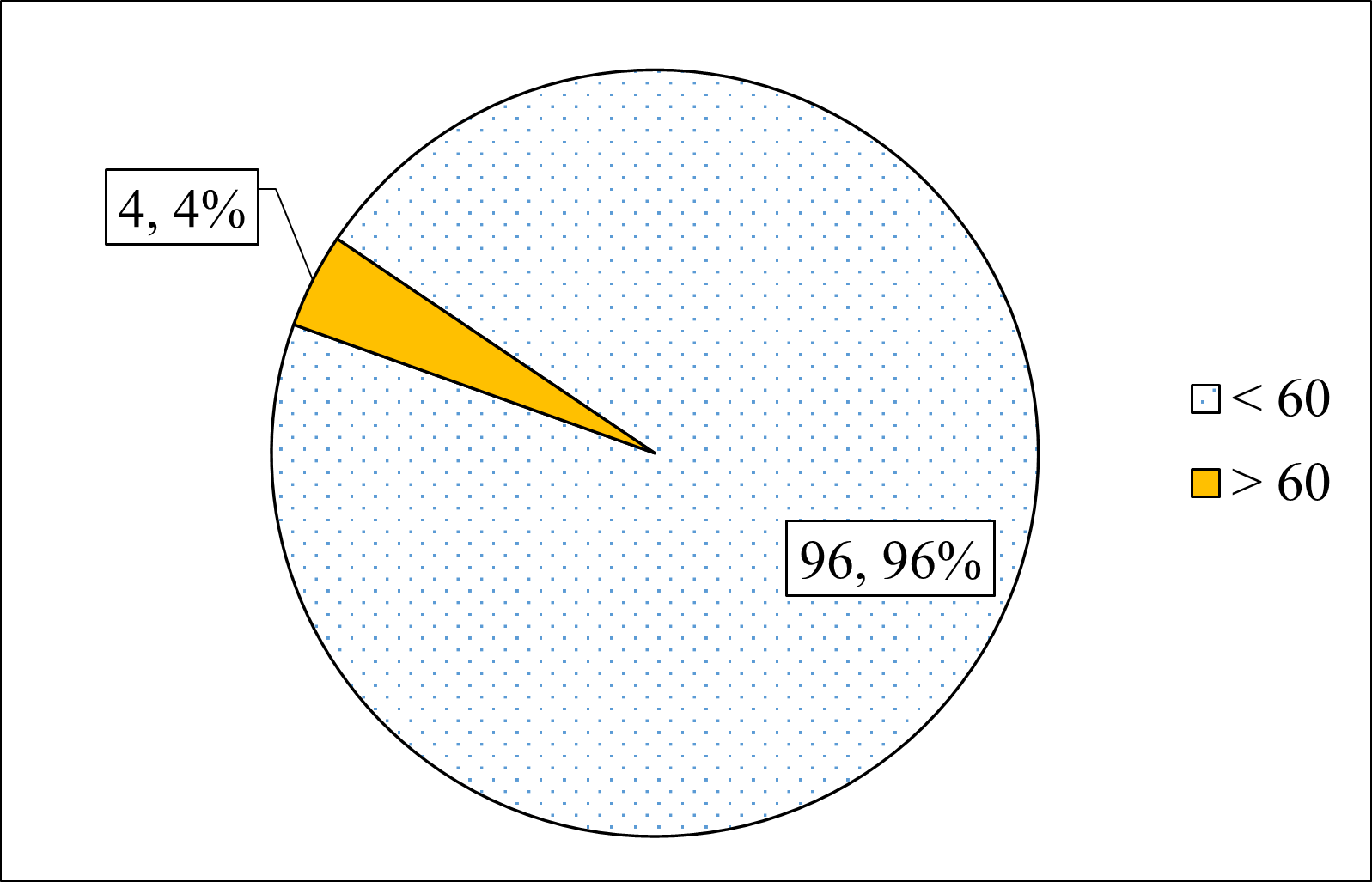
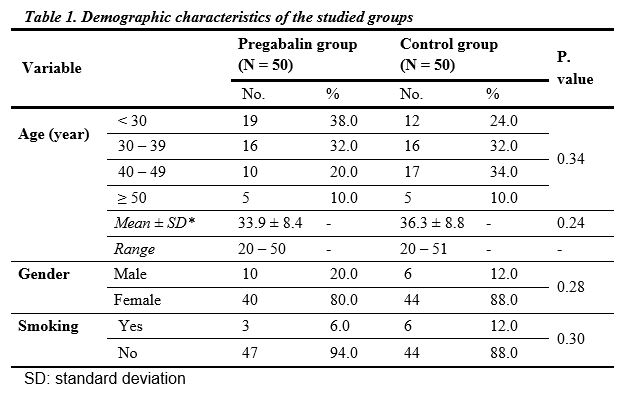
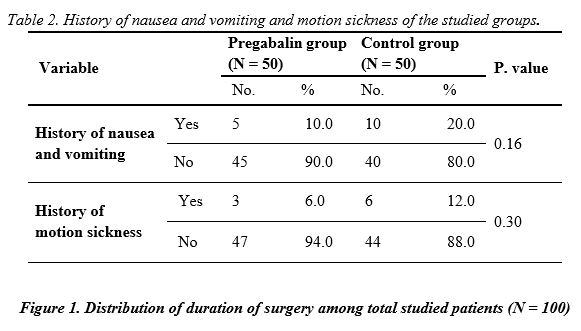
ABSTRACT: <br />Background:<br />Pregabalin has been found to minimize the need for opioids as well as non-steroid anti-inflammatory medications and relieve pain with a different type of surgery. Along with consideration of diverse mechanisms, preoperative oral pregabalin has been reported to have an antiemetic effect postoperatively. Postoperative laparoscopic cholecystectomy, is associated with nausea and vomiting and it’s a concern that dictates the need for an antiemetic given intravenously; as the intravenous drugs with intravenous fluid is becoming more common, the use of oral pregabalin is frequently mentioned, on the other hand, the intravenous antiemetic medication has some side effect.<br />Aim of the study:<br />To evaluate the effect of oral pregabalin on postoperative nausea and vomiting in laparoscopic cholecystectomy cases.<br />Design: Randomized Double Blind study.<br />Patient and method:<br />One hundred patients of the American Society of Anesthesiology (ASA) class1 were tested and divided into two groups, the first group did not receive any anti-emetics preoperatively, the and second group received preoperative 75 mg pregabalin orally. 75 mg pregabalin capsule was given orally 30 minutes before anesthesia in the preoperative time. We followed the patients postoperatively in the recovery room and general surgical ward for 24 hours the occurrence of nausea and vomiting and any antiemetic medications if used and their side effects; we assess the incidence of postoperative nausea and vomiting by the use of the Koivuranta Score.<br />Results: <br />Statistical analysis using SPSS showed a significant reduction of postoperative nausea and vomiting in the second pregabalin group compared with the first group in laparoscopic cholecystectomy patients.<br />Conclusion:<br />Preoperative 75 mg oral pregabalin give antiemetic effect on postoperative time. No significant postoperative side effects were noted because the of oral pregabalin dose. <br />Keywords: Orally, pregabalin capsule, laparoscopic cholecystectomy, general anesthesia.<br />Introduction <br />As long as anesthesia is administered, postoperative nausea and vomiting (PONV) will continue to be frequent and upsetting comorbidity. Vomiting and nausea can significantly slow down recovery, raise staffing and drug expenses, and decrease patient satisfaction during perioperative procedures. [1-2]<br />Nausea is a conscious recognition of subconscious excitation in an area of the medulla closely associated with or a part of the vomiting center, [3] or it is a sensation of discomfort in the upper abdomen and unease sensation with involuntary order to vomit. [4] While vomiting is a means by which the upper GIT rides its contents when any part of the upper GIT becomes irritated, distended, or over-excitable. <br />The PONV is the most feared postoperative symptom & it may impaired dressing, surgical repairs & increased ( bleeding, pain and risk of gastric contents aspiration ) & if it is prolonged will leads to electrolytes, fluid imbalance & dehydration; the PONV occurs after up to 90 % of operative procedure The common risk factors of PONV are young age, female gender, history of ( PONV motion sickness ) those, not smokers early mobilization after surgery early drinking & eating after operations procedures like (laparoscopic gynecological, abdominal, ENT, squint ), postoperative severe pain, narcotic premedication, possibly prolonged general anesthesia, gastric distention, stimulation of the pharynx, hypoxemia, hypotension, & dehydration. 5-7]<br />The PONV can be reduced by avoidance of triggers where possible, uses of anti-emetics drugs, techniques & procedures associated with a low incidence of PONV (e.g. propofol) & give intravenous fluids; with prophylaxis, the incidence is usually under 30% in high-risk cases, effective approach for prevention of PONV is the use of multiple strategies & different drugs. [5]<br />Pregabalin (C8H17NO2), is a newer drug & recently introduced in 1990. [8] as anticonvulsive medication. [9] We evaluated the effect of oral pregabalin on postoperative nausea and vomiting in laparoscopic cholecystectomy cases.<br />Patient and method: <br />After obtaining the ethical code from the Al-Najaf health director, the study took place in AL-Sader Medical City in AL-Najaf AL-Ashraf, operating theatre, during the period from 1st. of November 2021 to10th of July 2022, 100 patients have included in this study, inclusion criteria; Age ≥ 18 - < 55 years, for both gender (male & female), patients ASA physical status1, procedures with a high risk of postoperative nausea & vomiting, elective operations under general anesthesia with laparoscopic cholecystectomy. The exclusion criteria; Age ≥ 55 years, emergency operations, patient refusal, allergy to pregabalin, pregnant patients, patients taking preoperative antiemetic medication, patients with cardiac, respiratory, and endocrine diseases, total intravenous maintenance general anesthesia, and thiopental as an induction agent. The study was also approved by a local committee of the scientific council of anesthesia & intensive care, data were enrolled using a pre-constructed form sheet, a detailed history was taken from each patient, and clinical examination was performed by general examination & vital signs measurement.<br />Patient data collection forum<br />Demographic data:<br />Age, sex, weight, medical history, history of previous surgery, history of nausea & vomiting, history of motion sickness, history of smoking, history of allergy, ASA physical status, blood pressure, pulse rate, Spo2%, duration of surgery, postoperative nausea & vomiting, postoperative nausea, postoperative vomiting, Antiemetic requirement postoperatively, the Side effect of drug and Koivuranta score.<br />The patients were enlisted in this randomized trial, double blind-study, divided into two equal groups: the first group (50 patients) had not received any anti-emetic premedication preoperatively, and the second group (50 patients) received oral pregabalin capsule (Lyrica) 75 mg with little of pure water 30 minutes before anesthesia given to the patients by the anesthetist’s hand. On the day of the operation; the anesthesia team, and surgical team, prepare the operative room, equipment & medications, then let the patient sit on the operative table, intravenous line, pulse oximetry probe, non-invasive blood pressure cuff; all placed & secured, take the baseline measurements of the vital signs. Three minutes’ pre-oxygenation, general anesthesia started by propofol & atracurium, gentle manual ventilation & endotracheal intubation done, start mechanical ventilation, 1% isoflurane as maintenance, intravenous fluid given, continuous monitoring of the patient parameters throughout the time of operation, surgery started with the supine position then change to reverse Trendelenburg position with left lateral tilt. During surgery; intravenous paracetamol 10 mg /kg was given with intravenous fluid, and no any anti-emetic drug was given, with continuous monitoring of patient parameters. As for the postoperative period, the research subjects were all patients admitted in the world, the parameters that were used for assessment 24 hours postoperatively are duration of surgery (< or > 60 minutes), postoperative nausea, postoperative vomiting, postoperative nausea & vomiting, any anti-emetic requirement, any side effect that could arise unexpectedly & koivuranta score.<br />Statistical analysis: Data were entered and analyzed using the statistical package for social sciences (SPSS) software for windows, version 24. Descriptive statistics are presented as mean, standard deviation, frequencies, and proportions (%). The Chi-square test was used to compare the studied groups in categorical variables, while the student’s t-test was used to compare means. The level of significance was set at (≤ 0.05) to be a significant difference or correlation. Finally, the results are presented in tables and figures with an explanatory paragraph for each using the Microsoft Word program version 2010.<br /><br />Discussion:<br />In our study: we found no statistically significant differences had been between both groups in age, gender, or smoking history (p>0.05); Regarding gender; female were predominant in both groups; On the other hand: there was no statistically significant differences reported between both groups neither in history of nausea & vomiting nor the history of motion sickness (p > 0.05), and it’s also reported in the Isazadehfar, Mendes, M Arslan, and their groups.[10-12] In the vast majority of total patients, the duration of surgery was less than 60 minutes. In our study, none of the patients in the pregabalin group required antiemetic premedication compared to the control group (8%) & the difference was statistically significant (p=0.04); so the patients who received pregabalin were less likely to require antiemetic postoperatively & none of them developed side effects.<br />Postoperative nausea & vomiting were significantly less frequent in the pregabalin group & more frequent in the control group: 8% in the pregabalin group had nausea compared to 64% in the control, and 8% in the pregabalin group had vomiting compared to 62% in control. 64% in the control group had both nausea& vomiting compared to 14% in the pregabalin group, while patients who had the same feature of surgery that treated with ondansetron showed to be more incidence of PONV 22.5% and much higher with metoclopramide 65%. [13]<br />Following laparoscopic surgery, the prevalence of PONV ranged from 30% to 41% in patients who received dexamethasone and ondansetron, and it decreased to 28% with an increased dose of both medications, [14,15] this number is still higher than our reported study with using pregabalin medication.<br />In the current study had been significantly found that patients in the pregabalin group had lower Koivuranta scores compared to the control; So postoperative nausea & vomiting were reduced in the pregabalin group compared to the control group. There were no statistically significant differences across postoperative nausea & vomiting & Koivuranta score in relation to age in the pregabalin group: so the incidence of postoperative nausea & vomiting is less likely to be affected by the age of the patients in the pregabalin group. The female in the pregabalin group had significantly higher Koivuranta scores compared to males; so the female in the pregabalin group was more prone to nausea & vomiting postoperatively. One possible explanation is that the use of pregabalin which is a GABA agonist agent, by some mechanism, reduces nausea, vomiting, and antiemetic requirements which was reported by other authors in support of our findings; Michael et. al. [16] Concluded that the preoperative pregabalin is associated with significant reduction of postoperative nausea and vomiting and should not only be considered as part of a multimodal approach to postoperative analgesia but also for prevention of postoperative nausea and vomiting. <br /><br />Conclusion:<br />The preoperative oral pregabalin 75mg gives a significant antiemetic effect postoperatively extending beyond anesthesia time & reduce the requirements for antiemetic medication. No significant postoperative adverse effects were noted because of the use of pregabalin.<br /><br />By: Msc Mohammed Sasaa