Spinal Anaesthesia
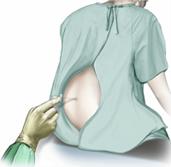
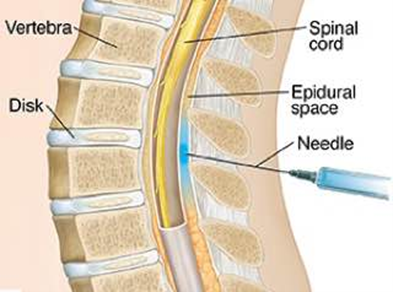
What is a spinal anaesthetic?<br />A spinal anaesthetic (or spinal) involves injecting local anaesthetics and other painkillers into the subarachnoid space (an area near your spinal cord). This numbs your nerves to give pain relief in certain areas of your body. A spinal can be used either on its own while you are awake, or together with sedation or a general anaesthetic. A spinal can also be used after an operation or procedure to give effective pain relief.<br />How does a spinal work?<br />The subarachnoid space is the bag of fluid that surrounds your spinal cord and the nerves that come out from it. Local anaesthetics and other painkillers are injected using a fine needle into this space.<br />How is a spinal given?<br />To insert the needle, your anaesthetist will ask you to either sit up or lie on your side.<br />Your anaesthetist will insert the needle and when they are certain that it is in the right position they will inject anaesthetic through it.<br />A spinal being given.<br />It should not be painful, although it can be uncomfortable.<br />The time that the spinal lasts for varies but is usually 1 to 3 hours. Your anaesthetist will put enough anaesthetic through the needle to make sure that it lasts longer than the expected length of the operation.<br /><br /><br /><br />What complications can happen?<br />There is a risk of significant permanent harm from a spinal.<br />• failure of the spinal<br />• low blood pressure<br />• headache<br />• allergic reaction to the equipment, materials or medication<br />• itching<br />• difficulty passing urine<br />• backache<br />• cardiovascular collapse (where your heart stops)<br />• unexpected high block, if the local anaesthetic spreads beyond the intended area<br />• infection around your spine<br />• nerve damage<br />• various other more serious problems have been reported with spinals, including spinal abscess and blood clots<br />• paralysis or death<br /><br />By: Dr. Hawraa Deyaa