داء المقوسات "داء القطط"
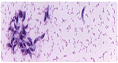
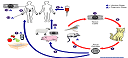
Toxoplasmosis<br />Prof. Dr. Saadya Hadi Humaydi <br /> Toxoplasmosis is considered to be a leading cause of death attributed to foodborne illness. More than 40 million men, women, and children in the U.S. However, women newly infected with Toxoplasma during or shortly before pregnancy and anyone with a compromised immune system should be aware that toxoplasmosis can have severe consequences. Causal Agent: Toxoplasma gondii is a protozoan parasite that infects most species of warm-blooded animals, including humans, and causes the disease toxoplasmosis. <br /> Life Cycle:<br /> The only known definitive hosts for Toxoplasma gondii are members of family <br />Felidae. Unsporulated oocysts are shed in the cat’s feces . Although oocysts are usually only shed for 1-3 weeks, large numbers may be shed. Oocysts take 1-5 days to sporulate in the environment and become infective. Intermediate hosts in nature (including birds and rodents) become infected after ingesting soil, water or plant material contaminated with oocysts . Oocysts transform into tachyzoites shortly after ingestion. These tachyzoites localize in neural and muscle tissue and develop into tissue cyst bradyzoites . Cats become infected after consuming intermediate hosts harboring tissue cysts . Cats may also become infected directly by ingestion of sporulated oocysts. Animals bred for human consumption and wild game may also become infected with tissue cysts after ingestion of sporulated oocysts in the environment . <br />Humans can become infected by any of several routes: <br />• Eating undercooked meat of animals harboring tissue cysts . <br />• Consuming food or water contaminated with cat feces or by contaminated environmental samples (such as fecal-contaminated soil or changing the litter box of a pet cat) . <br />• Blood transfusion or organ transplantation . <br />• Transplacentally from mother to fetus . <br />In the human host, the parasites form tissue cysts, most commonly in skeletal muscle, myocardium, brain, and eyes; these cysts may remain throughout the life of the host. Diagnosis is usually achieved by serology, although tissue cysts may be observed in stained biopsy specimens . Diagnosis of congenital infections can be achieved by detecting T. gondii DNA in amniotic fluid using molecular methods such as PCR <br /> Diagnosis<br /> A Toxoplasma-positive reaction, stained by immunofluorescence (IFA). <br />The diagnosis of toxoplasmosis is typically made by serologic testing. A test that measures immunoglobulin G (IgG) is used to determine if a person has been infected. If it is necessary to try to estimate the time of infection, which is of particular importance for pregnant women, a test which measures immunoglobulin M (IgM) is also used along with other tests such as an avidity test. Diagnosis can also be made by direct observation of the parasite in stained tissue sections, cerebrospinal fluid (CSF), or other biopsy material. These techniques are used less frequently because of the difficulty of obtaining these specimens. <br /> Disease<br /> Mother-to-child (congenital): if a woman has been infected before becoming pregnant, the unborn child will be protected because the mother has developed immunity. If a woman becomes newly infected with Toxoplasma during or just before pregnancy, she can pass the infection to her unborn baby (congenital transmission). The damage to the unborn child is often more severe the earlier in pregnancy the transmission occurs. <br />Potential results can be: <br />• A miscarriage <br />• A stillborn child <br />• A child born with signs of congenital toxoplasmosis (e.g., abnormal enlargement or smallness of the head) <br />Infants infected before birth often show no symptoms at birth but may develop them later in life with potential vision loss, mental disability, and seizures. <br /> Prevention & Control<br /> To prevent risk of toxoplasmosis and other infections from food: Cook food to safe temperatures. A food thermometer should be used to measure the internal temperature of cooked meat. Color is not a reliable indicator that meat has been cooked to a temperature high enough to kill harmful pathogens like Toxoplasma. Do not sample meat until it is cooked. <br />• Peel or wash fruits and vegetables thoroughly before eating. <br />• Wash cutting boards, dishes, counters, utensils, and hands with soapy water after contact with raw meat, poultry, seafood, or unwashed fruits or vegetables. <br />• Do not drink unpasteurized goat’s milk. <br />• Do not eat raw or undercooked oysters, mussels, or clams (these may be contaminated with Toxoplasma that has washed into seawater). <br /> Reduce Risk from the Environment<br />To reduce risk of toxoplasmosis from the environment: <br />• Avoid drinking untreated water. <br />• Wear gloves when gardening and during any contact with soil or sand because it might be contaminated with cat feces that contain Toxoplasma. Wash hands with soap and water after gardening or contact with soil or sand. <br />• Teach children the importance of washing hands to prevent infection. <br />• Keep outdoor sandboxes covered. <br />• Feed cats only canned or dried commercial food or well-cooked table food, not raw or undercooked meats. <br />• Ensure that the cat litter box is changed daily. The Toxoplasma parasite does not become infectious until 1 to 5 days after it is shed in a cat’s feces. <br />• If are pregnant or immunocompromised: <br />1. Avoid changing cat litter if possible. If no one else can perform the task, wear disposable gloves and wash your hands with soap and water afterwards. <br />2. Keep cats indoors to prevent them from hunting and reduce the chances they will become infected with Toxoplasma. <br />3. Do not adopt or handle stray cats, especially kittens. Do not get a new cat while there are pregnant or immunocompromised. <br />