تصميم الفلاتر لأنظمة الصرف تحت الأرض
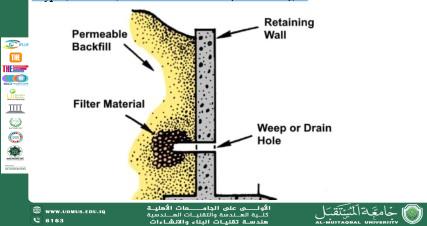
ا.د. نجاح مهدي لطيف<br />Underground drainage systems are essential for managing storm water, preventing flooding, <br />and protecting infrastructure. These systems often require filters to remove solid debris and <br />contaminants from runoff water before it reaches storm water drains, treatment facilities, or <br />natural bodies of water. Designing an efficient filter for underground drains is essential for <br />improving water quality and preventing blockages, ensuring long-term performance, and <br />minimizing maintenance needs. <br />This article outlines the key considerations for filter design in underground drainage systems, <br />including filter types, materials, and installation techniques as in Fig.1. <br /><br /> <br /><br />Fig.1 Filter Installation <br />1. Purpose of Filters in Underground Drainage Systems <br />Filters in underground drainage systems serve the following primary purposes: <br />1- Sediment Removal: Filters prevent sediment from entering the drainage system, which <br />can cause blockages and reduce the system’s efficiency. <br />2- Pollutant Reduction: Filters help remove pollutants such as oils, heavy metals, and other <br />contaminants that may be present in storm water runoff. <br />3- Maintenance of Drainage Efficiency: Filters help maintain the flow rate by preventing <br />clogging of the pipes and drains with debris. <br />4- Environmental Protection: By filtering out contaminants, filters play a significant role <br />in protecting local water bodies from pollution. <br /><br /><br />2. Types of Filters Used in Underground Drains <br />There are several types of filters commonly used in underground drainage systems, <br />depending on the specific needs of the drainage design and the type of contaminants being <br />filtered. These include: <br />a) Sediment Filters <br />These filters are designed to capture large particles and debris, such as leaves, gravel, and <br />sand. Sediment filters are often the first line of defense in storm water filtration systems. <br />b) Oil and Grease Separators <br />These filters remove oils and fats from the water, which are common contaminants in urban <br />runoff from vehicles and industrial areas. The separator works on the principle of gravity, where <br />lighter oils rise to the surface, allowing the water to flow through the filter. <br /><br /> <br /><br />c) Carbon Filters <br />Activated carbon filters are used to remove dissolved contaminants, such as volatile organic <br />compounds (VOCs) and odors, from storm water runoff. Carbon filters work through adsorption, <br />where contaminants are attracted and held by the surface of the carbon material. <br />d) Bio-retention Filters <br />These filters use vegetation and soil to filter and treat stormwater. They are an example of <br />green infrastructure and are designed to allow water to pass through layers of soil and plants, <br />removing pollutants along the way. <br />e) Permeable Pavement Filters <br />Permeable pavements allow water to pass through and infiltrate the soil below while filtering <br />out larger particles and debris. These systems often integrate with underground drainage systems <br />to manage runoff. <br />3. Key Design Considerations <br />When designing a filter for underground drains, several factors must be taken into account to <br />ensure its effectiveness and long-term functionality. <br />a) Flow Rate and Capacity <br />One of the primary considerations when designing a filter is the expected flow rate. The filter <br />should be designed to handle peak flow during storms while maintaining adequate filtration <br /><br /><br />capacity. This includes calculating the average and maximum storm water flows based on local <br />climate conditions and drainage area size. <br />b) Maintenance Accessibility <br />Underground filters must be easy to maintain, as they will accumulate debris over time. <br />Proper access points should be incorporated into the design for routine inspections, cleaning, and <br />replacement of filter media if necessary. <br />c) Material Selection <br />The choice of materials for the filter depends on the type of contaminants being filtered. <br />Materials should be durable, resistant to clogging, and able to handle the environmental <br />conditions of underground systems. Common materials include sand, gravel, activated carbon, <br />and synthetic filter fabrics. <br /><br /> <br /><br /> <br /><br />d) Durability <br />The filter media should be designed to withstand the underground environment, including <br />exposure to moisture, chemicals, and temperature changes. Filters made of strong materials can <br />ensure longer service life and reduce the need for frequent replacements. <br />e) Hydraulic Performance <br />The filter should not restrict water flow significantly, as this could lead to water backup and <br />flooding. The hydraulic performance of the filter should be carefully designed to ensure that it <br />operates efficiently under varying flow conditions. <br />f) Environmental Impact <br />Sustainable and environmentally friendly materials and design methods should be prioritized <br />in filter construction. For example, using locally sourced natural materials, avoiding harmful <br />chemicals, and incorporating bio-retention systems can help reduce the ecological footprint of <br />underground drainage systems. <br />4. Installation Techniques <br />Proper installation of filters in underground drainage systems is crucial for ensuring their <br />efficiency. The installation process typically involves the following steps: <br />1. Preliminary Assessment: Before installing the filter, an assessment of the site conditions <br />is essential. This includes analyzing soil types, drainage areas, and expected flow rates. <br /><br /><br />2. Excavation: The location for the filter system is excavated to the required depth, <br />considering both the filter system's size and necessary access points. <br />3. Filter Placement: Once the excavation is complete, the filter media or components are <br />placed according to the design specifications. The system should be level and securely <br />positioned. <br />4. Connection to Drainage Pipes: The filter must be properly integrated into the drainage <br />network, ensuring water flows through the filter before reaching the underground drains. <br />5. Backfilling and Compaction: After installation, the system is backfilled with <br />appropriate materials, and compaction is performed to ensure stability. <br />6. Testing: Once the installation is complete, the system should be tested for proper <br />operation, ensuring it can handle expected flows without excessive clogging or <br />resistance. <br />5. Challenges and Solutions <br />While filter systems provide significant benefits to underground drains, there are some <br />common challenges that need to be addressed: <br />1- Clogging: Filters can become clogged over time, especially in areas with high levels of <br />debris. Regular maintenance, including cleaning and media replacement can help mitigate <br />this problem. <br />2- Cost: High-quality filter materials and installation can be expensive. However, investing <br />in durable filters can save costs in the long run by reducing the need for frequent repairs <br />and maintenance. <br />3- Space Constraints: Underground systems often face space limitations, which can affect <br />filter design. Innovative filter designs, such as modular systems or compact bio-retention <br />filters, can help overcome space challenges. <br />6. Conclusion <br />Filter design is an essential component of underground drainage systems, providing effective <br />means of removing contaminants and preventing blockages. A well-designed filter system not <br />only protects the environment but also ensures that underground drainage systems operate <br />efficiently for years to come. By considering factors such as flow rate, material selection, <br />maintenance, and environmental impact, engineers can design filters that meet both performance <br />and sustainability goals. <br />References: <br /><br /><br />- S. A. Ead, Yehia Abdelmonem, E. S. El- Mergawey, “STUDY OF THE CHARACTERISTICS OF <br />DRAINAGE FILTERS” Conference: 18th Canadian Hydrotechnical Conference, Challenges for <br />Water Resources Engineering in a Changing World, August 22 – 24, 2007 <br />- Essien, A.E., Guo, Y., Khafagy, M. et al. Design and hydrologic performance estimation of highway filter <br />drains using a novel analytical probabilistic model. Sci Rep 14, 2350 (2024). <br />https://doi.org/10.1038/s41598-024-52760-7 <br />- Kamal Radwan, Ibrahim MclwaJli, Abmed Al-SArawy, “A Study of Filter Drain Performance <br />for the Pollution Control of Urban Runoff” MansOllra Engineering Journal, (tv1EJ), Vol. 34, <br />No.2 , June 2009