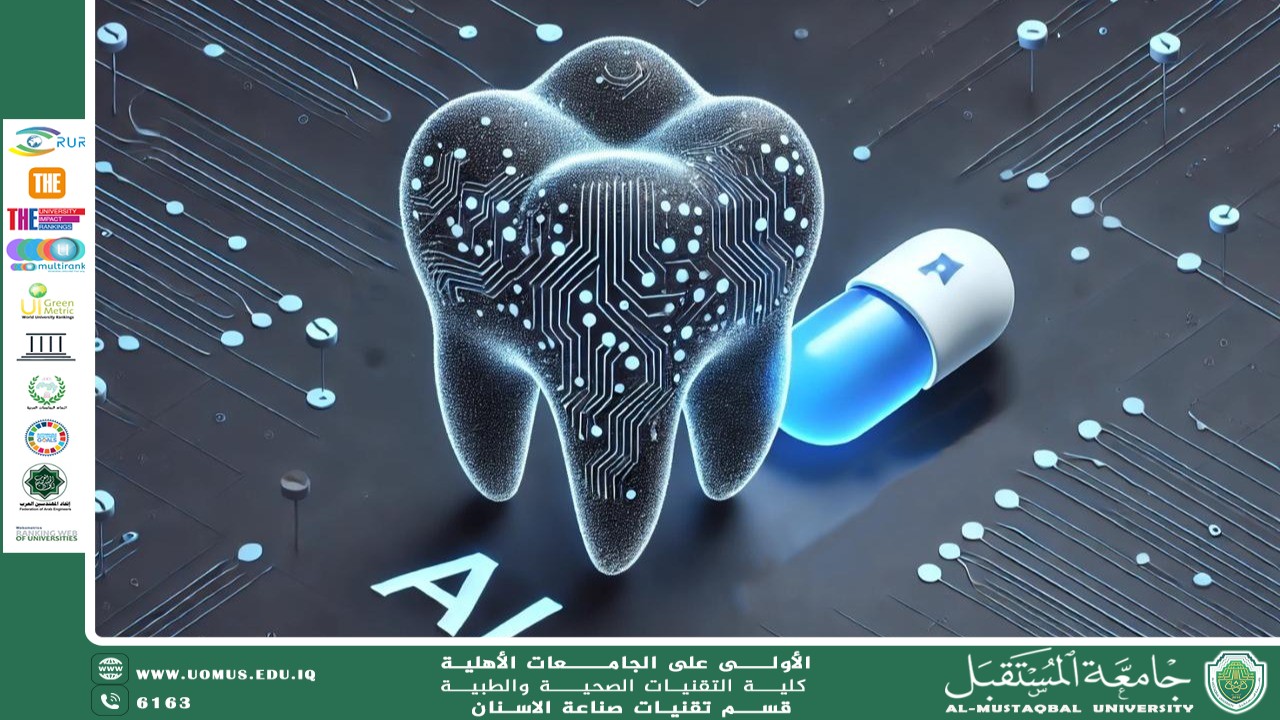
مقالة علمية بعنوان Can AI Solve Dentistry's Antibiotic Dilemma
تحقيقا للهدف الثالث من اهداف التنمية المستدامة وهو الصحة الجيدة والرفاه قام قسم تقنيات صناعة الاسنان بعمل مقالة علمية وتحت عنوان Can AI Solve Dentistry's Antibiotic Dilemma للسيدة د.حنين عامر نعمة وذلك يوم <br />الثلاثاء الموافق 25/3/2025 <br /><br />As dentists, we often face difficulties in prescribing antibiotics correctly. Artificial Intelligence (AI) helps by examining patient information, medical history, symptoms, and local antibiotic resistance patterns. AI can suggest whether antibiotics are truly needed and select the best antibiotic to use. This is important because dentists prescribe around 10% of antibiotics outside hospitals, and many of these prescriptions may be unnecessary, according to the CDC in 2024.<br />In 2023, a review showed that AI methods could reduce antibiotic use by up to 67%, particularly in choosing antibiotics like ciprofloxacin or levofloxacin, compared to human decisions. Another study showed AI could predict prescription errors with 81% precision, demonstrating that AI could significantly improve prescribing accuracy. Integrating AI into your dental practice could help reduce unnecessary antibiotics and fight antimicrobial resistance (AMR).<br />Enhancing Non-Antibiotic Treatments with AI<br />AI isn't only useful for antibiotics, it also supports treatments that don't use antibiotics, such as antimicrobial photo-sonodynamic therapy (aPSDT). This treatment uses light and sound to eliminate bacteria, and AI makes it more effective by predicting bacterial resistance, simulating bacterial changes, and customizing the treatment for each patient.<br />A study in 2024 highlighted how AI can improve aPSDT by identifying the best treatment settings for resistant bacteria and tracking the response in real-time. For diseases like periodontitis, where antibiotics are often used, AI can help reduce drug dependence and slow down AMR. Additionally, AI supports remote monitoring through the Internet of Dental Things (IoDT), decreasing the need for clinic visits and antibiotic prescriptions.<br />Early Detection of Dental Infections Using AI<br />Early detection of dental problems is key to avoiding unnecessary antibiotics. AI excels at identifying dental diseases before they become serious. By analyzing X-rays and photos of the mouth, AI can detect caries, periodontal disease, and periapical lesions with high accuracy, often better than human dentists.<br />In 2023, research showed that AI is highly accurate in diagnosing dental conditions. Another study emphasized AI’s ability to detect tooth decay, a common condition affecting 3.5 billion people worldwide, especially children and adults. Early detection allows dentists to use treatments like fillings or cleaning instead of antibiotics, directly fighting AMR.<br />Tracking Antibiotic Resistance Patterns with AI<br />AI can monitor and predict antibiotic resistance by analyzing bacteria samples and testing how bacteria respond to antibiotics. Although not yet widely used in dentistry, AI has great potential to study oral bacteria and detect resistance genes early.<br />A 2020 study highlighted the importance of oral bacteria in antibiotic resistance, suggesting AI could be used to identify resistance early. Additionally, general research from 2019 showed AI could accurately predict resistance based on genetic data, a method that could also be applied to oral health. Using AI to understand resistance can guide dentists toward treatments without antibiotics for patients at high risk.<br />Why AI Matters for Preventing AMR in Dentistry<br />Antimicrobial resistance (AMR) is a major global health threat. Dentistry significantly contributes to AMR because antibiotics are frequently used for common infections like gum disease or abscesses. Overusing antibiotics creates resistant bacteria, increasing healthcare costs and complicating treatments. AI, which mimics human thinking, can help dentists address these issues effectively.<br />Benefits of AI in Dentistry:<br />• Improved Prescriptions: AI predicts bacterial infections accurately and reduces unnecessary antibiotics. Studies show AI can reduce certain antibiotic prescriptions by 67% and predict prescription errors with 81% accuracy.<br />• Early Disease Detection: AI detects caries and periodontal diseases early, significantly reducing antibiotic use. Tools like CariesNet and Denti.AI® enhance accuracy and treatment.<br />• Resistance Tracking: AI analyses oral bacteria to identify resistance genes early. General research showed up to 99.7% accuracy in detecting antibiotic resistance, offering promising potential in dentistry.<br />Important Numbers:<br />• Antibiotic Use: AI reduced the use of ciprofloxacin from 34% to 11%, with up to 96% accuracy in identifying prescription errors. • Caries Detection: AI addresses dental decay affecting 3.5 billion people worldwide. • Resistance Detection: AI achieved up to 99.7% accuracy in identifying resistant bacteria.<br />