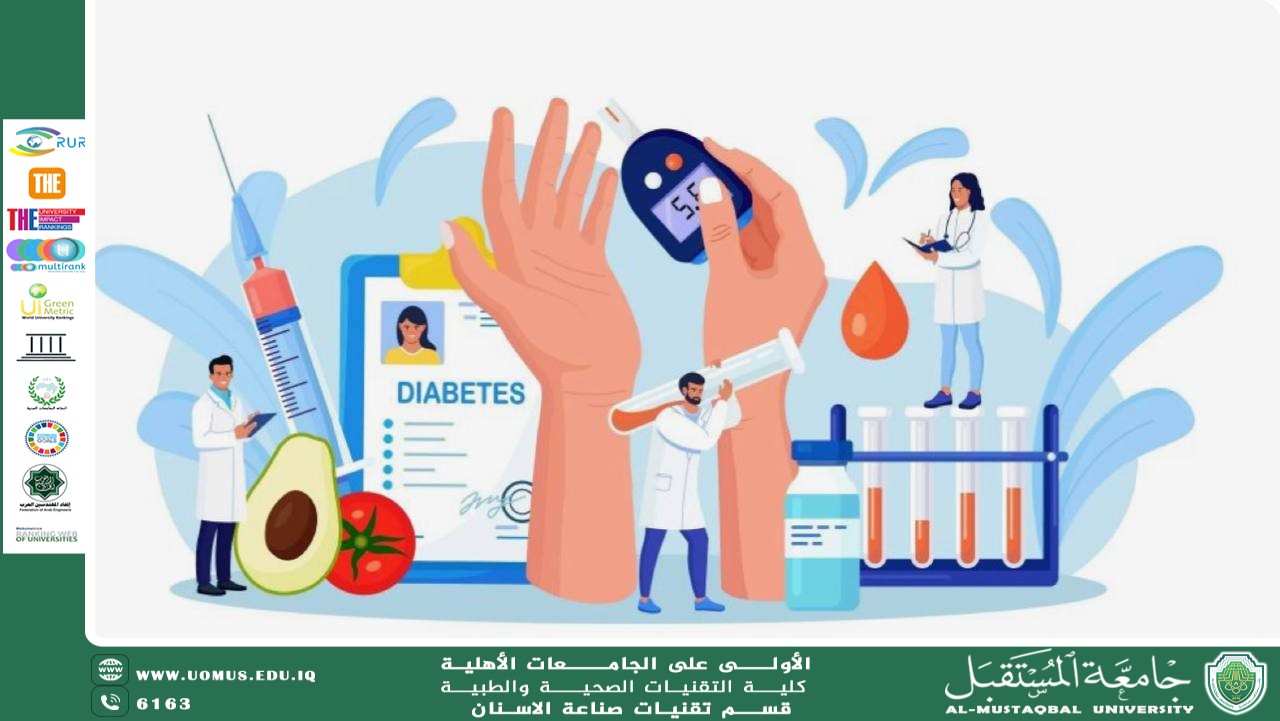
مقاله علمية للدكتوره نور مهند عباس بعنوان Diabetes mellitus
تحقيقا للهدف الثالث من اهداف التنمية المستدامة وهو الصحة الجيدة والرفاه قام قسم تقنيات صناعة الاسنان بعمل مقالة علمية وتحت عنوان Can AI Solve Dentistry's Antibiotic Dilemma للسيدة د. نور مهند عباس وذلك يوم <br />الثلاثاء الموافق 25/3/2025 <br />Diabetes mellitus <br /><br />مقاله علمية للدكتوره نور مهند عباس بعنوان Diabetes mellitus <br /> <br />(DM) is a chronic metabolic disorder characterized by high blood glucose levels (hyperglycemia) due to insufficient insulin production, impaired insulin action, or both. It is a major global health concern, affecting millions of people worldwide and increasing the risk of severe complications such as heart disease, kidney failure, and nerve damage.<br /><br />⸻<br /><br />1. Types of Diabetes Mellitus<br /><br />There are several types of diabetes, each with distinct causes and risk factors:<br /><br />1.1 Type 1 Diabetes (T1DM)<br /> • Cause: Autoimmune destruction of insulin-producing beta cells in the pancreas.<br /> • Onset: Commonly diagnosed in children and young adults.<br /> • Treatment: Requires lifelong insulin therapy.<br /><br />1.2 Type 2 Diabetes (T2DM)<br /> • Cause: Insulin resistance and gradual loss of insulin production.<br /> • Onset: More common in adults but increasingly seen in younger individuals due to lifestyle factors.<br /> • Risk Factors: Obesity, sedentary lifestyle, family history, and poor diet.<br /> • Treatment: Lifestyle modifications, oral medications, and sometimes insulin therapy.<br /><br />1.3 Gestational Diabetes Mellitus (GDM)<br /> • Cause: Hormonal changes during pregnancy leading to insulin resistance.<br /> • Onset: Occurs during pregnancy and usually resolves after childbirth, but increases the risk of developing T2DM later.<br /><br />1.4 Other Specific Types<br /> • Maturity-Onset Diabetes of the Young (MODY): A genetic form of diabetes.<br /> • Secondary Diabetes: Caused by conditions such as pancreatitis or the use of certain medications (e.g., corticosteroids).<br /><br />⸻<br /><br />2. Causes and Risk Factors<br /><br />2.1 Genetic Factors<br /> • Family history plays a role in both T1DM and T2DM.<br /> • Certain genetic mutations are linked to specific types of diabetes.<br /><br />2.2 Lifestyle Factors (Mainly in T2DM)<br /> • Unhealthy Diet: High intake of processed foods, sugar, and saturated fats.<br /> • Lack of Physical Activity: Leads to obesity and insulin resistance.<br /> • Obesity: Strongly linked to T2DM, particularly excess abdominal fat.<br /><br />2.3 Autoimmune and Environmental Triggers (Mainly in T1DM)<br /> • Viral infections (e.g., Coxsackievirus, enteroviruses) may trigger an autoimmune attack on pancreatic beta cells.<br /><br />⸻<br /><br />3. Symptoms of Diabetes<br /><br />Common symptoms of diabetes include:<br /> • Increased thirst (polydipsia)<br /> • Frequent urination (polyuria)<br /> • Unexplained weight loss (more common in T1DM)<br /> • Extreme fatigue<br /> • Blurred vision<br /> • Slow healing of wounds<br /><br />جامعة المستقبل الجامعة الاولى في العراق