تم نشر مقالة علمية في قسم تقنيات التخدير للتدريسسة( م.م فاطمة صفاء فاهم عبد الامير مرجان) بعنوان The Importance of Gallium Metal as A Biomaterial
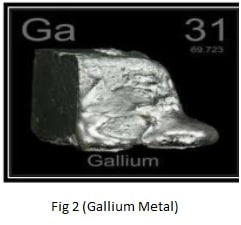
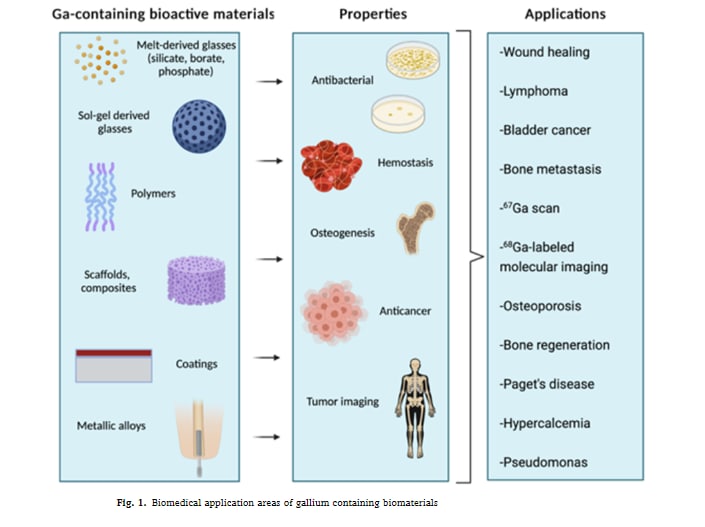
<br />The Importance of Gallium Metal as A Biomaterial<br />Solid gallium is a blue-gray metal with orthorhombic crystalline structure, very pure gallium has a stunning silvery color. Gallium is solid at normal room temperatures, but as well as mercury, cesium, and rubidium it becomes liquid when heated slightly. Solid gallium is soft enough to be cut with a knife. It is stable in air and water; but it reacts with and dissolves in acids and alkalis.<br />The incorporation of gallium into bioactive materials has been reported to enhance osteogenesis, to influence blood clotting, and to induce anti-cancer and anti-bacterial activity. Gallium-doped biomaterials prepared by various techniques include melt-derived and sol-gel-derived bioactive glasses, calcium phosphate bioceramics, metals and coatings. In this review, we summarize the recently reported developments in antibacterial, anticancer, osteogenesis, and hemostasis properties of Ga-doped biomaterials and briefly outline the mechanisms leading to Ga biological effects. The key finding is that gallium addition to biomaterials has great potential for treating bone-related diseases since it can be efficiently transferred to the desired region at a controllable rate. Besides, it can be used as a potential substitute for antibiotics for the inhibition of infections during the initial and advanced phases of the wound healing process. Ga is also used as an anticancer agent due to the increased concentration of gallium around excessive cell proliferation (tumor) sites. Moreover, we highlight the possibility to design different therapeutic approaches aimed at increasing the efficiency of the use of gallium containing bioactive materials for multifunctional applications.<br />