مقالة بعنوان "Short Article on Recent Developments in Drug Delivery Devices: Innovations and Applications"للتدريسي م.م ماهر رحمن عبد الامير
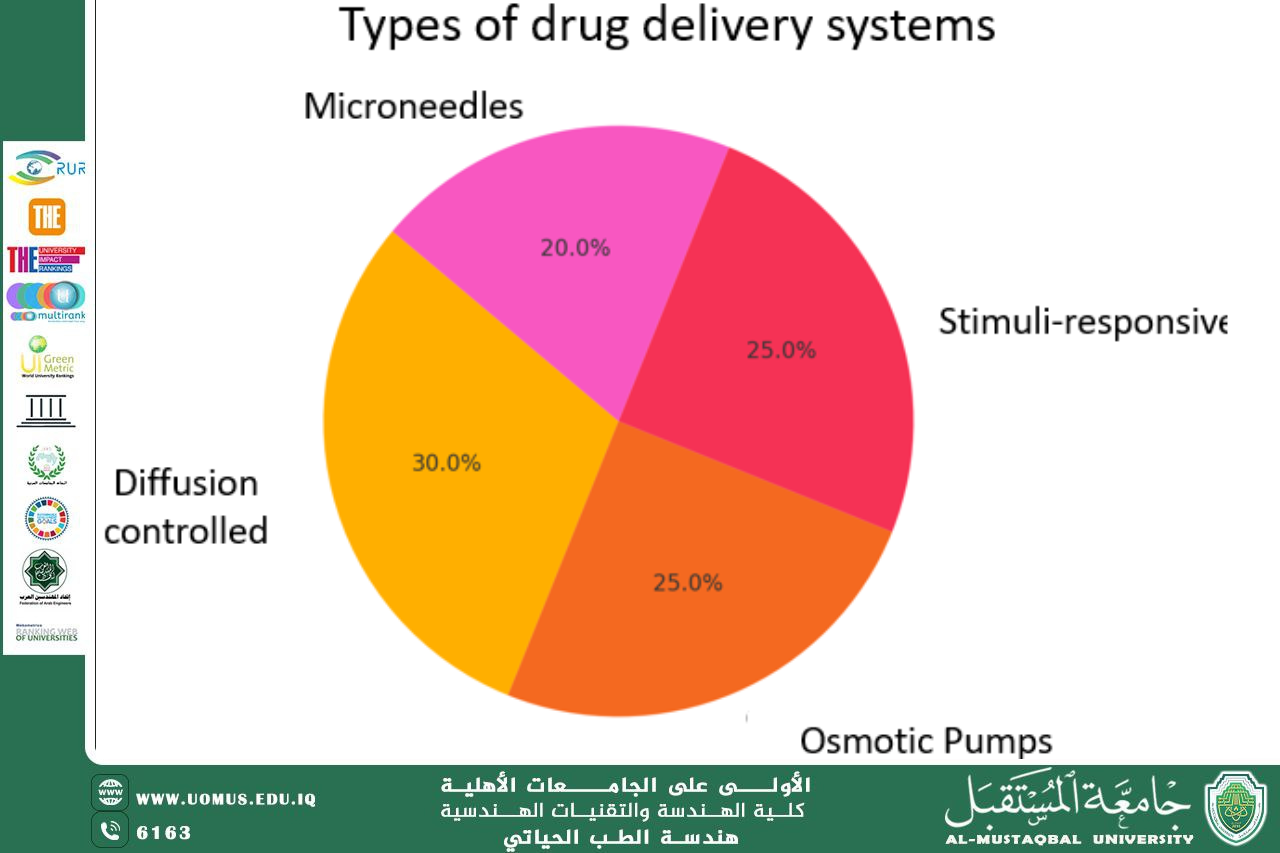
<br />Drug delivery devices have significantly enhanced therapeutic outcomes by enabling controlled, sustained, and targeted drug release. These devices improve drug efficacy, reduce side effects, and increase patient compliance, making them a vital component in modern healthcare.<br />Types of Drug Delivery Devices<br />Drug delivery devices can be categorized based on their release mechanisms. Diffusion-controlled systems, such as transdermal patches, release drugs gradually as they diffuse from the device into the body [1]. Osmotic pumps provide continuous, steady drug release by utilizing osmotic pressure [2]. Stimuli-responsive systems, which respond to changes in pH, temperature, or light, allow for highly targeted drug delivery, particularly in cancer therapy [3]. Additionally, microneedles enable painless, efficient transdermal drug delivery, making them ideal for vaccines and biologics [4].<br />Applications<br />These devices have found significant applications in cancer treatment, chronic disease management, and pain relief. In oncology, targeted drug delivery systems ensure chemotherapy agents are concentrated at the tumor site, reducing systemic toxicity [5]. Insulin pumps for diabetes provide continuous medication administration, improving patient compliance and management [6].<br />Future Directions<br />Despite challenges like device stability and immune responses, ongoing research is focused on integrating diagnostic and therapeutic capabilities into a single device, paving the way for personalized medicine [7].<br />References<br />[1] A. S. Lee et al., "Controlled drug delivery: Systems and technologies," Journal of Drug Delivery Science and Technology, vol. 34, pp. 45-56, 2017.<br />[2] R. Langer and J. P. Folkman, "Polymers for sustained drug release," Science, vol. 211, no. 4482, pp. 486-489, 1981.<br />[3] M. P. Neupane et al., "Stimuli-responsive drug delivery systems," Advanced Drug Delivery Reviews, vol. 64, no. 6, pp. 364-383, 2012.<br />[4] P. G. Donovan et al., "Microneedles in drug delivery," Advanced Drug Delivery Reviews, vol. 57, no. 4, pp. 524-532, 2019.<br />[5] M. Zhang et al., "Nanoparticles in drug delivery systems for cancer therapy," Journal of Controlled Release, vol. 162, no. 1, pp. 146-156, 2017.<br />[6] D. A. Huang et al., "Insulin pumps for diabetes management," Journal of Diabetes Science and Technology, vol. 9, no. 2, pp. 324-333, 2015.<br />[7] H. T. Wang et al., "Future of drug delivery systems: Diagnostic and therapeutic integration," Nature Reviews Drug Discovery, vol. 14, no. 7, pp. 439-450, 2015.<br />