ضمن أهداف التنمية المستدامة مقالة علمية لطلبة المرحلة الثانية من كلية الصيدلة بعنوان (Pseudomonas aeruginosa)
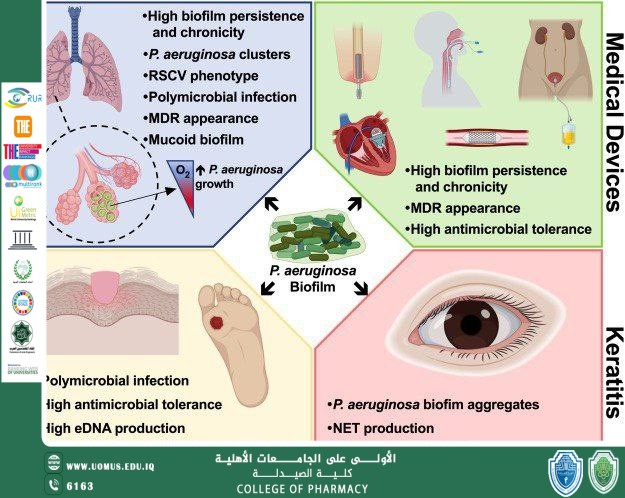
بقلم الطالبة :-<br />نور قاسم حميد<br />سارة كميل مزهر<br />صيدلة /مرحلة ثالثة<br /><br />Pseudomonas aeruginosa<br /><br />Pseudomonas aeruginosa is a Gram-negative bacterium widely distributed in moist environments and is considered one of the most prominent causes of opportunistic infections, especially in patients with diabetes, cystic fibrosis, immunodeficiency, or those hospitalized. It is distinguished by its high ability to resist antibiotics, making its treatment a clinical challenge.<br /><br />Environmental and Practical Characteristics and Distribution<br />This bacterium lives in soil and water and prefers moist places such as wash basins and toilets. It can colonize the skin and mucous membranes without causing disease, but becomes pathogenic under certain conditions.<br />In Babil Governorate, isolates of P. aeruginosa have been detected in drinking water and household tanks, indicating a real environmental infection risk. Practically, this means that daily use of water for drinking or bathing may be a direct source of infection, especially in the presence of poor network sterilization or lack of regular testing.<br />Sterilization procedures should be strengthened, water quality monitored, and residents educated about the dangers of contaminated water.<br /><br />Pseudomonas aeruginosa represents an escalating health challenge in Iraq, requiring integration between environmental prevention, early diagnosis, and targeted antibiotic treatment.<br /><br />Infections and Predisposing Factors<br />P. aeruginosa causes a wide range of infections, including swimmer’s ear and folliculitis, eye, lung, and urinary tract infections, bacteremia, and infections of bones and heart valves.<br />The risk increases with the use of catheters, respiratory devices, or in cases of immunodeficiency.<br /><br />Diagnosis and Treatment<br />The disease is diagnosed by culturing samples from the infected site, and the appropriate antibiotic is determined through sensitivity testing.<br />Mild cases are treated topically, while severe cases require intravenous antibiotics such as Ceftazidime or Ciprofloxacin, and sometimes a combination due to multidrug resistance.<br /><br />Scientific Source<br />Bush, L. M., & Vazquez-Pertejo, M. T. (Reviewed by: Tesini, B. L.). Pseudomonas Infections. MSD Manual.<br /><br /><br /><br />جامعة المستقبل الجامعة الأولى في العراق<br />كلية الصيدلة الأولى على الكليات الأهلية