
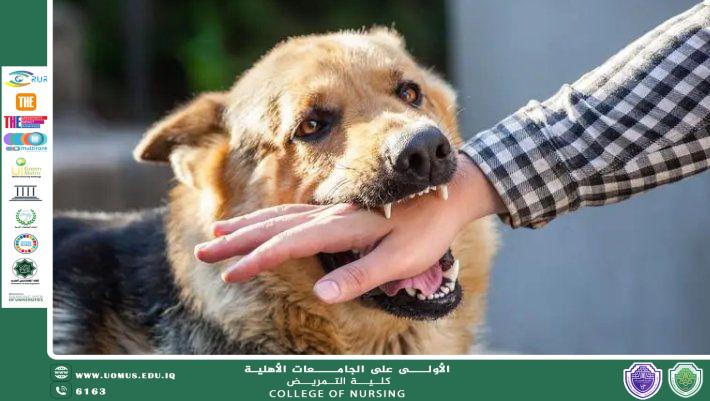
Rabies Disease
28/12/2025 Share :
The phenomenon of stray dogs has recently become widespread, posing a significant concern for citizens and residents due to the serious harm they can cause. Rabies, a viral infection affecting the central nervous system, can lead to a deterioration in the health of individuals bitten by these stray dogs. The virus is typically transmitted through the saliva of infected animals, usually via bites or scratches. Once symptoms appear, the disease is nearly 100% fatal. Therefore, rapid preventative training is the only "lifeline." Dogs (the primary source of human infections globally), cats, cows, foxes, bats, and wolves are not the only carriers. It has become imperative to raise public awareness about the dangers of this disease and to educate people about immediate health measures (in case of a bite). Upon being bitten or scratched by a suspected infected animal, the following health measures should be followed: Wash the wound immediately with soap and water for at least 15 minutes, as soap helps break down the virus's fatty membrane. Then, use an alcohol-based or povidone-iodine antiseptic to disinfect the affected area. Afterward, go to the hospital, even if no symptoms are present, because treatment must begin before the virus reaches the brain. It is also advised not to suture bite wounds except in extreme cases, to allow the virus to escape and prevent it from becoming trapped within the tissues. Regarding vaccines and treatment protocols, vaccines are divided into two types depending on the individual's condition: The first type is for post-exposure prophylaxis (for previously unvaccinated individuals). This vaccine contains antibodies (Rabies Immunoglobulin) which are administered on the day of infection (day 0) around the wound area to locally inactivate the virus. Following this, a series of vaccinations is given intramuscularly (usually in the shoulder muscle) according to the schedule established by the World Health Organization (WHO). It is administered in four doses:
First dose: Day 0 (day of the bite).
Second dose: Day 3.
Third dose: Day 7.
Fourth dose: Day 14.
(A fifth dose is optional in some medical protocols and is given on day 28). The second type is for pre-exposure prophylaxis (for high-risk groups):
It is given to veterinarians, laboratory workers, or travelers to endemic areas.
It usually consists of three doses administered on days 0, 7, and 21 or 28. For general prevention, pets should be vaccinated, and stray animals should be avoided. Children should be taught not to approach unfamiliar animals, even if they appear calm. It is also important to note that the incubation period (the time from the bite until the onset of symptoms) usually ranges from one to three months, but it may be shorter if the bite is near the head or neck. Finally, caution should be exercised regarding this viral disease, and proper health procedures should be followed if bitten by a stray dog to avoid serious complications and to ensure the continued health of individuals and the community.
Al-Mustaqbal University is the first university in Iraq.
الهدف الثالث من اهداف التنمية المستدامة -الصحة الجيدة والرفاه