Scientific Article by Head of the Department of Medical Biochemistry, Prof. Dr. Nasser Abdul-Hassan Nasser Title: The Role of Medical Biochemistry in Personalized Medicine
28/12/2025 Share :
estabraq Arif, [12/27/2025 10:42 AM]
Scientific Article by Head of the Department of Medical Biochemistry, Prof. Dr. Nasser Abdul-Hassan Nasser
Title: The Role of Medical Biochemistry in Personalized Medicine
Abstract
Modern medicine is undergoing an accelerated transformation,fueled by scientific advancements in various fields, with medical biochemistry standing as a cornerstone for understanding the chemical processes within the human body. This discipline has significantly contributed to the emergence of personalized medicine, an approach that aims to provide healthcare tailored to each individual based on their unique genetic and biochemical profile, moving beyond traditional one-size-fits-all treatments. This article explores the fundamental concepts of medical biochemistry, its integral role in enabling personalized medicine, and the future prospects of this revolutionary approach.
Introduction: From Generalized to Personalized Healthcare
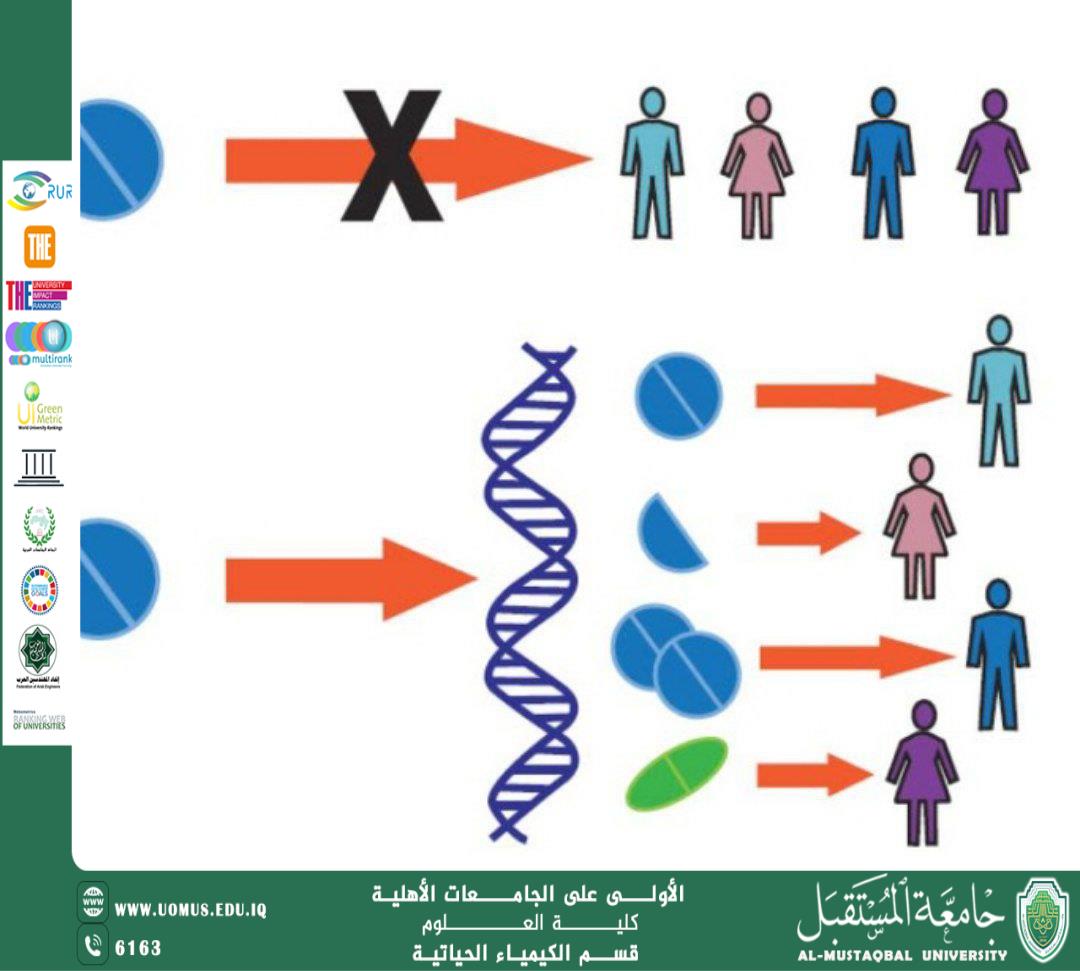
The traditional model of medicine often operates on a standardized approach. However, individuals respond differently to diseases and treatments due to variations in their biochemistry and genetics. Personalized medicine represents a paradigm shift, utilizing detailed molecular information about a patient to guide the prevention, diagnosis, and treatment of disease. At the heart of this shift is medical biochemistry, the science that deciphers the chemical language of life, from enzyme activity and hormone function to protein synthesis and genetic expression.
The Foundational Role of Medical Biochemistry
Medical biochemistry provides the essential toolkit for personalized medicine by:
· Decoding Disease Mechanisms: It studies the biochemical alterations in cells and tissues that underlie diseases, such as insulin resistance in diabetes or metabolic disorders leading to liver disease.
· Identifying Biomarkers: It discovers and validates biomarkers—measurable molecular indicators (like specific proteins or genetic mutations)—that can signal the presence of a disease, predict its progression, or indicate a patient's likely response to a therapy. For example, the HER2 protein is a critical biomarker for selecting breast cancer treatment.
· Enabling Molecular Diagnostics: Advanced biochemical techniques form the basis of molecular diagnostics, which analyze DNA, RNA, and proteins for precise disease detection. Techniques like Polymerase Chain Reaction (PCR) allow for the amplification and analysis of minute genetic material, enabling the diagnosis of infectious diseases, genetic disorders, and cancers with high sensitivity.
Key Applications of Biochemistry in Personalizing Treatment
The application of biochemical principles facilitates personalized interventions in several critical areas:
Pharmacogenomics: This field, a direct fusion of pharmacology and genetics, studies how a person's genetic makeup affects their response to drugs. Biochemical analysis of enzymes responsible for drug metabolism (like cytochrome P450) can predict whether a patient will metabolize a drug too quickly, too slowly, or experience adverse effects, allowing for precise dosage adjustments or alternative drug selection.
Targeted Cancer Therapy
Instead of broad chemotherapy,treatment is guided by the specific biochemical signature of the tumor.
· Example: The presence of the HER2 biomarker dictates the use of targeted therapies in breast cancer.
Management of Metabolic and Genetic Diseases
Personalized strategies are based on understanding the specific biochemical defect.
· Example: In cystic fibrosis, treatment can be tailored based on the exact genetic mutation affecting chloride channels.
Cardiology and Chronic Disease
Dosage and drug choice can be optimized based on individual biochemistry.
· Example: Genetic testing can guide the use of blood thinners or statins to maximize efficacy and minimize side effects.
Tools and Techniques: The Biochemical Engine of Personalization
Personalized medicine relies on sophisticated technologies rooted in biochemistry:
· Genomic Sequencing: Determines the complete DNA sequence of an individual, identifying disease-related mutations and genetic predispositions. Costs have decreased dramatically, making it more accessible for clinical use.
· Proteomics and Metabolomics: Study the entire set of proteins and small-molecule metabolites in a biological sample, providing a dynamic snapshot of an individual's physiological state.
· Bioinformatics and Artificial Intelligence (AI): These tools are indispensable for analyzing the vast, complex datasets generated by biochemical and genomic tests. AI algorithms can identify patterns to predict disease risk and recommend optimal treatment pathways.
Challenges and Future Directions
Despite its promise, personalized medicine faces hurdles:
· High Costs and Accessibility: Advanced genomic testing and targeted therapies can be expensive, potentially limiting access.
· Data Interpretation and Privacy: Managing and securely interpreting massive amounts of sensitive genetic data is a significant technical and ethical challenge.
· Need for Interdisciplinary Integration: Successful implementation requires seamless collaboration between biochemists, clinicians, genetic counselors, and bioinformaticians.
The future is geared toward greater integration and predictive power. Emerging areas include the use of biochemistry in regenerative medicine, such as developing bioactive "bio-inks" for 3D printing of tissues. Furthermore, AI-powered platforms that integrate electronic health records with genomic and biochemical data are set to become central to clinical decision-making, making personalized prevention and treatment more proactive and precise.
Conclusion
Medical biochemistry is the fundamental science that makes personalized medicine possible. By translating the molecular details of human health and disease into actionable clinical insights, it is transforming healthcare from a reactive, generalized system into a proactive, individualized one. As research continues to unravel the complexity of human biochemistry and technology becomes more integrated, personalized medicine is poised to become the standard of care, ultimately leading to more effective treatments, fewer side effects, and improved health outcomes for every patient.
Al-Mustaqbal University
Ranked First among Private Iraqi Universities