
The Role of Medical Biochemistry in Early Molecular Diagnosis of Diseases Prof. Dr. Nasser Abdul-Hassan Nasser Head of the Department of Biochemistry Al-Mustaqbal University
28/12/2025 Share :
Medical Biochemistry is considered one of the fundamental pillars of modern medicine, as it links the chemical reactions occurring within cells and tissues to human health status. With the rapid advancement of molecular technologies, the role of medical biochemistry has become increasingly prominent in early molecular diagnosis of diseases. This type of diagnosis is based on detecting molecular changes before the appearance of clinical symptoms, thereby improving treatment outcomes and preventive strategies.
First: Concept of Early Molecular Diagnosis
Early molecular diagnosis is a modern approach that relies on the analysis of biological molecules such as DNA, RNA, proteins, and metabolites in order to detect abnormal changes associated with disease development at its earliest stages. The importance of this diagnostic approach lies in its ability to identify diseases before their progression, allowing for early medical intervention and reducing complications.
Second: Role of Medical Biochemistry in Understanding the Molecular Basis of Diseases
Medical biochemistry plays a central role in explaining the molecular mechanisms underlying various diseases, including:
Genetic mutations leading to inherited disorders.
Alterations in enzyme activity and metabolic pathways.
Structural or functional abnormalities in proteins.
Understanding these molecular alterations helps in identifying molecular biomarkers that are later utilized for early diagnosis.
Third: Biomarkers and Their Role in Early Diagnosis
Biomarkers are measurable biological molecules that indicate a specific physiological or pathological condition. Medical biochemistry contributes to:
Discovering and identifying disease-specific biomarkers.
Developing accurate analytical methods to measure these biomarkers in blood, urine, or tissues.
For example, measuring certain proteins or enzymes in blood is used for early detection of cardiovascular diseases, while specific molecular markers are employed in the early diagnosis of cancer.
Fourth: Molecular Techniques Based on Medical Biochemistry
Advances in medical biochemistry have led to the development of several modern diagnostic techniques, including:
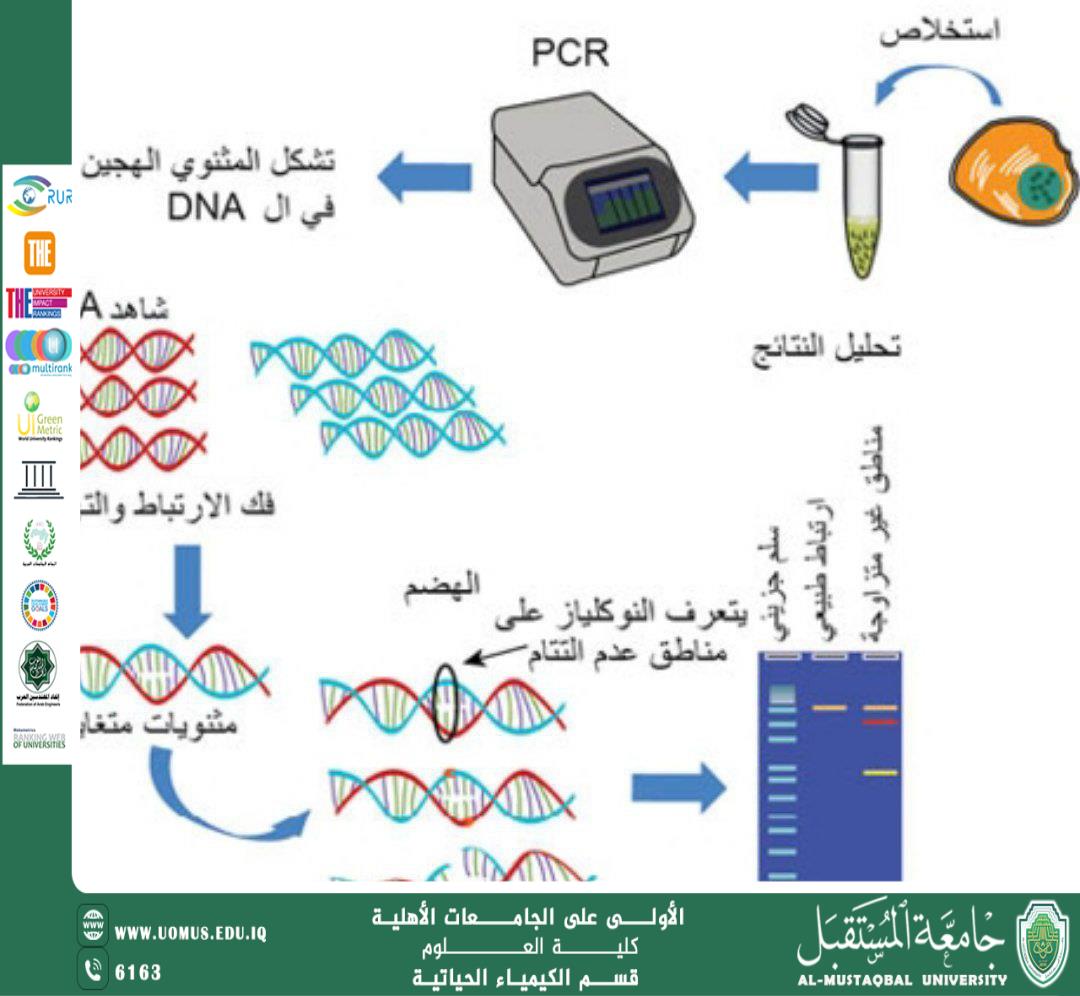
Polymerase Chain Reaction (PCR) for detecting genetic mutations.
Gene sequencing technologies for identifying DNA alterations.
Proteomics for studying changes in protein expression.
Metabolomics for detecting metabolic disturbances.
These techniques have enabled clinicians to diagnose serious diseases such as cancer, genetic disorders, and viral infections at very early stages.
Fifth: Role of Medical Biochemistry in the Diagnosis of Genetic Diseases
Genetic diseases represent one of the most significant fields benefiting from early molecular diagnosis. Medical biochemistry assists in:
Detecting disease-causing genetic mutations.
Diagnosing carriers of genetic disorders before symptoms appear.
Supporting genetic counseling and preventive strategies.
This form of diagnosis plays a vital role in reducing the prevalence of genetic diseases and improving quality of life.
Sixth: Clinical and Preventive Impact of Early Diagnosis
Early molecular diagnosis based on medical biochemistry contributes to:
Increasing recovery rates through early treatment.
Reducing long-term healthcare costs.
Improving and personalizing therapeutic plans.
Supporting preventive medicine and personalized healthcare.
Conclusion
Medical biochemistry represents a cornerstone of early molecular diagnosis of diseases, as it provides a precise understanding of molecular changes that precede clinical symptoms. With continuous scientific and technological advancements, the role of this discipline is expected to expand further in improving healthcare quality, enhancing prevention, and shifting medicine from disease treatment to disease prediction and prevention.
Al-Mustaqbal University
Ranked First among Iraqi Private Universities