Immunity: Biochemical Foundations and Its Role in Protecting the Human Body By: Asst. Lecturer Abbas Hamza Khudair Department of Biochemistry – College of Science – University of Al-Mustaqbal
30/12/2025 Share :
Immunity: Biochemical Foundations and Its Role in Protecting the Human Body
By: Asst. Lecturer Abbas Hamza Khudair
Department of Biochemistry – College of Science – University of Al-Mustaqbal
Introduction:
Immunity is a complex defense system that protects the human body against pathogenic agents such as bacteria, viruses, parasites, and abnormal cells. This system relies on intricate interactions involving immune cells, protein molecules, and regulated biochemical pathways.
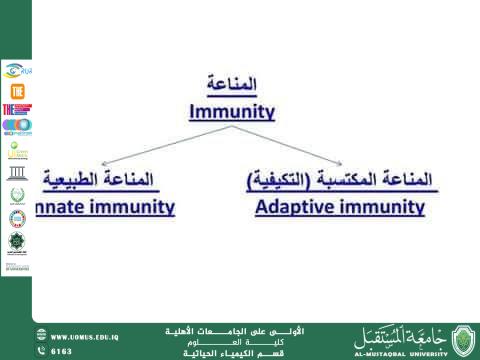
Types of Immunity:
Innate Immunity:
Represents the first line of defense, is non-specific, and responds rapidly. It includes:
Physical barriers such as skin and mucous membranes
Phagocytic cells (macrophages and neutrophils)
Cytokines and inflammatory mediators
Complement system
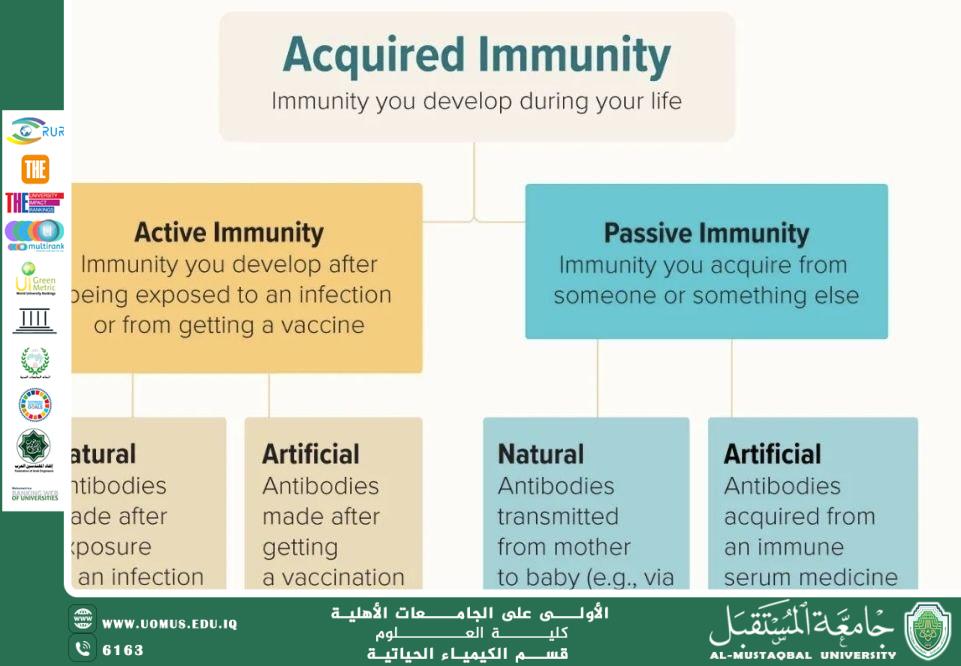
Adaptive Immunity:
Characterized by specificity and immunological memory, and divided into:
Humoral Immunity: Depends on B cells and the production of antibodies
Cellular Immunity: Depends on T cells that destroy infected or cancerous cells
Biochemical Role of Immunity:
The immune response depends on precise molecular interactions, including:
Antigen binding to specific receptors on immune cells
Activation of intracellular signal transduction pathways
Secretion of cytokines and interleukins to regulate the response
Activation of genes responsible for cellular proliferation and immune differentiation
Immunity Between Health and Disease:
Immune balance contributes to maintaining health, whereas dysregulation can lead to:
Autoimmune diseases, where the body attacks its own cells
Immunodeficiency, increasing susceptibility to infections
Hyperimmune responses, as seen in allergies and asthma
Conclusion:
Immunity is a vital biological system essential for maintaining homeostasis in the body. Understanding its cellular and biochemical mechanisms is fundamental for studying immune-related diseases and developing modern vaccines and immunotherapies.
University of Al-Mustaqbal – First among Iraqi Private Universities