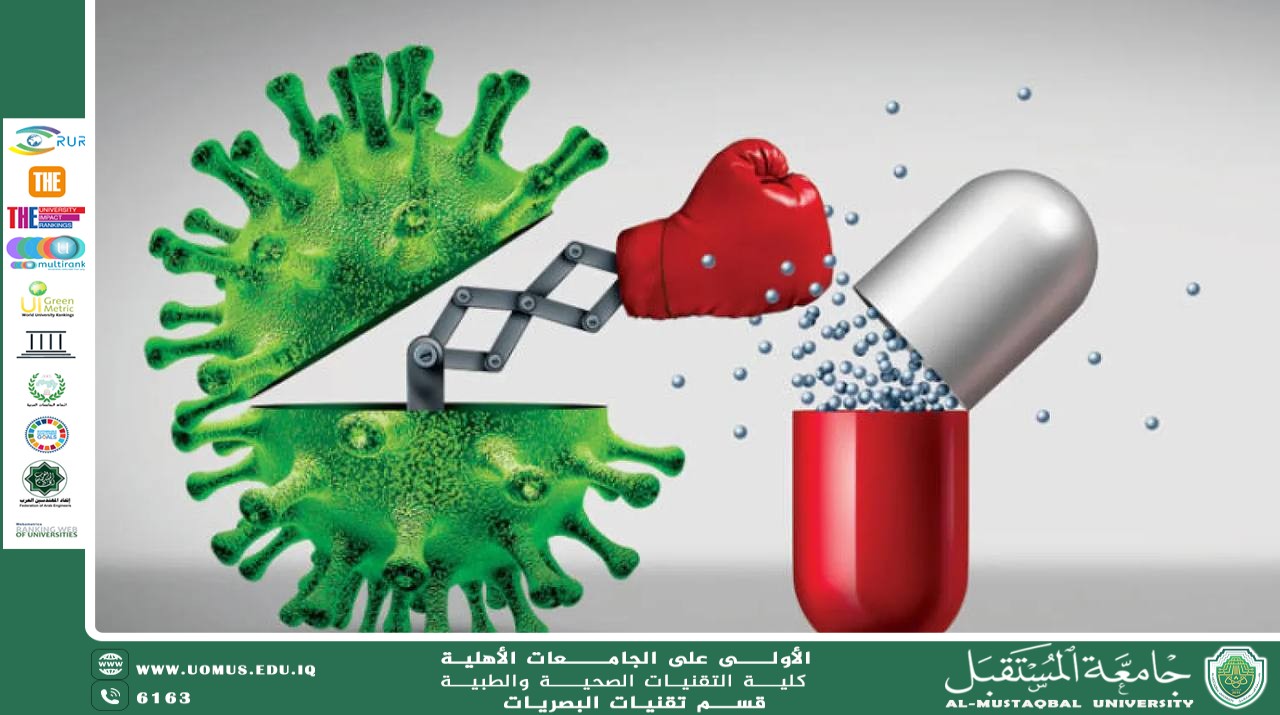

"Scientific article by Ms. Islam Fadel entitled: “Antimicrobial Drug Resistance at Al-Mustaqbal University.
03/01/2026 Share :
Antimicrobial resistance (AMR) is considered one of the most serious global health challenges. As microorganisms gradually become resistant to antimicrobial drugs, treatments lose their effectiveness, threatening a future in which common infections may once again become deadly.
Causes of Antimicrobial Resistance
• Excessive and improper use of antimicrobial drugs
• Failure of patients to complete prescribed treatment courses
• Use of antibiotics in agriculture and animal farming
• Weak healthcare surveillance and control systems
• Limited development of new antimicrobial agents
Expected Future Impacts
• Increased mortality rates from common infections
• Higher healthcare and treatment costs
• Failure of surgical procedures and organ transplants
• Threats to the treatment of chronic diseases and cancer
• Growing global economic burden
Future Solutions and Strategies
• Development of new antimicrobials with innovative mechanisms
• Use of artificial intelligence in drug discovery
• Bacteriophage therapy (viruses that target bacteria)
• Strengthening preventive medicine and vaccination programs
• Improving rapid diagnostic tools to reduce inappropriate drug use
Role of Awareness and Health Policies
• Raising public awareness about the dangers of improper antimicrobial use
• Enforcing strict regulations on drug prescription and distribution
• Supporting scientific research at the global level
• Enhancing international cooperation to monitor resistant strains
Conclusion
Antimicrobial resistance is not only a future threat but a current reality that requires urgent and coordinated action. Investing in scientific research and public health education remains the most effective approach to combating this global challenge
University of Al-Mustaqbal – The First and Leading Private University