The Relationship Between Pharmacokinetics and Pharmacodynamics from a Biochemical Perspective
11/01/2026 Share :
Drugs play a vital role in treating diseases and improving quality of life. However, the effect of a drug on the body depends on two main factors:
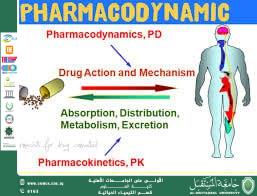
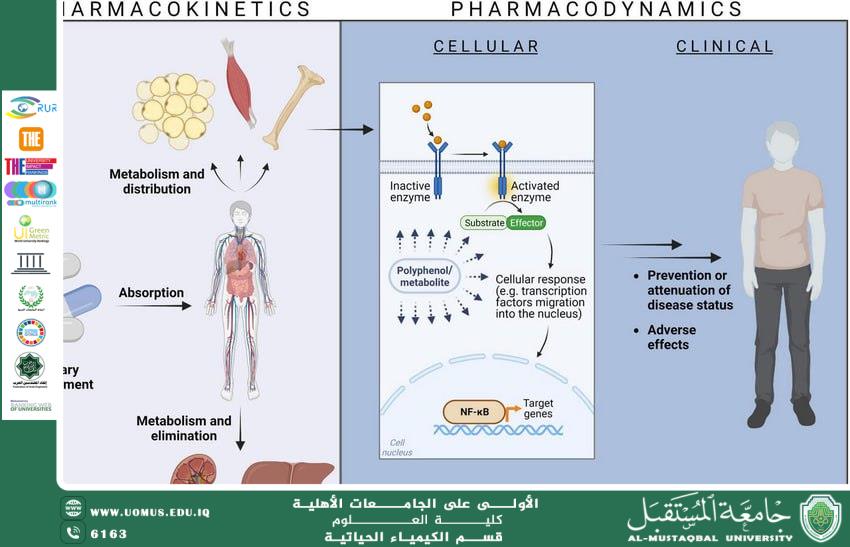
1. Pharmacokinetics (PK): What the body does to the drug, including absorption, distribution, metabolism, and excretion.
2. Pharmacodynamics (PD): What the drug does to the body, including therapeutic effects, side effects, and the mechanism of action on cellular receptors.
The Relationship Between Pharmacokinetics and Pharmacodynamics
Pharmacokinetics determines the amount of drug available in the blood and target tissues, which directly affects the strength and nature of the drug’s effect.
• For example, paracetamol is rapidly absorbed in the intestine, distributed to tissues, metabolized in the liver, and excreted in urine (PK). Its effect reduces pain and fever by inhibiting COX enzymes in the nervous system and tissues (PD).
• Any change in pharmacokinetics due to liver dysfunction or drug interactions can alter drug concentration, thus modifying its effect and side effects.
Biochemical Perspective
Biochemistry plays a key role in understanding PK and PD:
1. Drug Metabolism: Depends on liver enzymes, such as cytochrome P450 (CYP450), which convert drugs into more excretable forms.
2. Receptor Binding: Drugs interact with specific protein receptors on the cell membrane or inside the cell, depending on chemical bonds (hydrogen, ionic, metallic) and structural compatibility.
3. Chemical Effects on Cells: Some drugs act as enzyme activators or inhibitors within cells, influencing both PD and PK.
Practical Examples
• Alcohol: PK → metabolized in the liver by alcohol dehydrogenase; PD → affects the central nervous system.
• Thalidomide: PK → rapidly absorbed and metabolized in the liver; PD → causes birth defects by interacting with specific receptors.
• Paracetamol: PK → rapid absorption and metabolism; PD → reduces pain and fever via COX inhibition.
• Pharmacokinetics and pharmacodynamics are closely linked, as PK determines drug delivery to the target site, while PD determines the resulting effect.
• Biochemistry provides a deep understanding of drug metabolism, receptor binding, and interaction with cellular processes.
• This knowledge allows healthcare professionals to optimize dosing, minimize side effects, and predict drug behavior in the body.