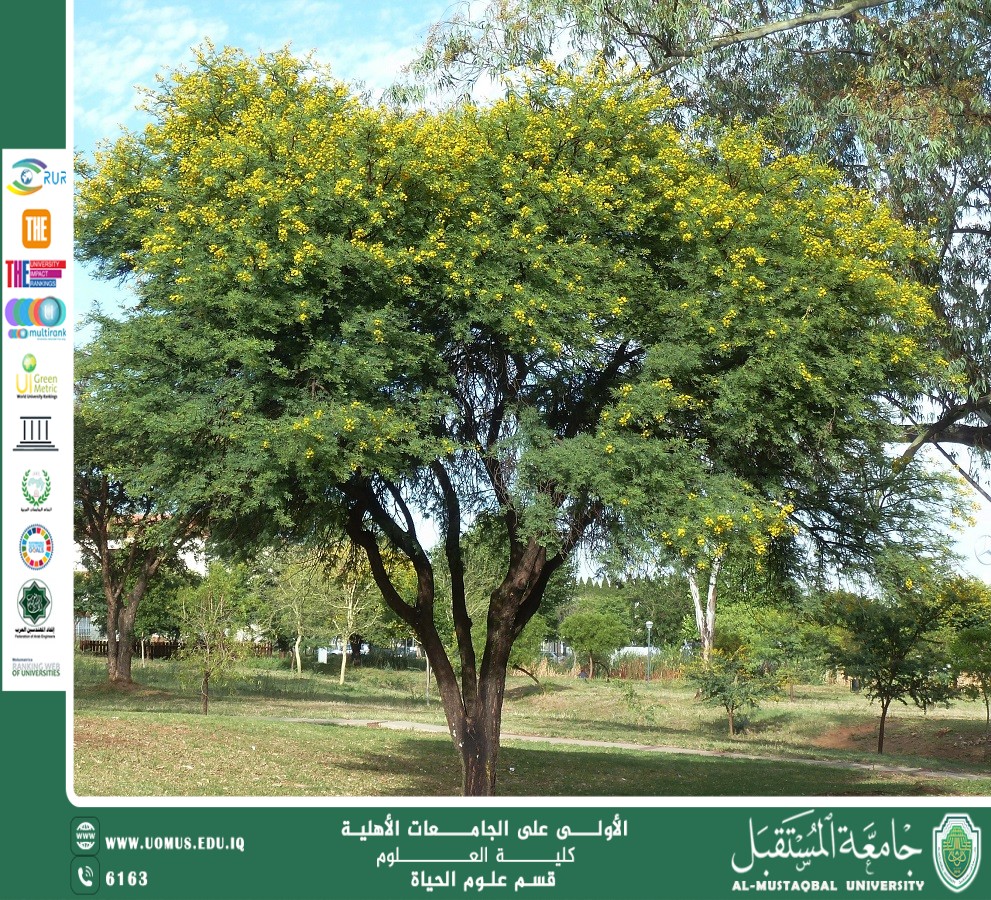
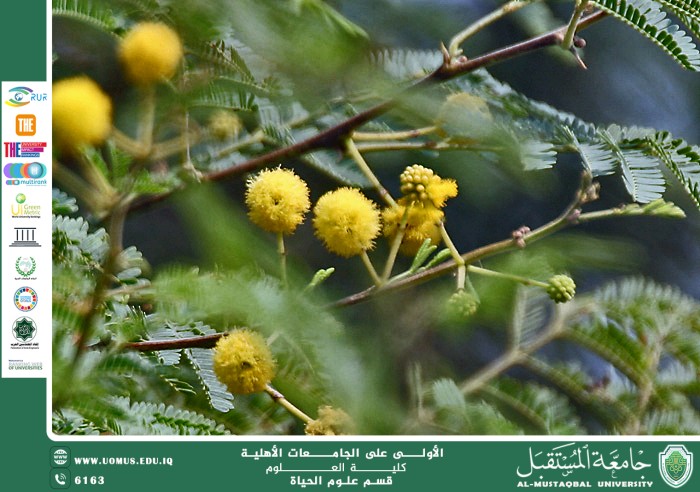
A scientific article by Miss Nour El-Hoda Azmy Hassan entitled "The Acacia Tree"
11/01/2026 Share :
The Acacia tree is a long-living and distinctive tree found in arid and semi-arid regions, as it can withstand harsh conditions such as water scarcity and high temperatures. It belongs to the family Fabaceae and is widely distributed in the Middle East, Africa, and Asia. Acacia has significant economic and environmental value.
Acacia trees are characterized by their small, delicate leaves that reduce water loss and by thorns that protect them from animals. They produce small, beautiful yellow flowers and usually bear pods containing seeds suitable for cultivation. Acacia serves as an important source of wood and fibers, and its leaves and seeds are used as animal feed. It also plays a role in soil stabilization and combating desertification.
Acacia is also used in traditional medicine, as parts of the tree are employed to treat certain ailments and reduce inflammation. Due to its drought resistance and ability to grow in poor soil, Acacia is considered an important tree for sustainable agriculture and environmental improvement in arid areas.