Zainab Jawad Kadhim Assistant Lecturer: Materials and Demands
20/02/2022 Share :
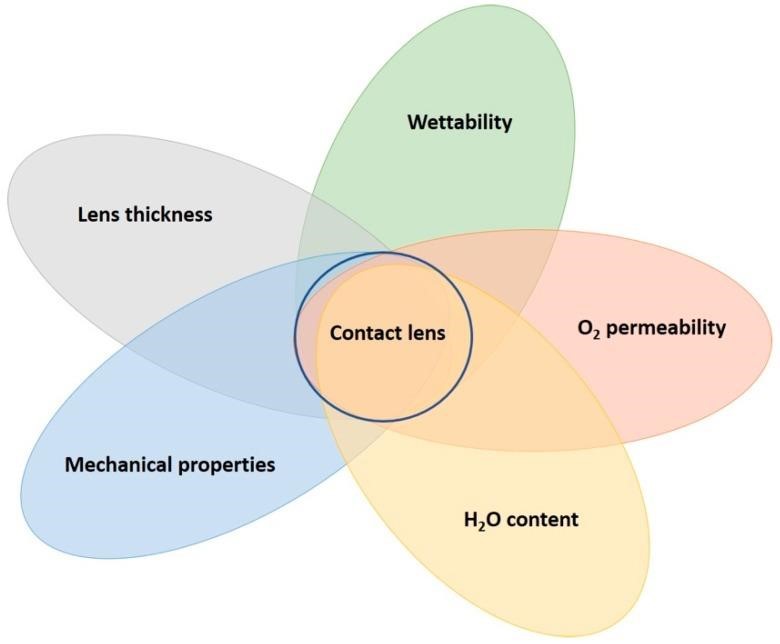
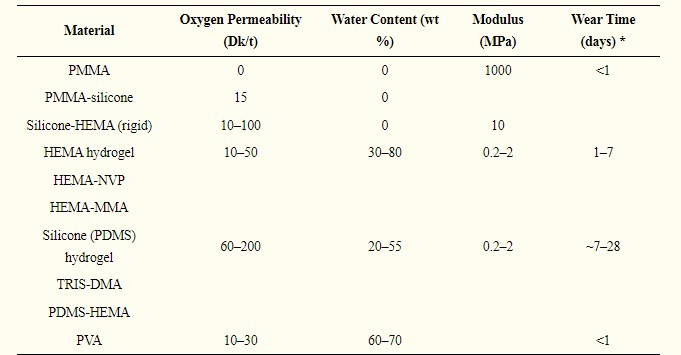
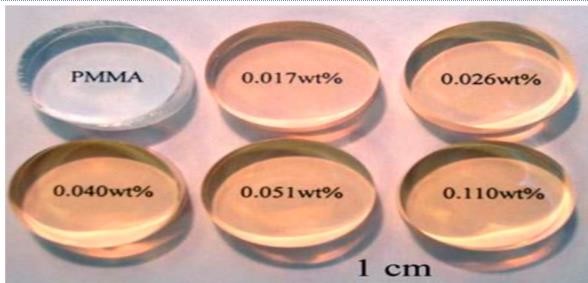
Materials and Demands:-<br />To manufacture contact lenses (CLs), there must be a appropriate polymeric material. This opens an incredible number of possibilities, not only from the range of polymers but to the formula of components within a given recipe. In addition, there can be considerations for the different types of polymerization mechanisms to form the same polymer, such as radical vs. catalytic polymerizations and derivatives. Within this, the polymerization conditions (temperature, initiator type, vessel used, etc.) can be altered to produce the same polymer but with different properties. Finally, the material must be suitable for the manufacturing stages, which include the synthesis, inspection, and packaging processes. The extent of variation in materials is why there is such a wide range of CLs available today, and this has been extensively researched. Fig.(1) contains some of the most important factors from a materials science perspective when designing CLs. <br />From this, an assessment of current CL materials’ pros and cons is given in table (1). <br />Table 1: General pros and cons of current CL material classes. <br />Fig.2: CL lens is dependent on many parameters from a material science perspective. Stronger emphasis on specific characteristics are required, depending on the specific demand placed on the CL. The final CL material accounts for wear time and comfort. These characteristics are often dependent on the materials, but also includes manufacturing processes, such as plasma treatment.<br />Table2: Generalized Properties of some CL materials <br />Days*: Maximum wear time without extensive complications to eye before lens disposable. <br />We will talk about one type of bio-polymer materials used for CLs manufacturing, it is PMMA: <br />Polymethylmethacrylate (PMMA): Today, PMMA CLs occupy <br />a market share of about 1%; however, they are a useful place to begin to appreciate CLs materials—the properties of polymers that are suitable for ocular wear. One of the biggest issues with PMMA is that it has little to no oxygen permeability. This is due to the lack of mobility of polymer chains preventing the flow of oxygen or internal water to mediate the flow of O2. This occurs in PMMA due to intermolecular forces, such as dipole–dipole bonding and physical entanglement that is prevalent between polymer chains. The dipoles are created by the negatively charged (electrochemical negative) oxygen compared with the adjacent positively charged (electrochemical positive) carbon and hydrogen atoms. Therefore, neighboring polymer chains can attract each other to provide thermodynamic stability to the polymer. These intermolecular forces also mean that PMMA has low free volume (space between polymer chains), meaning the chains do not rotate or move easily. In addition, PMMA does not contain large pendant chains that prevent the interaction of neighboring chains. All these factors together prevent the flow of oxygen through the polymer. However, functionalization of the PMMA surface can improve the hydrophilicity, which would be useful to these CLs. <br />PMMA has typically been utilized as a reference material for investigating various effects of CLs on the eye. These works are some of many with a particular focus on the effect of the PMMA lens on eye conditions, such as astigmatism, strabismus, and blepharoptosis. Aliό et al. fitted patients who had received post-corneal refractive surgery with a variety of lens types, with RGP lenses showing the best results. An interesting work by Li et al. showed fabrication of a possible new PMMA hybrid lens with zinc oxide quantum dots to reduce UV exposure. <br />Very low loadings of ZnO quantum dots (0.017 wt %) reduced the transmittance of UV light by 50%, yet retained suitable optical transparency expected of a contact lens. Perhaps the most novel advancement for PMMA lenses was the possibility of developing nanophotonic lenses. Acid- and hydroxyl-functionalized fullerenes (C60) were attached to PMMA to try to harness the photo- and electroactivity of the fullerene. However, these nanophotonic lenses have now been a focus of SCL materials instead.<br />