Al-Mustaqbal University Organizes an Online Workshop on “The Impact of Chemical Substances on Women’s Health
21/01/2026 Share :
Under the patronage of the President of Al-Mustaqbal University, Professor Dr. Hassan Shaker Majdi, the Women’s Affairs Division, in cooperation with the Continuing Education Center, organized an online workshop entitled “The Impact of Chemical Substances on Women’s Health.” The workshop was held in implementation of the partnership agreement with “Ma’an” Association for the Protection of Humans and the Environment, as part of the University’s awareness-raising activities, and in line with the Sustainable Development Goals, particularly Goal 3 (Good Health and Well-Being) and Goal 5 (Gender Equality and Women’s Empowerment).
The workshop witnessed the attendance of the Head of the Women’s Affairs Unit at the Technical Engineering College, along with a number of academics and those interested in environmental issues and women’s health, reflecting the College’s support for health awareness initiatives and the empowerment of women in society.
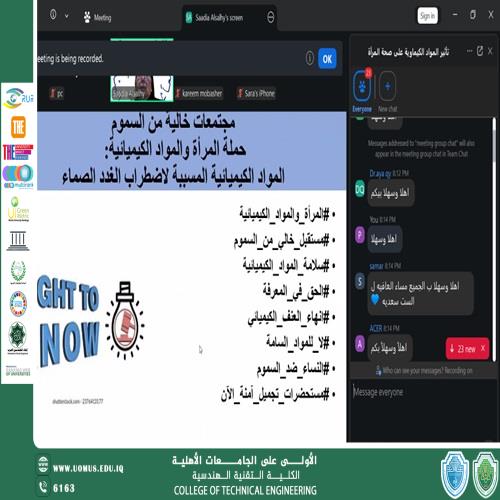
The workshop was delivered by Eng. Saadiya Faleh Hassoun, President of “Ma’an” Association and National Coordinator of the Arab Network for Environment and Development in Iraq and Kurdistan. The lecture highlighted the risks of chemical substances found in everyday products, especially personal and feminine care products that may contain plastics and endocrine-disrupting components.
Key Topics of the Workshop:
The workshop reviewed the risks of several common chemical substances, including:
Plastics and chlorine: used in manufacturing some conventional products and potentially causing skin irritation and hormonal disorders.
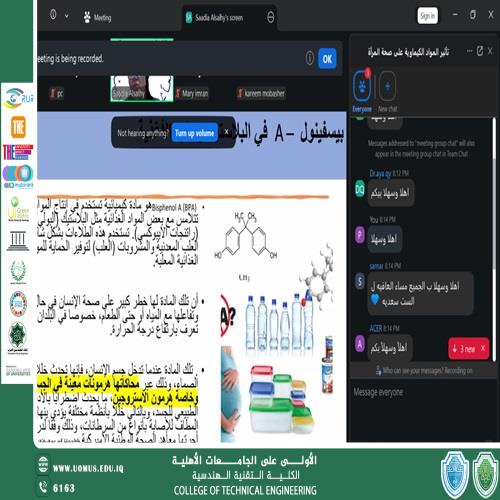
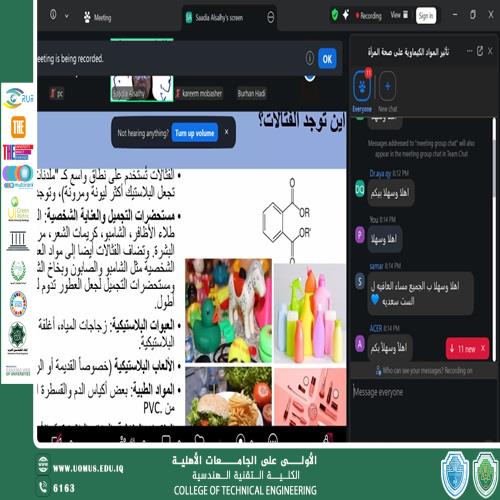
Hazardous chemical compounds: such as parabens, phthalates, and Bisphenol A (BPA), and their potential effects on reproductive health and the nervous system.
Safer alternatives: emphasizing the importance of shifting toward organic and natural products, such as organic cotton, and products free from fragrances and chemical bleaches.
Tips and Recommendations:
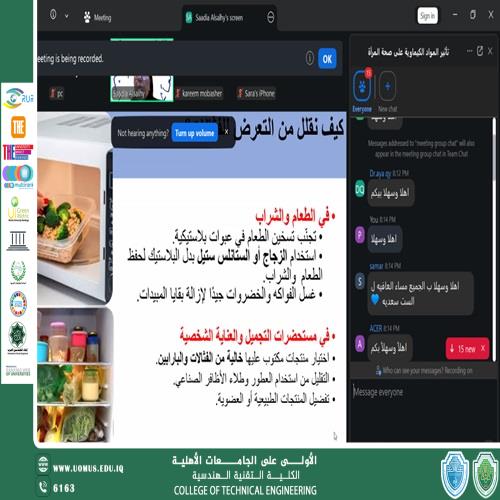
The workshop concluded with a set of practical recommendations to reduce exposure to these risks, including:
Choosing healthy products free from fragrances and artificial colors.
Using natural and sustainable alternatives such as medical-grade silicone.
Reading warning labels and avoiding products that contain plastics whenever possible.
Regularly changing products to maintain hygiene and reduce irritation.
It is worth noting that the workshop was held online via the Zoom platform on Wednesday, January 21, 2026, and witnessed wide participation and strong interaction, reflecting Al-Mustaqbal University’s commitment to promoting health and environmental awareness and supporting women’s issues in accordance with the Sustainable Development Goals.