“Postmodern Transformations: From the Deconstruction of Meaning to the Fluidity of References” By Dr. Mustafa Sahib, Lecturer
22/01/2026 Share :
**Introduction**
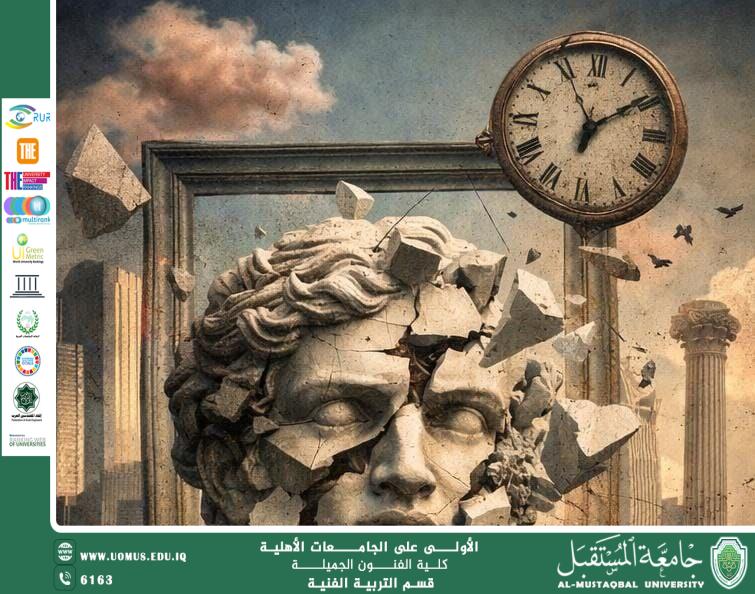
Postmodernism represents one of the most problematic and complex concepts in contemporary thought, not merely as a historical phase that follows modernity, but as a radical critical stance toward its epistemological, philosophical, and aesthetic foundations. Postmodernism emerged as a reaction to the failures of the modernist project, which promised absolute rationality, progress, and human emancipation, yet—paradoxically—led to total wars, alienation, technological domination, and the reification of the human being. Accordingly, postmodern transformations can only be understood through their deconstruction of constants and their destabilization of the grand centralities that governed Western thought for centuries.
**First: The Epistemological Transformation and the Disintegration of Grand Narratives**
Jean-François Lyotard is regarded as one of the foremost theorists of postmodernism, having proclaimed the “end of grand narratives,” such as the narratives of Enlightenment, progress, reason, and unified identity. In this context, knowledge shifted from being a comprehensive, totalizing system to becoming fragmented, juxtaposed bodies of knowledge, no longer unified by a single overarching logic or reference.
Truth is no longer absolute or objective; rather, it has become relative, contextual, and conditioned by the discourse within which it is produced. This transformation marked a rupture with classical rationalist philosophy and opened the way for epistemological plurality, marginality, and the emergence of alternative voices. At the same time, however, it raised the problem of the loss of standards and the ambiguity of epistemic judgment.
**Second: The Philosophical Shift from Metaphysics to Deconstruction**
On the philosophical level, postmodernism is associated with profound transformations in the understanding of being and meaning. Deconstruction, as developed by Jacques Derrida, contributed to undermining traditional binary oppositions (presence/absence, reason/unreason, center/margin), emphasizing that meaning is unstable, perpetually deferred, and endlessly open to reinterpretation.
This shift abolished the notion of a fixed essence and replaced it with the concept of difference and multiplicity, whereby the text no longer carries a final meaning but becomes an open field of interpretation. Herein lies one of the most critical transformations of postmodernism: the collapse of philosophical certainty and the rise of doubt as an epistemological tool.
**Third: Aesthetic Transformations in Art and Culture**
In the artistic sphere, postmodernism constituted a revolution against concepts of originality, individual genius, and stylistic purity. The artwork no longer seeks to express an absolute truth or beauty; instead, it becomes a symbolic play, a layering of references, and a satirical borrowing from the past.
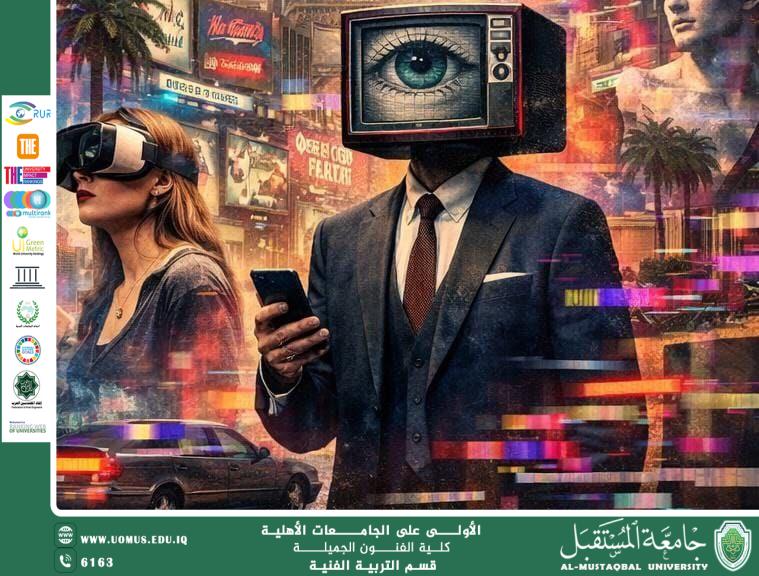
Concepts such as parody, intertextuality, and the deconstruction of form emerged, while the boundaries between high art and popular culture became blurred. The artist also lost the role of the “transcendent creator,” becoming instead a curator of signs and symbols within a world saturated by images and digital media.
This transformation reflects the postmodern logic of plurality and uncertainty, yet it raises questions about the fate of aesthetic value and the meaning of creativity in an age of reproduction.
**Fourth: Social Transformation and Liquid Identity**
Socially, postmodernism contributed to reshaping the concept of identity, which is no longer fixed or essential, but rather fluid and mutable, formed through discourse, media, and consumption.
In this context, consumption replaced production, and the image supplanted reality, as Jean Baudrillard suggested in his discussion of “hyperreality,” where the boundaries between the real and the imaginary disappear.
This transformation generated new forms of alienation—not the alienation of the worker from labor as in modernity, but rather the alienation of the individual from the self in a world of signs and representations.
**Fifth: The Problematics of Postmodernism between Emancipation and Nihilism**
Despite the radical critique that postmodernism has offered of dominant power and knowledge, it has not been immune to criticism. Some thinkers argue that it has led to a form of intellectual nihilism, abolishing standards without providing clear alternatives, and opening the door to epistemological chaos and the equivalence of values.
Others, however, defend postmodernism as a moment of critical consciousness that liberated humanity from the illusions of the absolute and restored the value of difference, plurality, and otherness.
**Conclusion**
Postmodern transformations cannot be reduced to a single philosophical or artistic stance; rather, they constitute a complex network of epistemological, aesthetic, and social shifts that have reshaped our relationship with meaning, truth, and identity. While postmodernism remains a subject of ongoing debate, its significance lies in its role as a critical mirror reflecting the crises of the age and prompting human thought to re-examine its most deeply entrenched assumptions.
..Almustaqbal University, The First University in Iraq
.