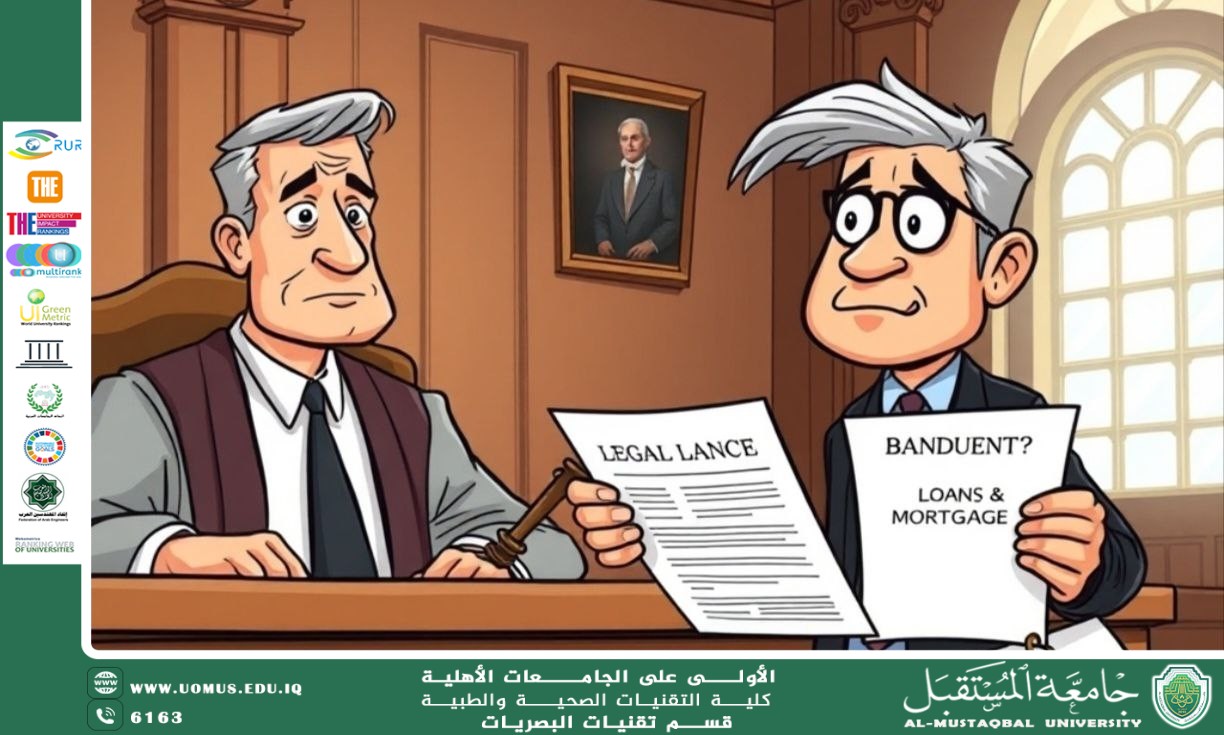

(The legal effect of the debtor's death on banking obligations)A Scientific Article by Lecturer Ibraheem saad Entitled: Modern Physics
20/01/2026 Share :
Scientific Article: The Legal Impact of a Debtor's Death on Banking Obligations
Introduction: The Problem of Heirs and an Estate Burdened with Debt
The relationship between a bank and a debtor is a bilateral contract, and the debtor's death raises fundamental questions about the fate of these obligations. A common misconception among non-specialists is that "death closes the real estate and financial records," while the legal reality rests on a well-established legal and religious principle: "There is no inheritance until the debt is paid."
First Axis: The Legal Nature of Financial Obligations After Death
In civil law, a debtor's liability is not discharged upon death; rather, the obligation transfers from the "person's liability" to their "estate." Here, a distinction must be made between two types of liability:
Personal Liability: This ends with the debtor's death (heirs cannot be imprisoned or held liable from their personal assets).
Real Liability: This remains in effect with respect to the assets of the estate (real estate, cash, stocks).
Legal Reference: Based on Article (corresponding to Article 895 of the Egyptian Civil Code or its equivalent in Under Arab laws, the deceased's debts are related to his estate, not the personal liability of his heirs. Therefore, the creditor (the bank) has priority over the heirs in recovering his due.
Second Axis: Mortgage Loans and the Right of Pursuit
Mortgage loans are characterized by the presence of a "official mortgage" registered against the property in favor of the bank. This mortgage gives the bank two advantages:
Right of Priority: Recovering the debt from the sale price of the property before any other creditor.
Right of Pursuit: Pursuing the property regardless of who it is transferred to, even if it is transferred to the heirs through a legal document.
Legal Note: Transferring ownership of the mortgaged property to the heirs does not release it from the mortgage. According to the provisions of the Official Mortgage Law, the bank has the right to enforce the mortgage on the property if the heirs stop paying the installments.
Third Axis: The Role of Takaful Insurance (The Safe Haven)
Here lies the crucial point that causes confusion among the public. Most modern banks require an "insurance policy" for the debtor's life.
First Scenario: There is a valid insurance policy. In this case, the insurance company pays the remaining loan amount, and the property is released to the heirs.
Second Scenario: Insurance Exclusions (Suicide, Chronic Illnesses) (Death due to a criminal act) Here, the debt returns to burden the estate.
Conclusion:
The notion that debts are extinguished by death is a "legal illusion." In reality, the estate remains encumbered by its debts. Legal justice dictates that a creditor should not be harmed by the death of their debtor, just as an heir should not be burdened with a debt they did not incur. Hence, the role of the "estate" as an independent legal entity bearing the burden of financial obligations becomes evident.
University of Al-Mustaqbal – The First and Leading Private University