A scientific article by Ms. Reham Safaa Najem entitled Nystagmus
31/01/2026 Share :
Introduction
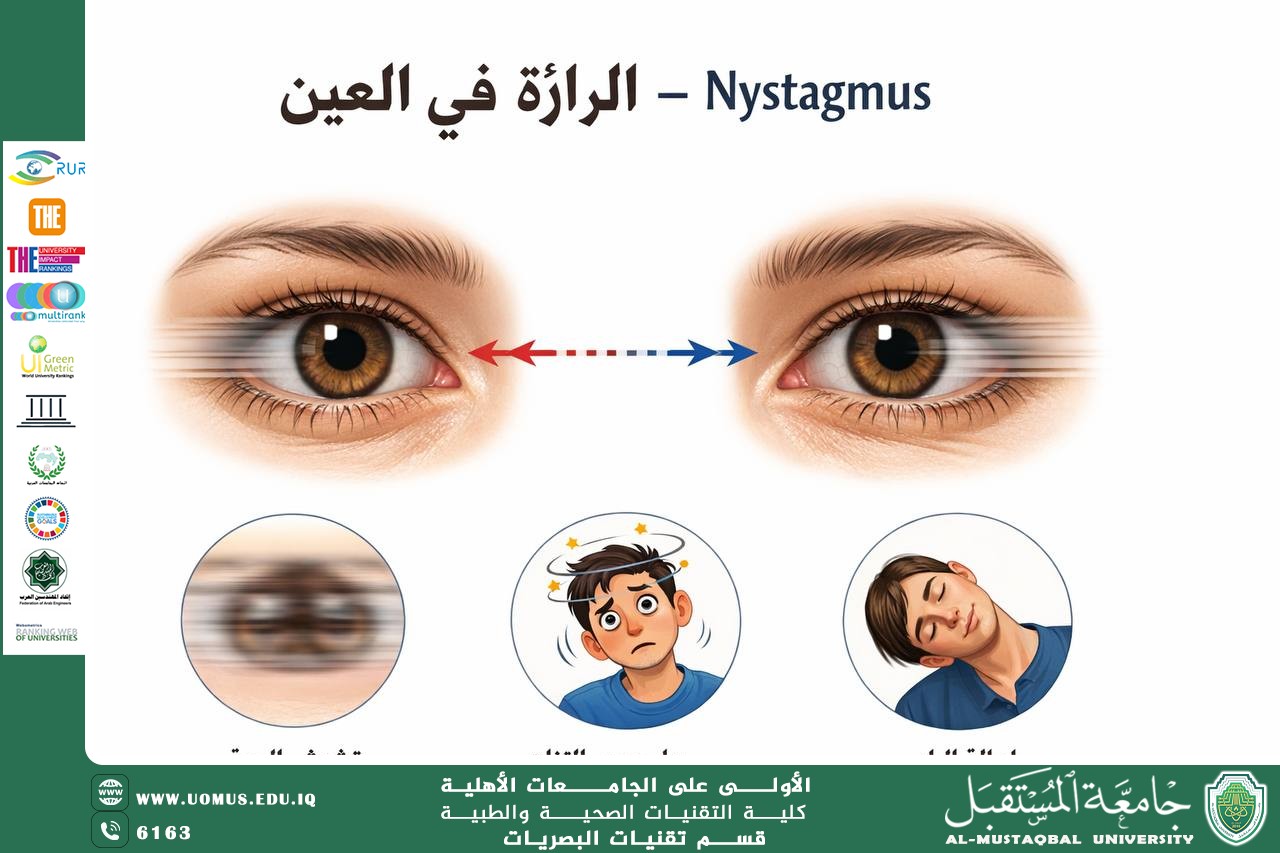
Nystagmus is a significant visual disorder that affects eye stability and visual performance. It is characterized by involuntary, repetitive eye movements that impair visual fixation and negatively impact daily activities and overall quality of life.
Definition of Nystagmus
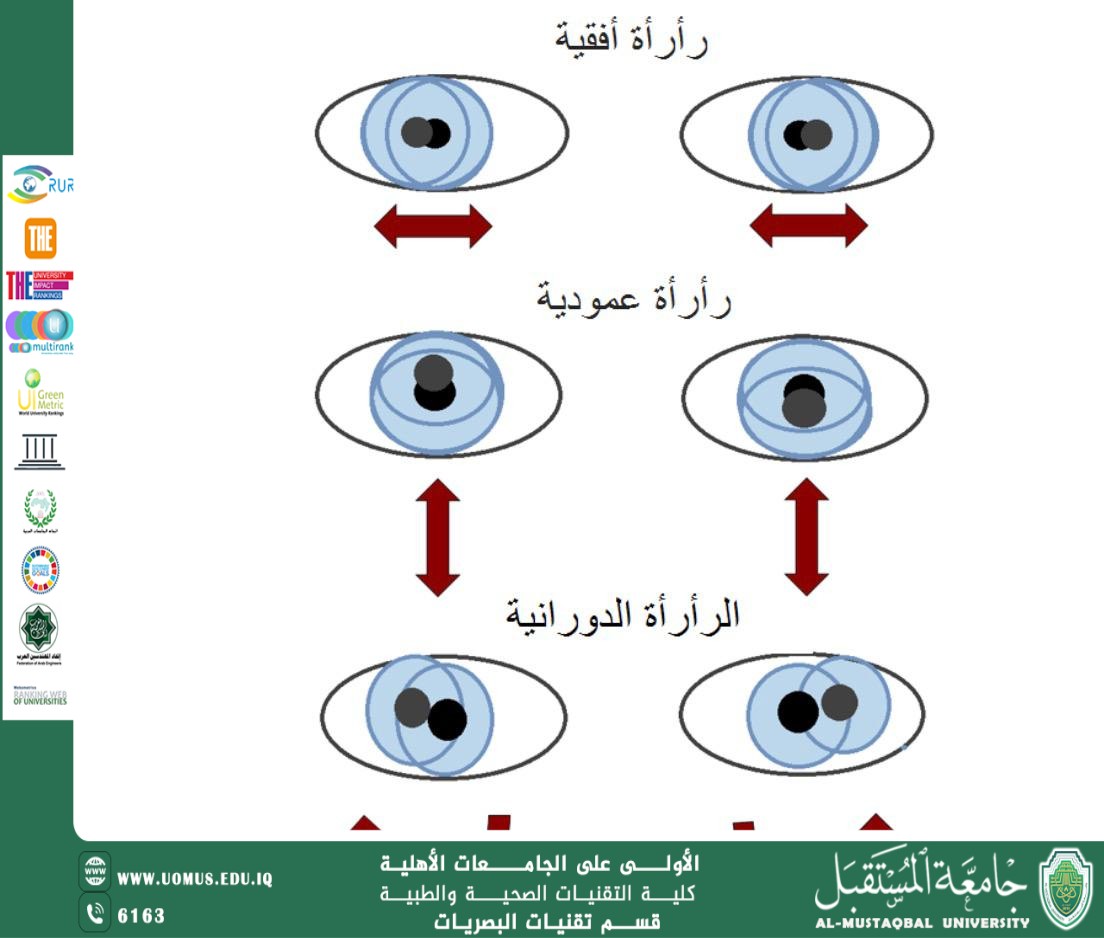
Nystagmus is defined as an involuntary oscillatory movement of the eyes, which may be horizontal, vertical, or rotary in nature. It results from abnormalities in the neural control of extraocular muscles or dysfunctions within the visual and vestibular systems.
Types of Nystagmus
Nystagmus is classified into several types, including:
1. Congenital Nystagmus
Appears during early infancy and is often associated with developmental abnormalities of the visual system or genetic disorders.
2. Acquired Nystagmus
Develops later in life and may be caused by:
• Central nervous system disorders
• Inner ear dysfunction
• Brain injuries
• Use of certain medications or drugs
3. Physiological Nystagmus
A normal response that occurs under specific conditions, such as body rotation or rapid visual tracking.
Clinical Manifestations
Common clinical features of nystagmus include:
• Reduced or blurred vision
• Dizziness and imbalance
• Difficulty maintaining visual fixation
• Headaches and visual fatigue
• Abnormal head posture to enhance visual clarity
Diagnosis
The diagnosis of nystagmus involves:
• Comprehensive ocular examination
• Assessment of visual acuity
• Evaluation of eye movements
• Neurological assessment
• Diagnostic techniques such as electronystagmography
Management and Treatment
Treatment strategies depend on the underlying etiology and may include:
• Optical correction using glasses or contact lenses
• Pharmacological therapy
• Visual rehabilitation and physical therapy
• Surgical intervention in selected cases to improve head posture and visual stability
Conclusion
Nystagmus is a complex visual condition that requires accurate diagnosis and appropriate management. Early detection and continuous follow-up play a crucial role in improving visual function and enhancing the quality of life for affected individuals.
University of Al-Mustaqbal – The First and Leading Private University