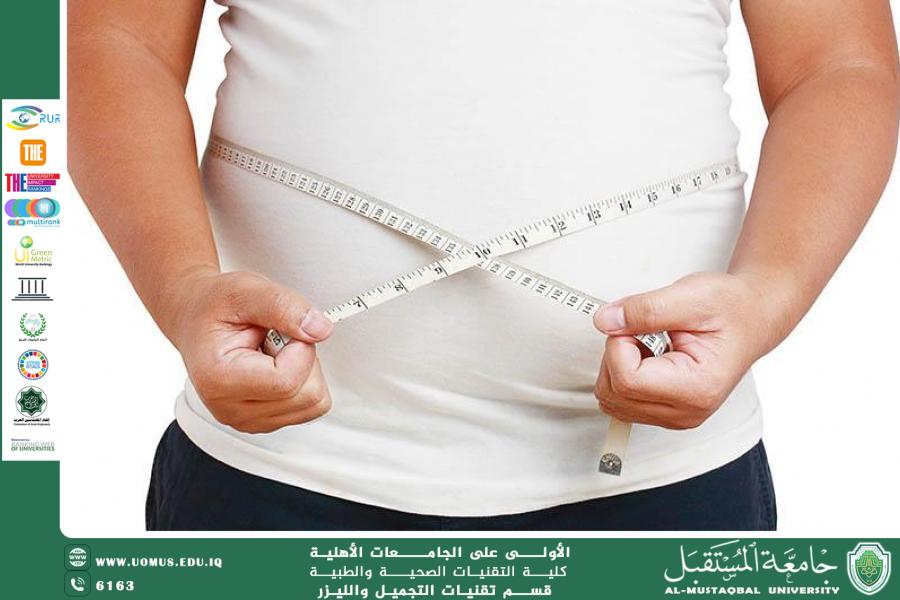

Morbid Obesity: The Epidemic of the Modern Age and Its Impact on Human Life Prepared by: Assistant Lecturer Huda Rafid Al-Khafaji
07/02/2026 Share :
Introduction
Morbid obesity is considered one of the most prominent health problems in the modern era, as its prevalence has increased significantly in various countries around the world. This condition is associated with many serious health complications that affect quality of life and life expectancy.
Definition of Morbid Obesity
Morbid obesity is a medical condition characterized by excessive accumulation of body fat. It is usually diagnosed when the Body Mass Index (BMI) is equal to or greater than 40 kg/m², or greater than 35 kg/m² with associated diseases such as diabetes or high blood pressure.
Causes of Morbid Obesity
The causes of morbid obesity are diverse and interconnected. The most important include: excessive consumption of high-calorie and high-fat foods, lack of physical activity and sedentary lifestyle, genetic factors, hormonal disorders, psychological factors such as stress and depression, and certain medications that lead to weight gain.
Health Effects of Morbid Obesity
Morbid obesity increases the risk of many diseases, including: cardiovascular diseases, type 2 diabetes, high blood pressure, sleep apnea, joint and bone disorders, certain types of cancer, and psychological problems such as low self-esteem and depression.
Diagnosis of Morbid Obesity
Diagnosis of morbid obesity depends on several methods, including: measuring body mass index, measuring waist circumference, analyzing body fat percentage, and laboratory tests to assess associated diseases.
Treatment Methods
Treatment of morbid obesity depends on an integrated plan that includes several approaches.
First: Nutritional Therapy
This includes following a balanced low-calorie diet, increasing consumption of fruits and vegetables, and reducing sugars and saturated fats.
Second: Physical Activity
This includes practicing regular exercise and increasing daily movement such as walking and using stairs.
Third: Behavioral Therapy
This includes modifying unhealthy eating habits, controlling psychological stress, and enhancing motivation to maintain a healthy lifestyle.
Fourth: Drug Therapy
In some cases, special weight-loss medications may be used under medical supervision.
Fifth: Surgery
Obesity surgeries are considered a treatment option for severe cases, such as gastric sleeve and gastric bypass, when other methods fail.
Prevention of Morbid Obesity
Morbid obesity can be prevented by following a healthy diet from an early age, practicing regular physical activity, reducing prolonged sitting, and promoting health awareness in schools and communities.
Role of Family and Society
Families, educational institutions, and media play an important role in spreading health awareness and encouraging positive behaviors related to nutrition and physical activity.
Conclusion
Morbid obesity represents a global health challenge that requires cooperation between individuals, health institutions, and governments. Adopting a healthy and balanced lifestyle is one of the most important means of prevention and treatment, contributing to improving individual and community health overall.
AL_mustaqbal University is the first university in Iraq