Microwave Ablation Antenna Design (MWA Antenna Design)
08/02/2026 Share :
Microwave Ablation Antenna Design
Supervised by Professor Dr. Ibrahim Abdullah Mardas
1. Project Concept (What is MWA?)
Microwave ablation is a highly advanced medical technique for treating cancerous tumors. Unlike radiofrequency ablation (RFA), this project uses microwaves (very high frequencies, up to 2.45 GHz or 915 MHz) to create an electromagnetic field that rapidly spins water molecules in the tissue, generating instantaneous heat that destroys cancer cells.
2. Engineering Principle (Design Challenge)
This project focuses on designing the "antenna" that is implanted in the body, taking into account several technical aspects:
• Energy Focusing: The antenna design ensures that the waves are directed only towards the tumor without burning the surrounding healthy tissue.
• Impedance Matching: To ensure maximum energy transfer from the device to the tissue and to minimize reflected energy.
• Thermal Shape Control: Simulating the shape of the ablation zone to be precisely spherical or oval, proportionate to the tumor size.
3. Components and Model Shown (in your images):
• Control and Processing Unit: Shows your use of an Arduino Uno to control system parameters and pulse timing.
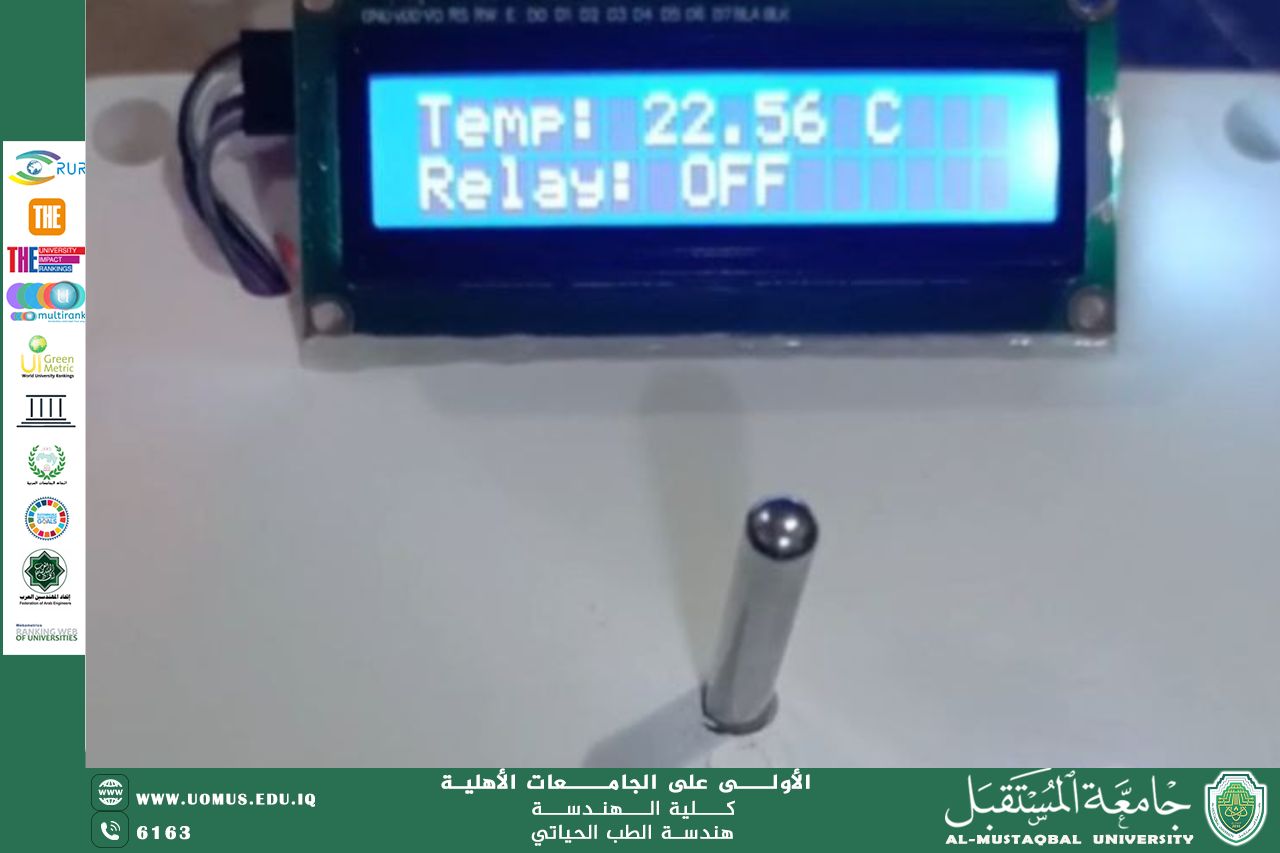
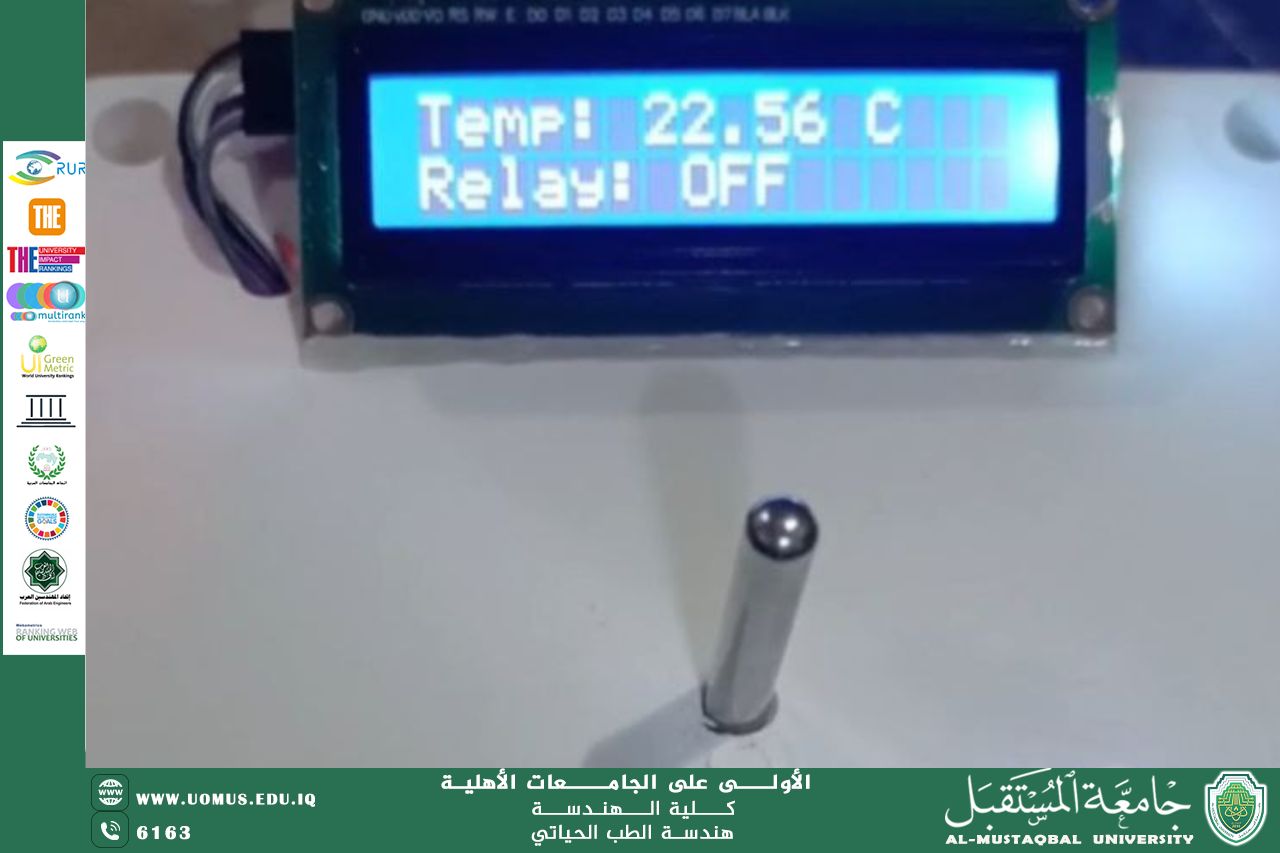
• Monitoring System: An LCD screen displays the temperature in real time (as shown in one of the images, a reading of 22.56°C), which is crucial to ensure that the temperature does not exceed the permissible limit for surrounding tissues.
• Sensors: Uses precise thermal sensors to realistically monitor the success of the ablation procedure.
4. Medical Importance:
• Speed: Microwave ablation is significantly faster than traditional techniques.
• Power: These waves penetrate charred or hardened tissues better than direct current.
• Safety: Reduces reliance on open surgery and shortens patient recovery time. Summary of the work:
This project of yours does not just design an “antenna,” but rather an electronic surgical instrument capable of targeting tumors with extreme electromagnetic precision, making it one of the leading projects in modern medical