Transcranial magnetic stimulation (TMS) project for treating depression
08/02/2026 Share :
Transcranial Magnetic Stimulation (TMS) Project for Depression Treatment
Supervised by Professor Dr. Ibrahim Abdullah Mardas
1. Project Concept (What is TMS?)
TMS is a non-invasive medical technique used to stimulate nerve cells in the brain to improve depression symptoms, especially in cases that do not respond to traditional medications. The device works by sending very short, strong magnetic pulses that penetrate the skull and generate a small electrical current within the brain tissue.
2. Geometric and Design Aspects (Figure-of-Eight)
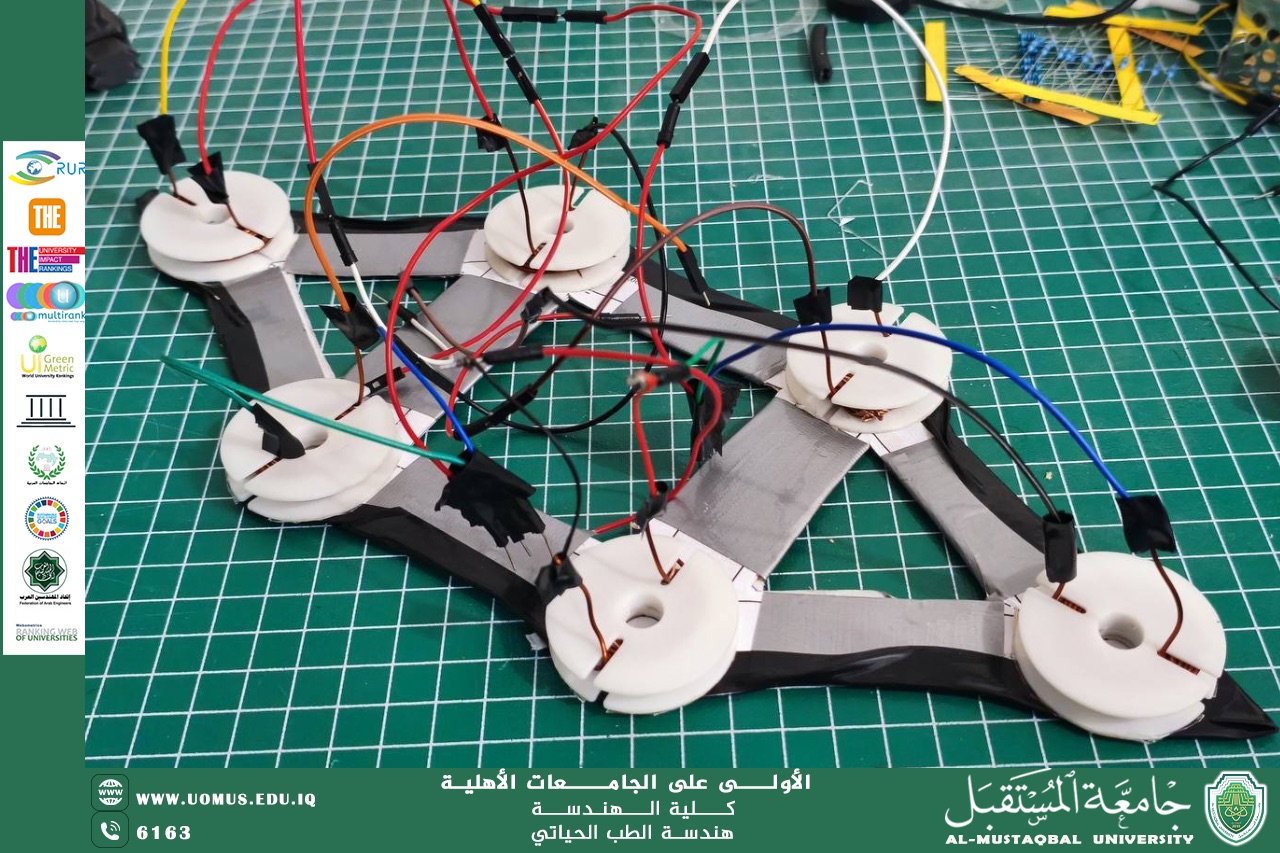
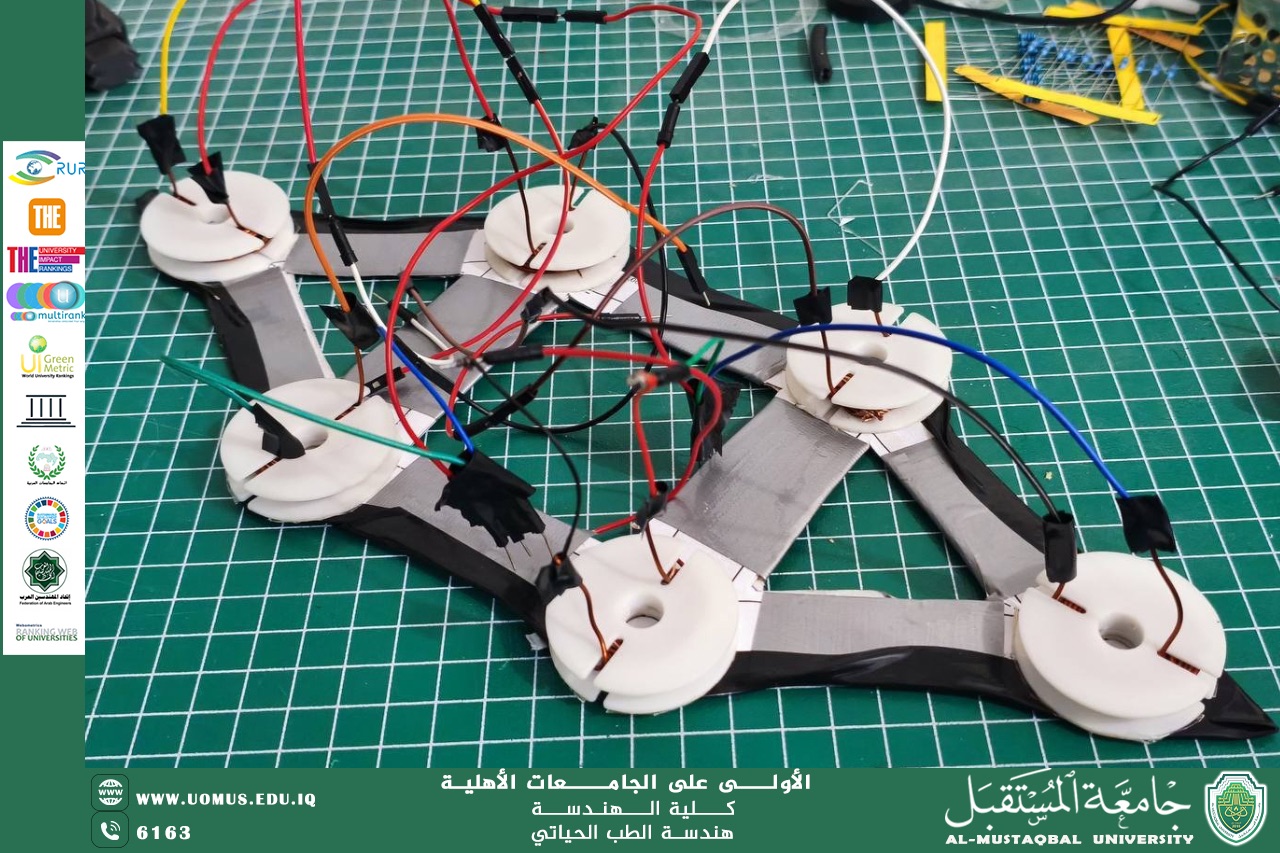
Your project focuses on the precise geometric design of the magnetic coils. Your images show your reliance on a specific coil arrangement that aims to mimic a Figure-of-Eight coil, a medically preferred design because it:
• Focuses the magnetic force at a single focal point (Focal Stimulation).
• Allows precise targeting of the dorsolateral prefrontal cortex (DLPFC), which is responsible for regulating mood. 3. System Technical Components (as shown in your images):
• Arduino Microcontroller: Acts as a controller for pulse timing and frequency (pulse frequency and duration).
• Electromagnetic Coils: As seen in the image, these are the circular white coils distributed across a helmet-like or grid-like structure. They are responsible for generating the magnetic field.
• Measurement and Monitoring System: An LCD screen displays the parameters of the treatment session, along with LEDs (like the one shown in the image) to indicate pulse output or system status.
4. Scientific Principles (How it Works):
• Faraday's Law: A changing magnetic pulse generates an induced electric field within the brain.
• Penetration Depth: The project calculates the depth at which these pulses reach the target nerves to ensure they deliver the signal without causing side effects. The medical significance of the project:
This research contributes to understanding how to transform TMS devices into more accurate and less expensive devices, opening the door to the development of home or portable treatments for depression and neurological disorders under medical supervision.