Medical Suction Machine Project Supervised by: Dr. Amir Najah Saud, Eng. Zahraa Mohammed Kadhim, and Eng. Mohammed Abdul Karim Razouqi
08/02/2026 Share :
Medical Suction Machine Project
Supervised by: Dr. Amir Najah Saud, Ms. Zahraa Mohammed Kadhim, and Mr. Mohammed Abdul Karim Razouqi
A medical suction machine (or suction device) is an indispensable tool in medical applications. It is used to remove unwanted fluids (such as mucus, blood, or surgical fluids) from a patient's body to clear the airway or irrigate the surgical area.
1. Basic Operating Principle
The device operates on the principle of negative pressure (vacuum). A motor creates a low-pressure area inside the collection jar, which draws fluids from the patient's body through a catheter into the collection jar.
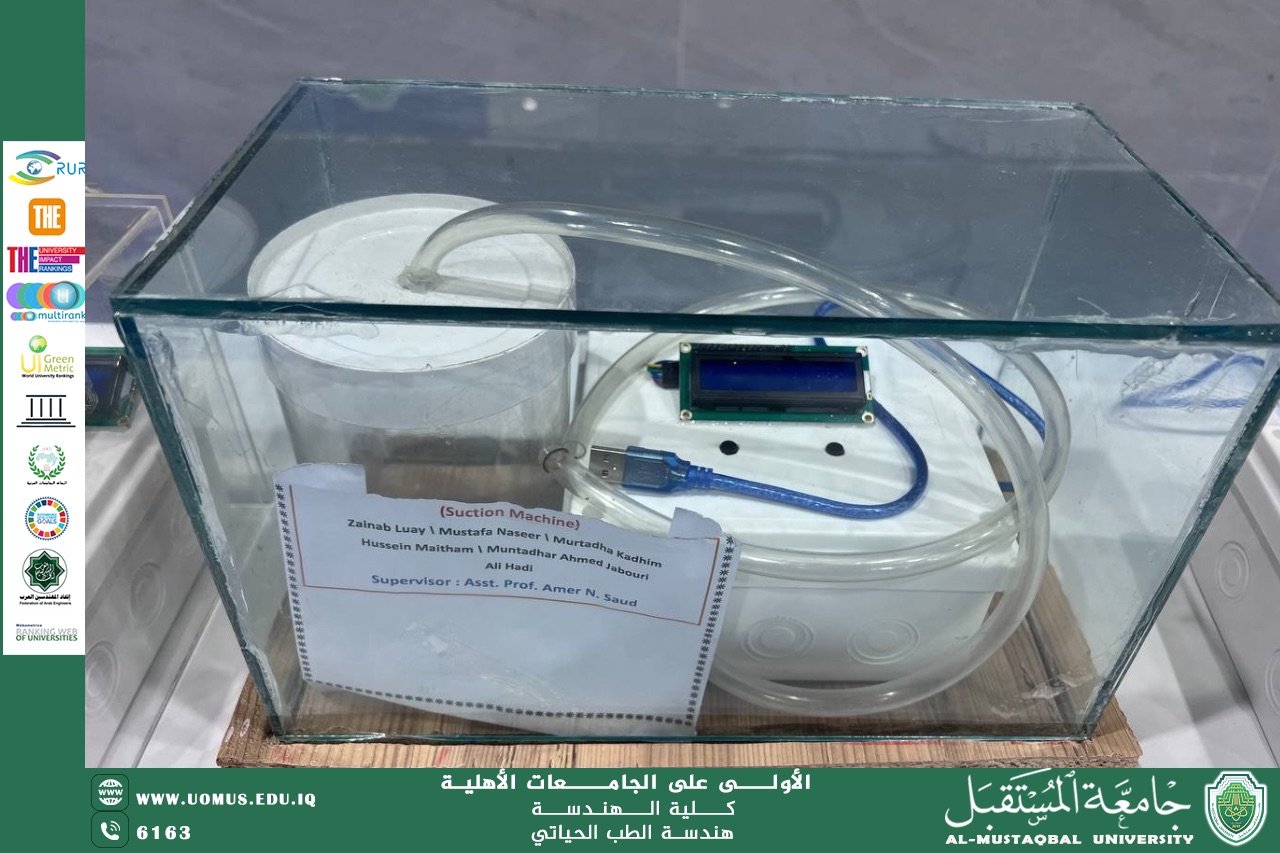
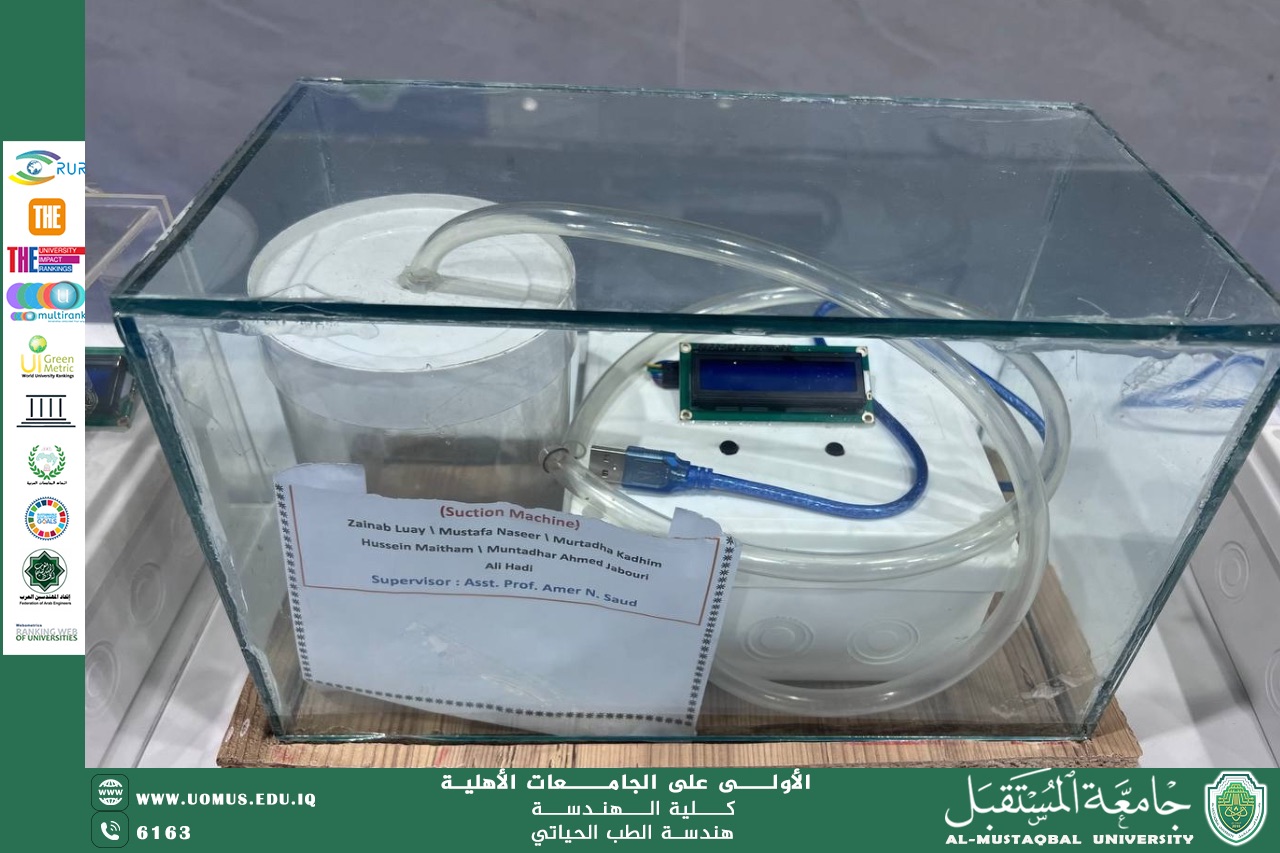
2. Technical Components (as shown in the images): • Collection Jar: The images show the cylindrical jar designed to receive the drawn fluids.
• Digital Control System: The use of an LCD screen and a microcontroller (likely an Arduino) is evident in the display of the pressure level or operating status in real time.
• Connecting Tubes: The flexible, transparent tubes shown in the model, which transfer the fluid from the treatment area to the collection jar.
• Protective Box: The electronic components and pump are housed in a sealed white box to ensure electrical insulation and protection from fluids.
3. Medical Importance and Features:
• Airway Clearing: Essential for patients experiencing difficulty breathing due to fluid accumulation.
• Precision and Control: The software allows for precise control of suction power to suit the patient's condition (light suction for children or strong suction for general surgery).
• Compact Design: Your model is portable and easy to use in emergency situations.
Conclusion: You have successfully developed a practical model that integrates biomechanics and electronic control, providing an effective and safe method for managing medical fluids. This is an excellent application of biomedical engineering principles in healthcare