
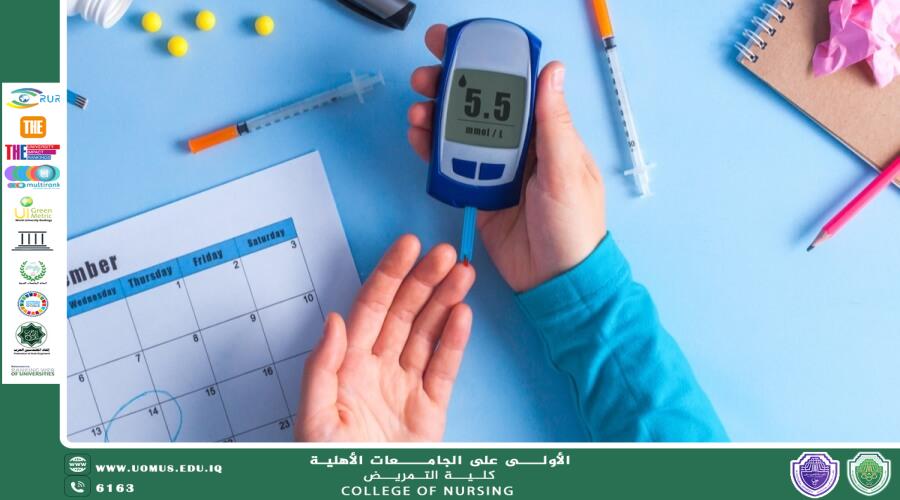
Nursing Care for Patients with Type 1 Diabetes Mellitus
14/02/2026 Share :
Type 1 Diabetes Mellitus is a chronic disease resulting from the destruction of beta cells in the pancreas, leading to a complete deficiency of insulin secretion. Patients require lifelong insulin therapy. Nursing care is essential to maintain stability and prevent complications.
First: Nursing Assessment
• Regular monitoring of blood glucose levels (fasting, before/after meals, before bedtime).
• Monitoring vital signs.
• Assessing symptoms of hyperglycemia (frequent urination, excessive thirst, fatigue, weight loss).
• Assessing symptoms of hypoglycemia (sweating, tremors, headache, dizziness, confusion).
• Inspecting insulin injection sites.
• Evaluating adherence to diet and treatment.
• Periodic monitoring of HbA1c results.
Second: Possible Nursing Diagnoses
• Imbalanced blood glucose level.
• Risk for hypoglycemia or hyperglycemia.
• Deficient knowledge regarding disease management.
• Risk for infection.
• Anxiety related to chronic illness.
Third: Nursing Interventions
Insulin Therapy Management
• Administer insulin according to the prescribed dose and type.
• Teach the patient proper injection technique and rotation of injection sites.
• Ensure correct storage of insulin.
Blood Glucose Monitoring
• Teach the patient how to use a home glucose monitoring device.
• Record and follow up on readings.
• Early recognition of emergencies such as diabetic ketoacidosis (DKA).
Medical Nutrition Therapy
• Educate the patient about the importance of meal planning.
• Carbohydrate counting.
• Avoid excessive intake of simple sugars.
Physical Activity
• Encourage regular exercise.
• Monitor blood glucose before and after exercise.
• Avoid exercise during hypoglycemia.
Prevention of Complications
• Daily foot care.
• Inspect the skin for wounds or infections.
• Regular eye and kidney examinations.
Health Education and Psychological Support
• Teach the patient and family how to manage emergencies.
• Educate about carrying a diabetes identification card.
• Provide psychological support, especially for children and adolescents.
Fourth: Management of Emergency Conditions
Hypoglycemia
• Administer 15 grams of fast-acting carbohydrates (such as juice or glucose tablets).
• Recheck blood glucose after 15 minutes.
Hyperglycemia
• Check urine or blood ketones in cases of severe hyperglycemia.
• Administer insulin according to the treatment plan.
• Encourage fluid intake.
Goals of Nursing Care
• Maintain stable blood glucose levels.
• Prevent acute and chronic complications.
• Empower the patient to manage their condition independently and safely.
Al-Mustaqbal University the first university in Iraq.
الهدف الثالث من اهداف التنمية المستدامة -الصحة الجيدة والرفاه