Scientific article by Lecturer Hamza Nader entitled Laser in Ophthalmology for the Correction of Refractive Errors"
14/02/2026 Share :
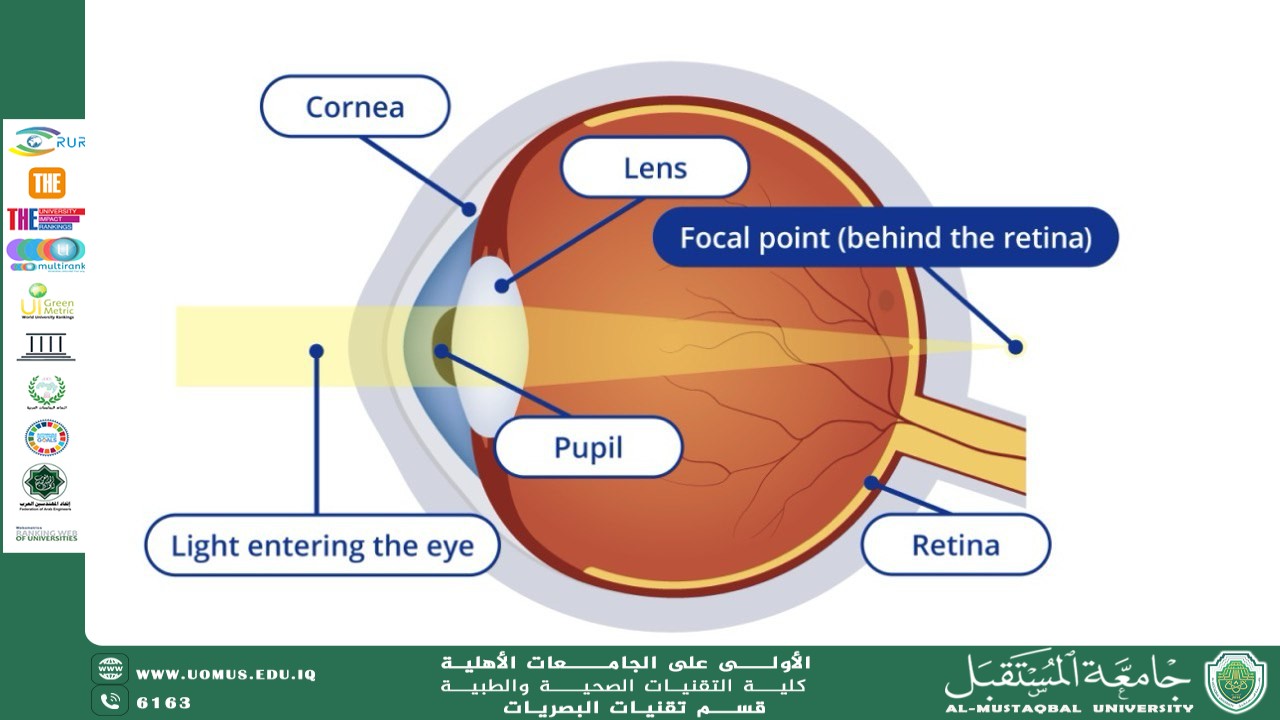
Laser technology has become one of the most important advances in ophthalmology, especially in the correction of refractive errors. Refractive errors occur when the eye cannot properly focus light on the retina, leading to blurred vision. Laser procedures reshape the cornea to improve visual clarity and reduce dependence on glasses or contact lenses.
Types of Refractive Errors
1. Myopia (Nearsightedness): Difficulty seeing distant objects clearly.
2. Hyperopia (Farsightedness): Difficulty focusing on near objects.
3. Astigmatism: Irregular curvature of the cornea causing distorted vision.
4. Presbyopia: Age-related difficulty focusing on near objects.
Common Laser Procedures
LASIK (Laser-Assisted in Situ Keratomileusis)
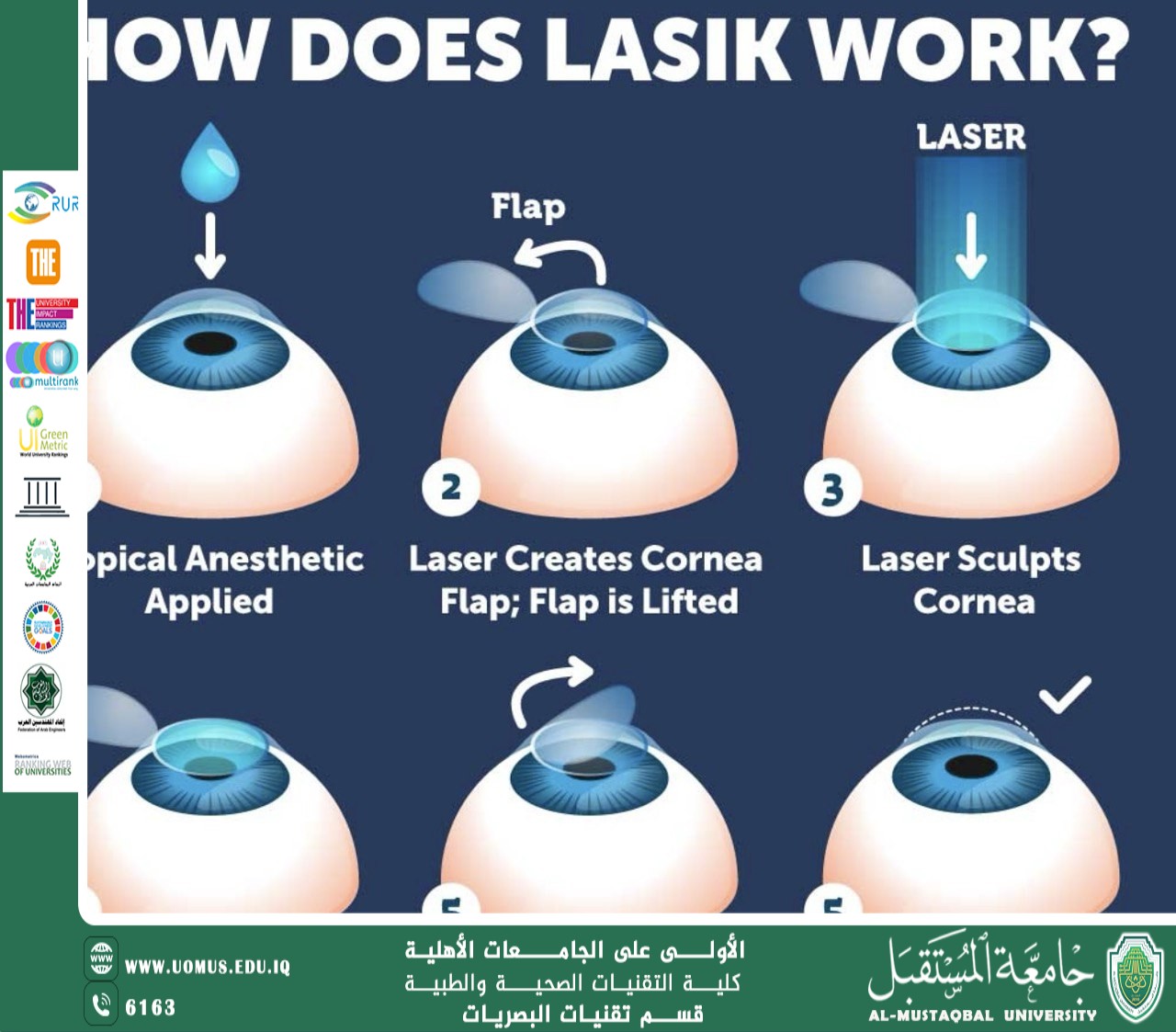
LASIK involves creating a thin flap in the cornea, then using an excimer laser to reshape the underlying tissue. It is one of the most commonly performed refractive surgeries due to rapid recovery and minimal discomfort.
PRK (Photorefractive Keratectomy)
PRK removes the outer corneal epithelium before laser reshaping. It is suitable for patients with thin corneas but requires longer healing compared to LASIK.
SMILE (Small Incision Lenticule Extraction)
SMILE is a minimally invasive laser procedure where a small lenticule is created and removed through a tiny incision, preserving more corneal stability.
Advantages
• Improved visual acuity
• Reduced dependence on glasses
• Quick recovery
• High success rate
Risks and Limitations
• Dry eye symptoms
• Night vision problems
• Infection or inflammation (rare)
• Not suitable for all patients
Conclusion
Laser refractive surgery has transformed modern ophthalmology by providing effective solutions for vision correction. Careful patient selection and proper surgical technique are essential to achieve optimal outcomes.
University of Al-Mustaqbal – The First and Leading Private University