
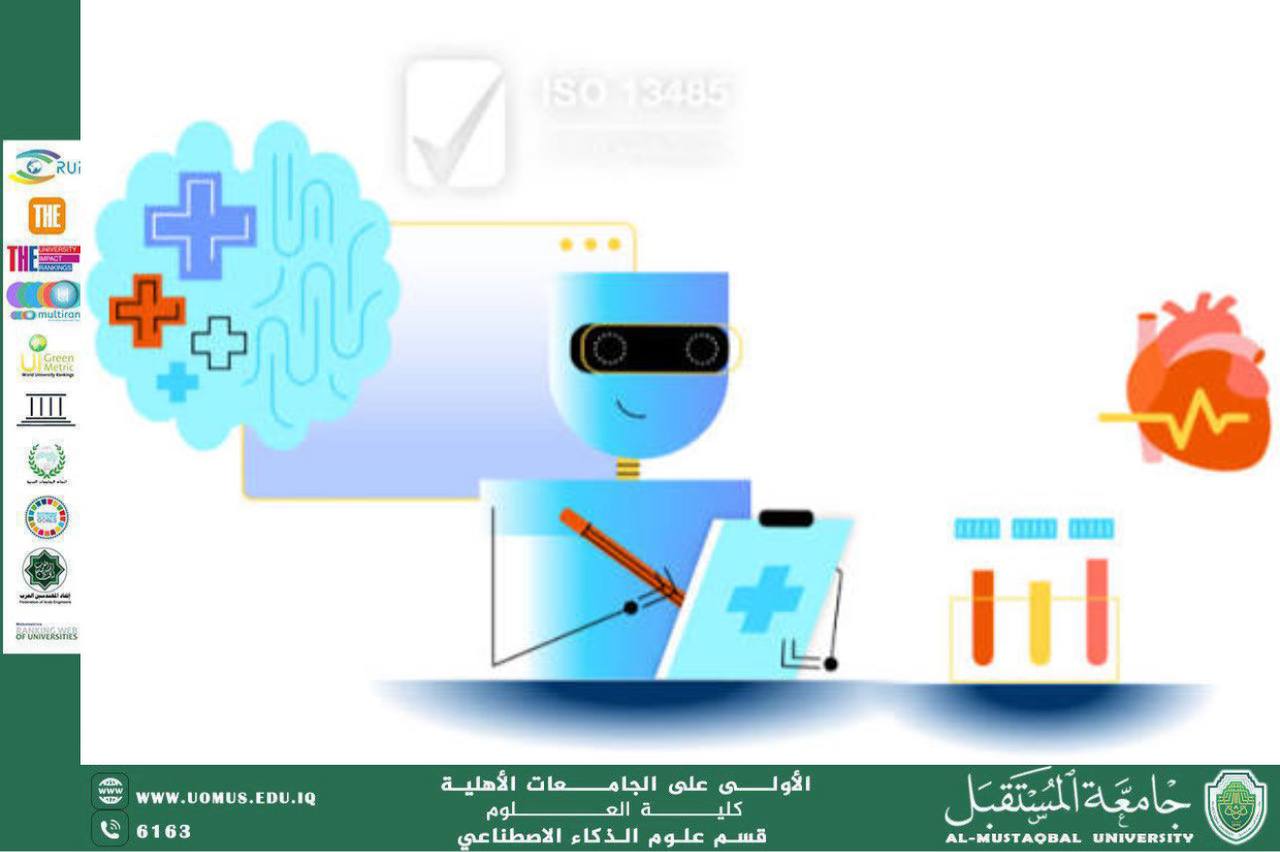
A scientific article entitled "Using Machine Learning in Predicting Chronic Diseases" (M.M. Aya Muhammad Hussein Muhammad Ali)
28/02/2026 Share :
Using Machine Learning for Predicting Chronic Diseases
The healthcare sector is undergoing rapid digital transformation driven by artificial intelligence technologies, with machine learning playing a central role in predicting chronic diseases before they progress. Chronic conditions such as diabetes, cardiovascular diseases, hypertension, and kidney disorders represent global challenges due to their high prevalence and long-term economic and health impacts.
Machine learning relies on analyzing large volumes of historical medical data, including electronic health records (EHRs), laboratory test results, vital signs, family medical history, and lifestyle factors such as diet and physical activity. By training advanced computational models on these datasets, hidden patterns can be identified beyond traditional statistical methods.
Algorithms such as Logistic Regression, Random Forest, XGBoost, and Artificial Neural Networks are widely used to estimate an individual's probability of developing a specific disease within a future timeframe. The output is often presented as a risk score, enabling physicians to make early preventive decisions, including lifestyle interventions or preventive treatments.
This approach strengthens predictive and personalized medicine, allowing tailored treatment plans based on individual patient data. Furthermore, it contributes to reducing long-term healthcare costs by emphasizing prevention rather than post-diagnosis treatment.
Despite its advantages, challenges remain, including data quality issues, patient privacy concerns, algorithmic bias, and limited explainability of complex models. Therefore, robust ethical and regulatory frameworks are essential to ensure safe and fair deployment.
Integrating machine learning into chronic disease prediction represents a strategic advancement toward smarter, more efficient, and sustainable healthcare systems.