A Scientific Article by Miss Noor Alhuda Azmi Hassan titled: Hypersensitivity and Its Types in the Human Body
28/02/2026 Share :
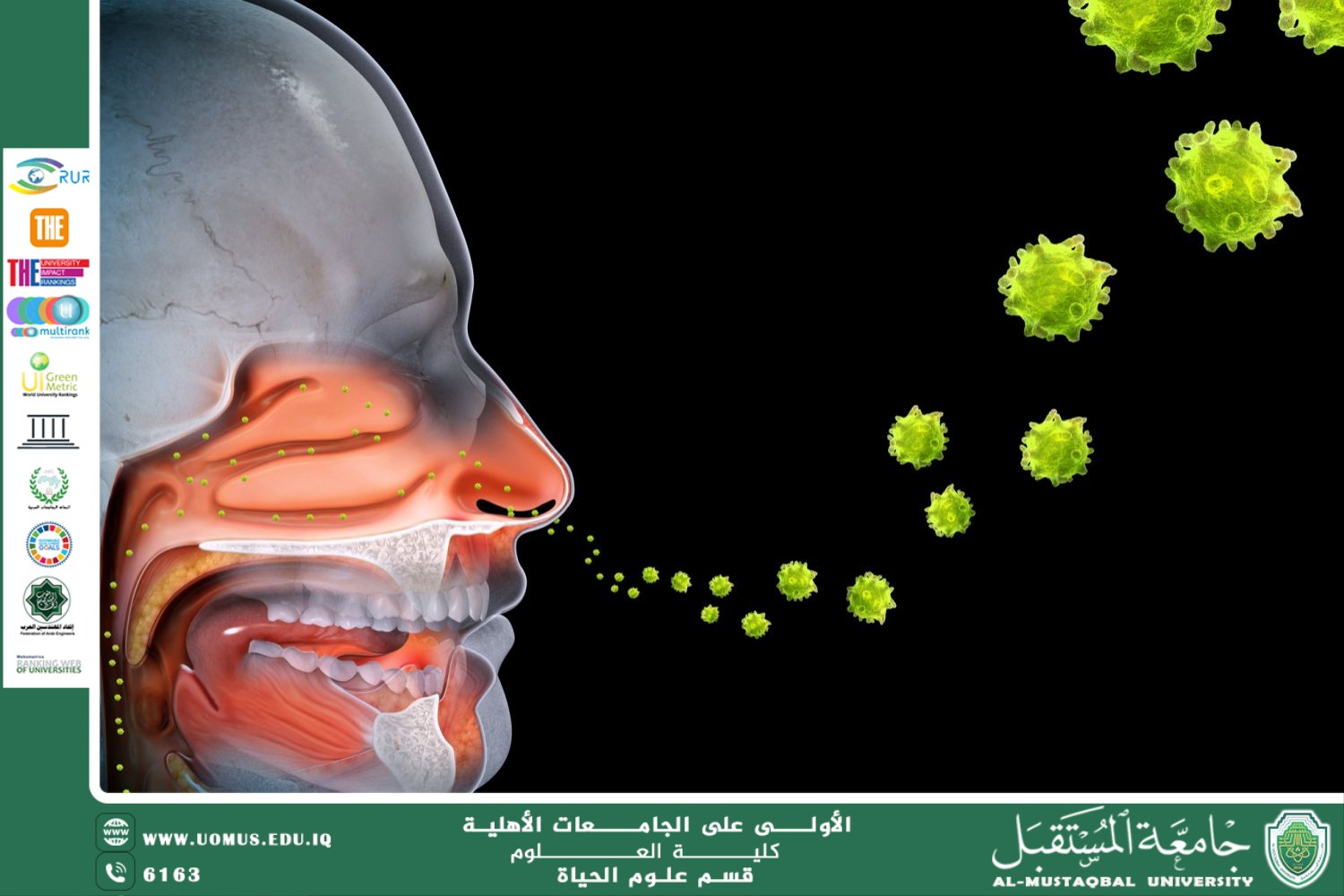
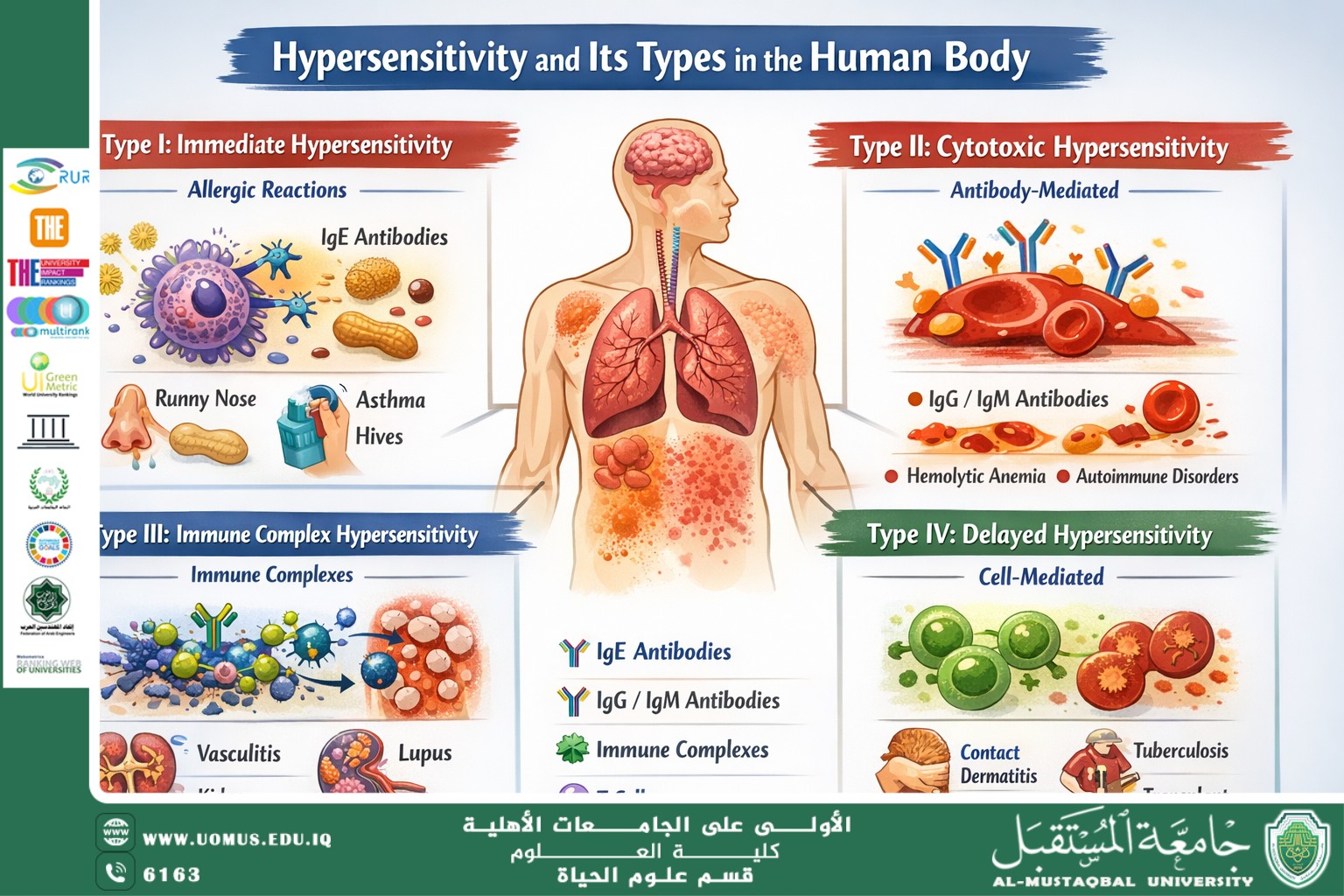
Hypersensitivity is an excessive or abnormal immune response to substances that are usually harmless, such as pollen, certain foods, or medications. Hypersensitivity is classified into four main types:
Type I: Immediate hypersensitivity, like food allergies and hay fever, caused by IgE antibodies.
Type II: Cell destruction mediated by IgG or IgM antibodies, seen in some blood disorders.
Type III: Immune complex deposition in tissues leading to inflammation, as in immune-mediated kidney inflammation.
Type IV: Delayed-type hypersensitivity mediated by T-cells, such as metal or drug-induced skin reactions.
Understanding hypersensitivity mechanisms helps doctors accurately diagnose and develop treatment plans, including avoiding triggers and using anti-inflammatory or immunosuppressive medications
الهدف الرابع : التعليم الجيد