"Scientific article by Miss Noor alhuda Azmi Hasan entitled: Non-Vascular Plants and Their General Characteristics"
28/02/2026 Share :
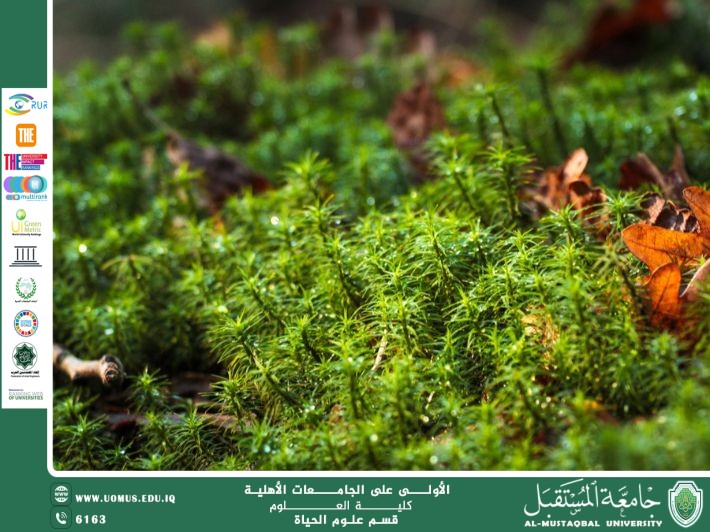
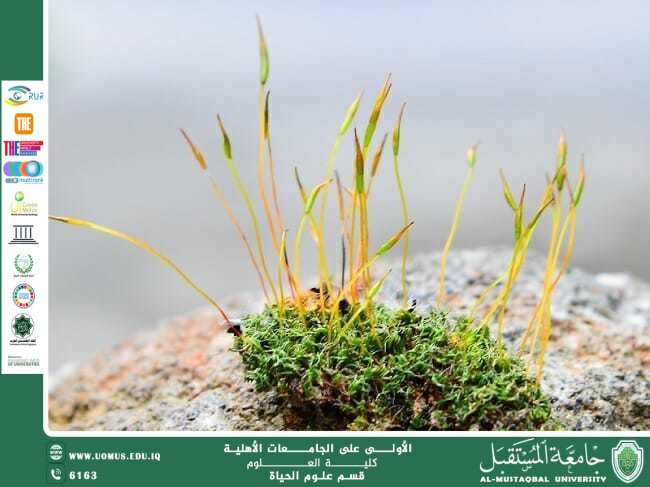
Non‑vascular plants are the simplest plants on Earth, lacking water- and nutrient-transport tissues such as xylem and phloem, and thus rely on direct absorption of moisture and nutrients from their surroundings. They are usually small and grow in moist, shaded areas, such as tropical rainforests and damp rocks. They reproduce via spores, with the gametophyte stage being the most prominent, long-lasting, and dominant in the plant’s life cycle.
Non‑vascular plants play an important ecological role, helping stabilize soil, prevent erosion, increase local moisture, and support microfauna and small insects. They are also critical models for studying early plant evolution, illustrating how primitive plants transitioned from aquatic to moist terrestrial environments and adapted to changing conditions over geological time. Additionally, these plants contribute to local carbon balance by absorbing carbon dioxide and releasing oxygen, and provide suitable habitats for the early growth of other organisms within ecosystems.
الهدف الرابع : التعليم الجيد