
"Scientific article by Miss Noor alhuda Azmi Hasan entitled: The Effect of Medicinal Herbs on the Digestive System"
27/02/2026 Share :
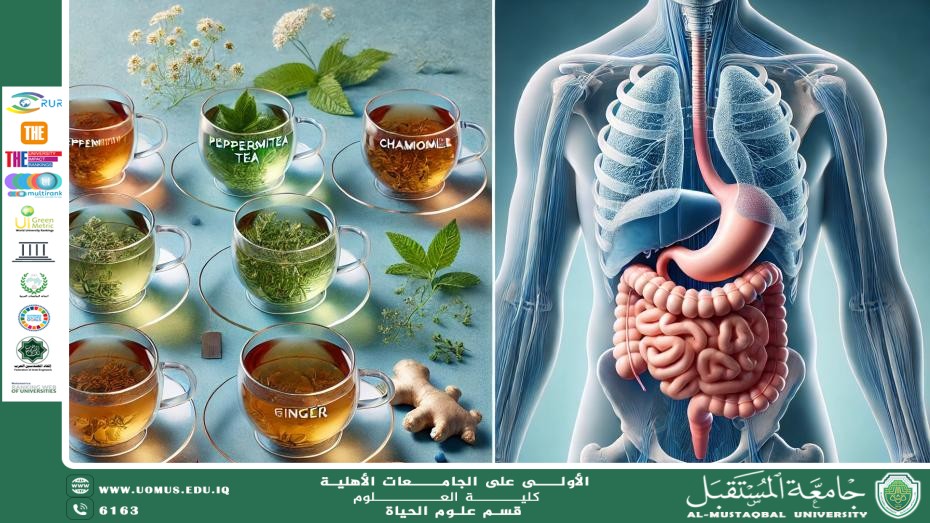
Many medicinal herbs are used to improve digestive system functions and reduce problems such as bloating, acidity, and constipation. These plants contain compounds that stimulate intestinal motility, increase digestive juice secretion, and reduce inflammation in the digestive tract. For example, peppermint contains menthol, which helps relax the intestinal muscles and reduce gas, while ginger stimulates bile secretion and aids digestion as well as relieves nausea.
In addition, some herbs have antibacterial, antiviral, and antifungal properties, which help treat stomach and intestinal infections and reduce the growth of harmful bacteria without harming the natural gut microbiota. Other examples of herbs beneficial for the digestive system include:
Anise and fennel: help relieve gas and bloating and improve bowel movement.
Chamomile: reduces inflammation and irritation in the stomach and acts as a soothing agent for the intestines.
Turmeric: contains curcumin, which reduces intestinal inflammation and improves digestion.
Medicinal herbs also play a preventive role, as they help improve nutrient absorption and reduce chronic digestive disorders, which positively impacts overall health and reduces the need for chemical medications. Regular use of some of these herbs may also enhance immunity, support liver function, and improve the balance of beneficial gut bacteria, making them a natural and effective choice for maintaining long-term digestive health.
الهدف الرابع : التعليم الجيد