"Scientific article by Miss Noor alhuda Azmi Hasan entitled: Medicinal Plants Used to Strengthen Immunity"
27/02/2026 Share :
Medicinal plants play an important role in enhancing the immune system, due to their content of active compounds such as flavonoids, polysaccharides, essential oils, and essential vitamins and minerals. These compounds work by stimulating antibody production, increasing the activity of natural killer (NK) cells, and strengthening the immune response against infections.
Examples of immune-boosting medicinal plants:
Echinacea
Contains compounds such as echinacin and polysaccharides.
Increases white blood cell activity and stimulates interferon production.
Used to prevent colds and reduce the duration of illness.
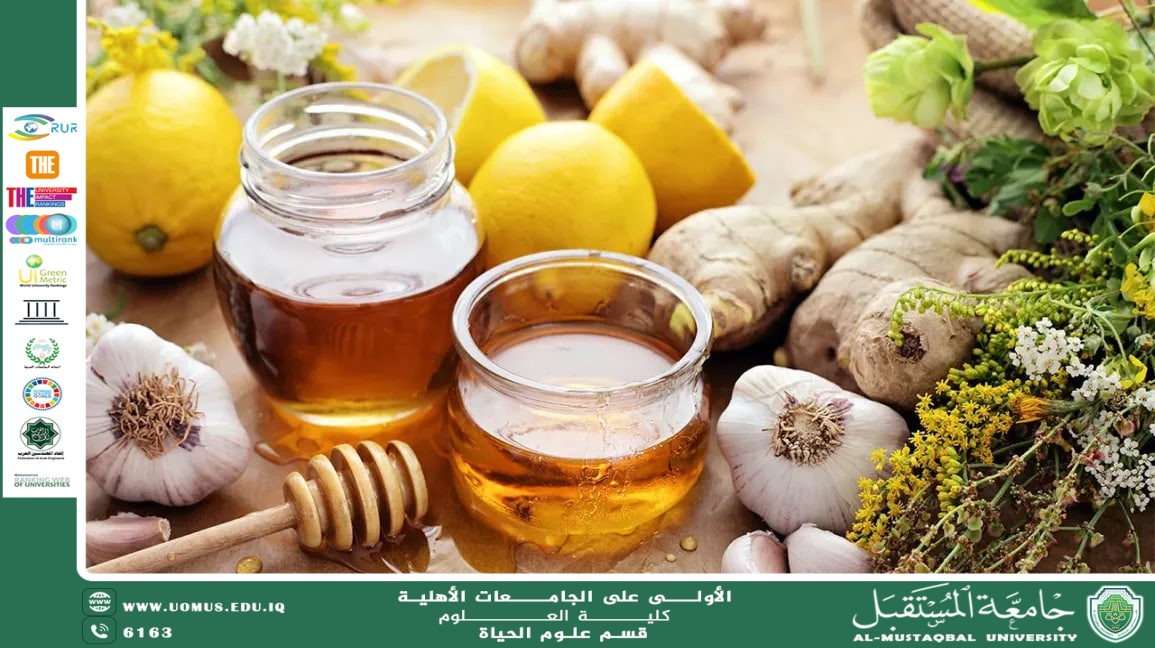
Garlic
Contains organosulfur compounds such as allicin.
Enhances the body's ability to resist bacteria, viruses, and fungi.
Reduces inflammation and improves blood circulation.
Ginger
Rich in antioxidants and essential oils.
Helps reduce inflammation and stimulate the immune system.
Useful for preventing seasonal illnesses.
Ginseng
Contains ginsenosides that regulate immune activity.
Increases the body's resistance to stress and chronic diseases.
Turmeric
Contains curcumin, which stimulates the immune response.
Acts as an anti-inflammatory and antioxidant agent and helps prevent chronic diseases.
Benefits of these plants for immunity:
Enhances the body’s resistance to infectious diseases such as colds and influenza.
Reduces chronic inflammation that may weaken the immune system.
Improves the body’s response to viruses and bacteria without affecting the natural microbiota balance.
Supports overall health, increases energy, and enhances the ability to recover from illnesses.
Regular use of immune-boosting medicinal plants, along with a healthy diet and balanced lifestyle, can strengthen preventive health and reduce reliance on chemical medications for disease prevention.
الهدف 3 : الصحة الجيدة والرفاه