"Scientific article by Miss Noor alhuda Azmi Hasan entitled: The Cell as a Basic Unit of Life"
28/02/2026 Share :
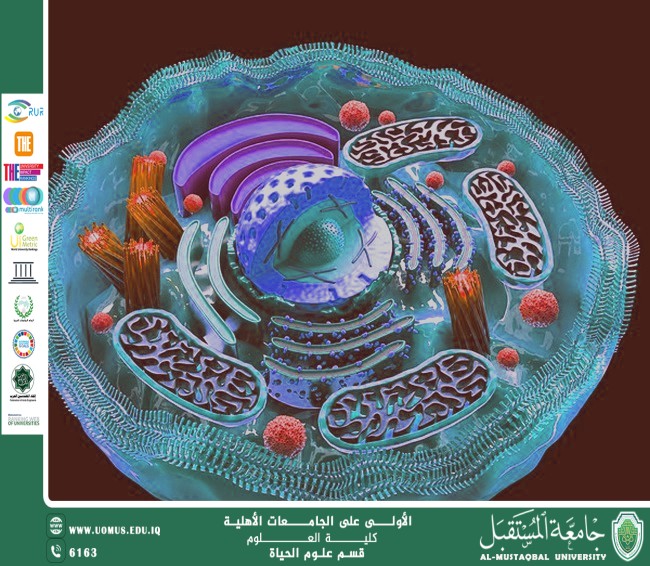
The cell is the basic unit that forms all living organisms, whether unicellular or multicellular. Each cell contains essential components, such as:
Plasma membrane: regulates the movement of substances in and out of the cell.
Nucleus: contains the genetic material (DNA) and controls cell growth and division.
Cytoplasm: contains various organelles such as mitochondria, endoplasmic reticulum, Golgi apparatus, and lysosomes, which are responsible for different biochemical reactions.
The cell plays a central role in vital processes, including cellular respiration, photosynthesis, cell division, and nutrient metabolism. It is also an integrated functional unit that contributes to:
Growth of the organism.
Repair of damaged tissues.
Reproduction and inheritance of genetic traits.
Studying the cell is fundamental in biology, genetics, and pathology, as it provides the basis for understanding complex biological processes at the molecular level and enables scientists to comprehend how organisms interact with and adapt to their environment.
Cell study also aids in the development of modern medicines and therapies and helps understand the causes of various diseases, including cancer, genetic disorders, and immune system dysfunctions.
الهدف الرابع : التعليم الجيد