
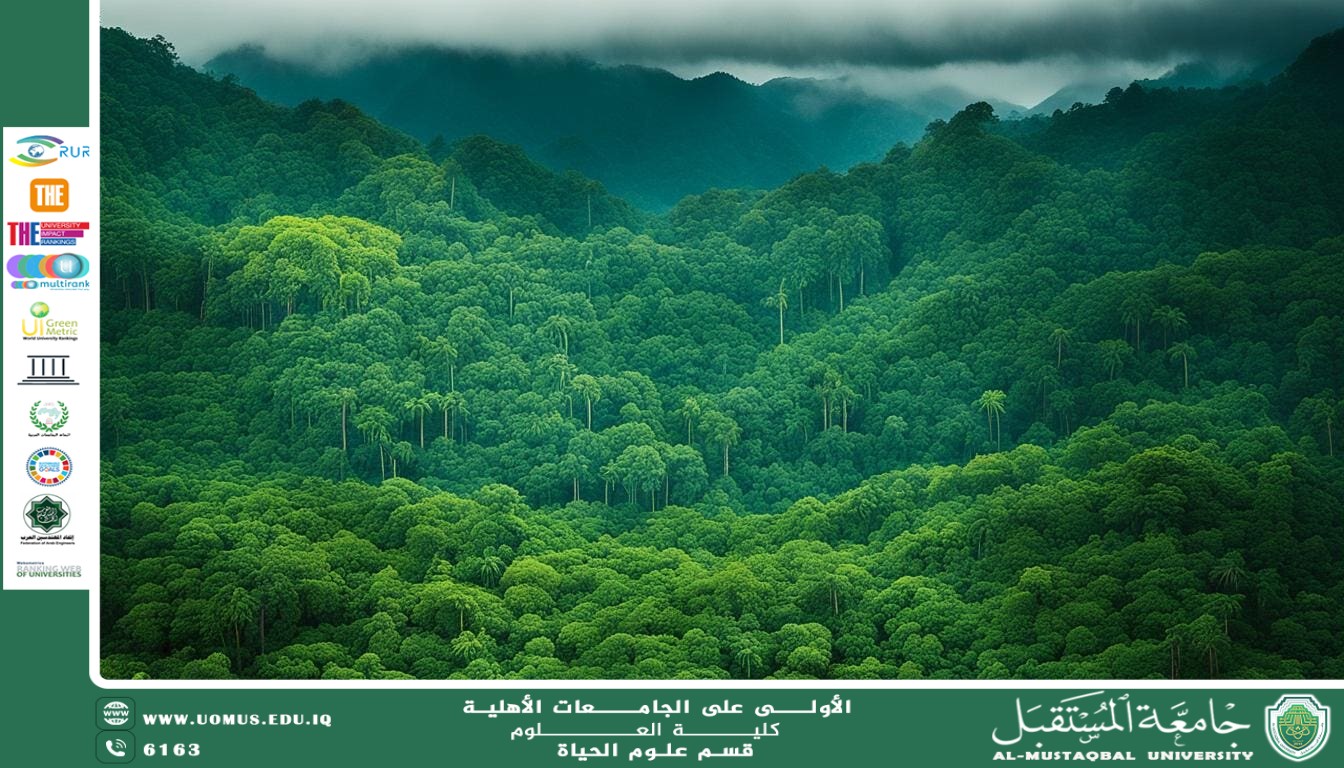
"Scientific article by Miss Noor alhuda Azmi Hasan entitled: The Role of Rainforests in Regulating the Global Climate"
27/02/2026 Share :
Rainforests are among the most important ecosystems on Earth and play a vital role in regulating the global climate and maintaining environmental balance. They are located near the equator, such as the Amazon rainforest, and are characterized by dense vegetation and high biodiversity. Rainforests are often called the "lungs of the Earth" because of their ability to absorb carbon dioxide and produce oxygen through photosynthesis.
Rainforests help reduce global warming by absorbing large amounts of carbon dioxide, one of the main greenhouse gases responsible for rising global temperatures. Trees absorb carbon dioxide and store it in their tissues, reducing its concentration in the atmosphere and limiting its warming effect.
Rainforests also play an important role in regulating the water cycle. Trees release water vapor into the atmosphere through transpiration, which contributes to cloud formation and rainfall. This helps maintain climate stability and supports water availability. Additionally, forests help reduce flooding by absorbing rainwater and maintaining soil moisture.
Rainforests also regulate temperature by providing shade and reducing heat absorption from the Earth's surface. Dense vegetation reduces sudden temperature changes and helps stabilize both local and global climates.
Furthermore, rainforests support biodiversity by providing habitats for millions of species of plants, animals, and microorganisms. This biodiversity enhances ecosystem stability and resilience to climate change.
However, deforestation due to human activities such as logging, agriculture, and urban expansion increases carbon dioxide levels and reduces Earth's ability to regulate climate. Therefore, protecting rainforests is essential for maintaining global climate stability and ensuring sustainable life on Earth.
الهدف 13 : العمل المناخي