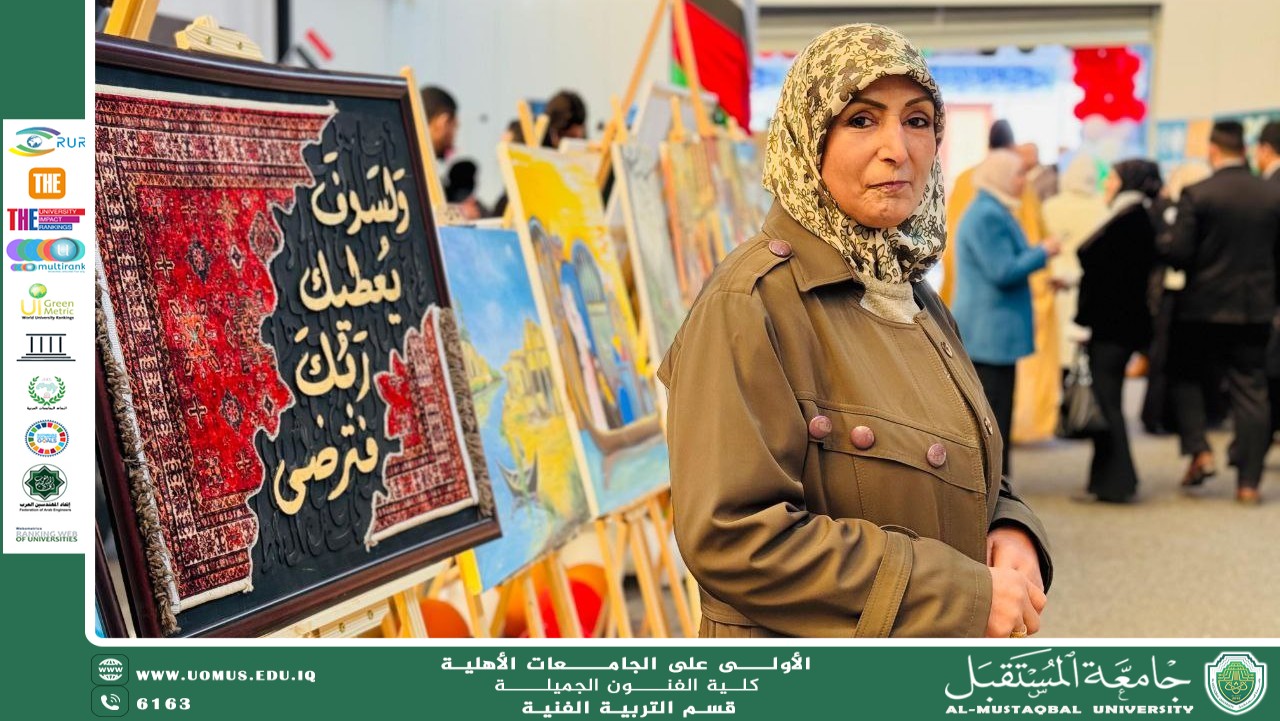
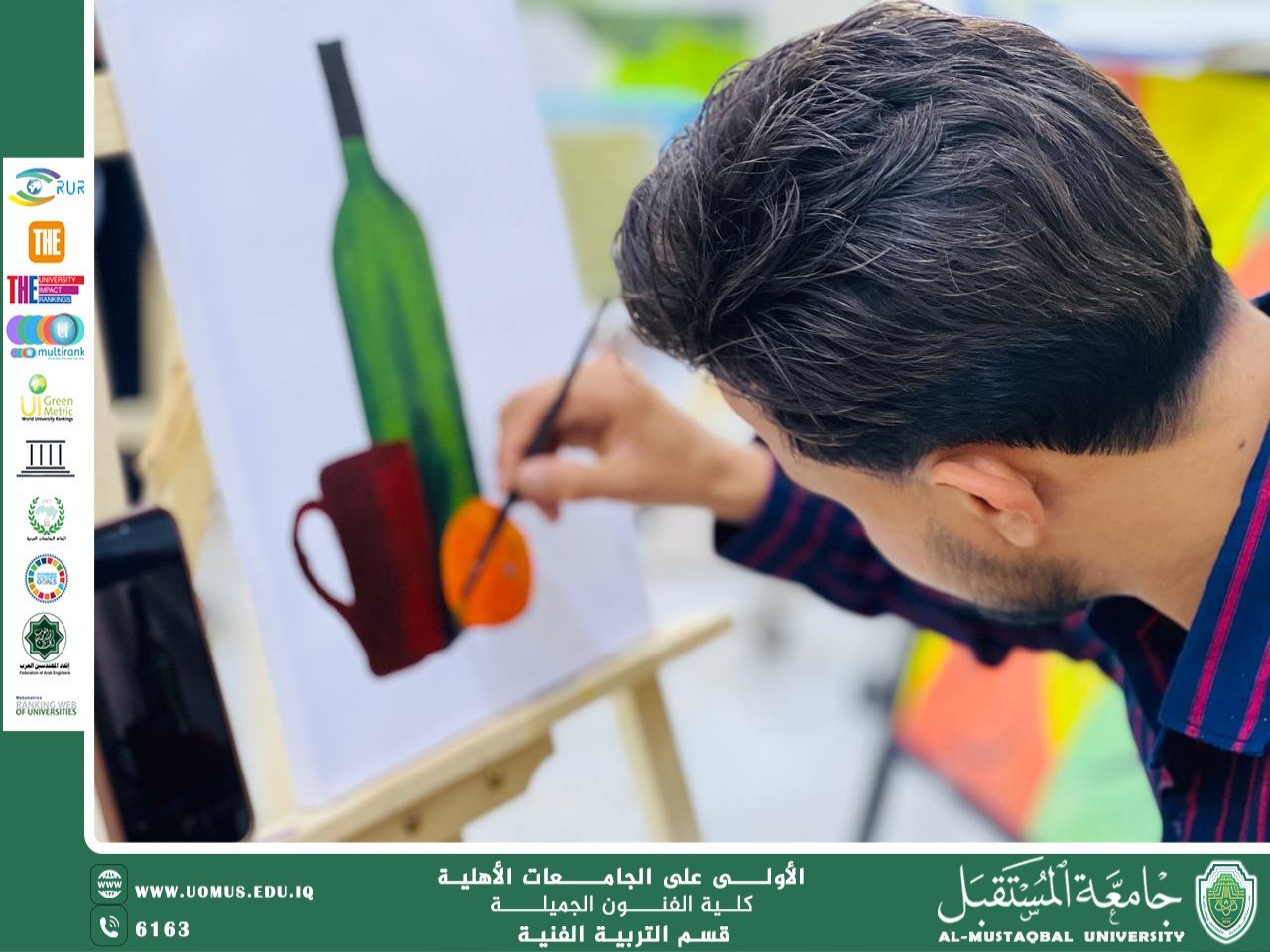
An article titled “Between the Brush and the Idea: Reflections on the Nature of Art” by Asst. Lect. Suhaila Kazem Jassim.
03/03/2026 Share :
From the moment early humans drew on cave walls, art was not merely an act of decoration but an attempt to understand the world and give existence meaning. Art does not simply reflect reality; it reshapes it through a subjective vision emerging from inner human experience. It is a mirror, yes—but one that reflects not only what is, but also what could be. From here arises the profound philosophical question: What makes an artwork art?
In Greek philosophy, Plato viewed art as imitation (mimesis) of the sensible world, which itself is only a shadow of the World of Forms. Thus, art becomes an image of an image, twice removed from truth. For this reason, he approached it with caution, believing it could influence emotions and distance people from rational truth. In contrast, Aristotle granted art a deeper function: catharsis—the purification of emotions through dramatic representation. Between these two perspectives, art emerges as either imitation or revelation.
In the modern era, this understanding evolved. Friedrich Nietzsche argued that art is not merely a mirror reflecting the world but a creative force expressing the will to life itself. Truth may be harsh and painful, but art grants us the strength to endure and transcend it. Meanwhile, Martin Heidegger saw the artwork as a disclosure of truth; in a painting or a poem, the world opens up and Being reveals itself. Art, therefore, is neither simple imitation nor mere expression—it is an event in which existence becomes manifest.
Yet the question persists: Does art reside in beauty? In technical skill? In the idea it conveys? Or in the effect it has on the viewer? We may encounter a work that is technically masterful yet spiritually hollow, and another that appears simple in form yet deeply moving. For this reason, some thinkers distinguished between “craft” and “creativity.” Craft is mastery of technique, while creativity is the addition of new meaning to the world.
The debate intensified in the twentieth century with Marcel Duchamp, who exhibited a ready-made urinal as a work of art. The aim was not merely to shock but to challenge the very definition of art. Does something become art because the artist declares it so? Because art institutions recognize it? Or because the viewer grants it meaning? Here it becomes clear that art is not a fixed property of an object but a relationship formed among the artist’s intention, the structure of the work, the viewer’s interpretation, and the cultural context.
The brush symbolizes form, and the idea symbolizes meaning. Yet separating them may be an illusion; every form carries an implicit idea, and every idea requires a sensory embodiment to be perceived. Even in the most abstract works, there remains an emotional experience conveyed through color, rhythm, or language. Art, then, is neither pure material nor pure concept, but a creative tension between the two—a moment where sensation meets reason, imagination meets reality, and the individual meets the universal.
Perhaps art is not defined by rigid boundaries but by its impact on us. It expands our vision, deepens everyday experience, and makes us more aware of ourselves and the world. We may never agree on a final definition of art, but we recognize its power when it stirs within us a question, a sense of wonder, or an experience of beauty.
From a contemporary developmental perspective, the role of art in shaping awareness and fostering critical thinking aligns with the vision of the United Nations, particularly Sustainable Development Goal 4: Quality Education, which seeks to ensure inclusive and equitable quality education and promote lifelong learning opportunities for all. When integrated into education, art is not merely a supplementary activity but a means of nurturing creativity, encouraging dialogue, and promoting respect for cultural diversity. In this way, art becomes a tool for building a more conscious individual and a more humane and sustainable society...Almustaqbal University, The First University in Iraq.