A scientific article by Lecturer Islam Fadel Mousa entitled: “3D Bioprinting of Organs and Tissues”
01/03/2026 Share :
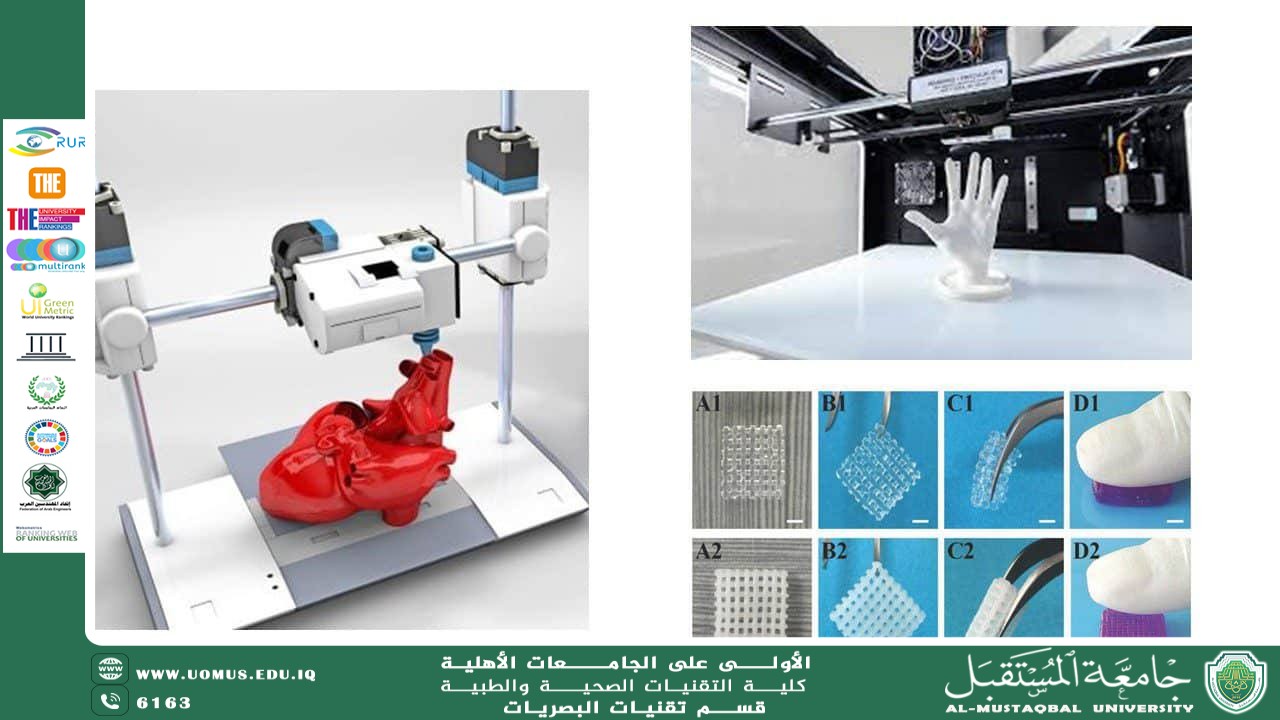
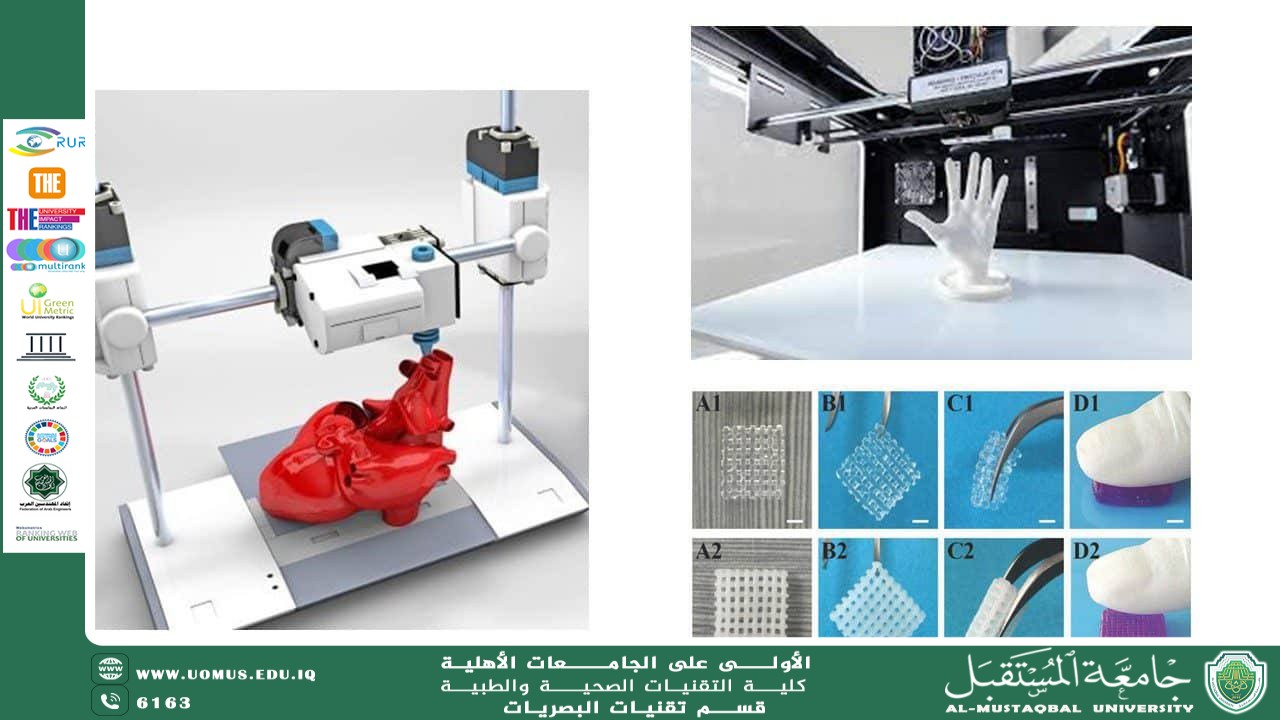
3D bioprinting is an advanced technology in biotechnology and medicine that aims to fabricate human tissues or organs using living cells and biological materials in a layer-by-layer process, similar to 3D printing. This technique holds great promise for addressing organ shortages and improving future healthcare.
Concept of 3D Bioprinting
Bioprinting involves arranging living cells in three-dimensional structures using supportive materials such as hydrogels, to mimic the natural structure and function of tissues.
The main steps include:
1. Designing a digital model of the organ or tissue
2. Selecting the appropriate cells and biological materials
3. Layer-by-layer printing to form the tissue
4. Culturing the cells within the printed structure to promote growth
Medical Applications
• Fabrication of organs for transplantation, such as liver, kidney, or skin
• Drug testing and studying effects on living tissues
• Manufacturing artificial cartilage and bones for injury repair
• Research on tissue-specific diseases, including cancer and chronic conditions
Advantages
• Reduces dependence on organ donations
• Enables patient-specific organs (personalized medicine)
• Minimizes the risk of organ rejection
• Speeds up drug testing and reduces animal use in experiments
Challenges
• Maintaining cell viability during the printing process
• Complexity of vascular networks in large organs
• High cost of equipment and technology
• Ethical and regulatory considerations regarding bioprinted organs
Conclusion
3D bioprinting of organs and tissues represents the future of modern medicine, with the potential to revolutionize organ transplantation and personalized disease treatment. Despite technical and ethical challenges, ongoing advancements bring this technology closer to practical human applications.
University of Al-Mustaqbal – The First and Leading Private University