
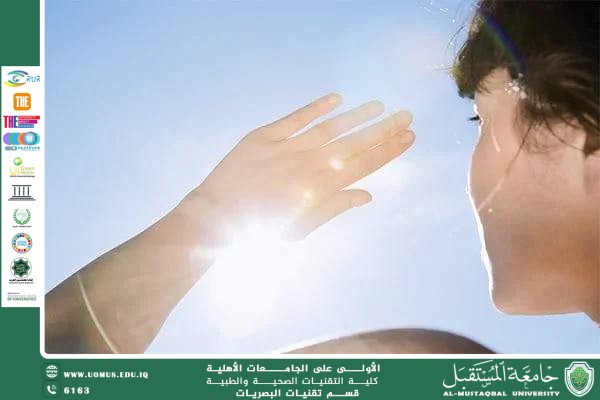
A scientific article by Lecturer Islam Fadel Mousa entitled: “The Effect of Sunlight on Skin Health.”
01/03/2026 Share :
Sunlight is an essential source of life, as it helps the body produce vitamin D, which is necessary for maintaining healthy bones. However, excessive exposure to sunlight can cause various harmful effects on skin health, especially when proper protective measures are not taken.
Types of Ultraviolet (UV) Radiation
Ultraviolet rays emitted by the sun are divided into three main types:
• UVA: Penetrates deep into the skin layers and contributes to premature aging.
• UVB: Affects the outer layer of the skin and causes sunburn.
• UVC: Is absorbed by the ozone layer and does not reach the Earth’s surface.
Harmful Effects of Excessive Sun Exposure
Prolonged and direct exposure to sunlight may lead to:
• Skin burns
• Dry skin
• Pigmentation and dark spots
• Early appearance of wrinkles and aging signs
• Damage to skin cells
• Increased risk of skin cancer
• Loss of skin elasticity
Effects of UV Radiation on Skin Cells
Ultraviolet radiation negatively affects the DNA within skin cells, which may result in:
• Genetic mutations
• Reduced ability of cells to regenerate
• Disruption in collagen production
• Increased risk of skin inflammation
Prevention Methods Against Sun Damage
To protect the skin from the harmful effects of sunlight, it is recommended to:
• Use sunscreen with an appropriate Sun Protection Factor (SPF)
• Wear protective clothing and hats
• Avoid sun exposure during peak hours (10 AM – 4 PM)
• Drink adequate amounts of water
• Use sunglasses to protect the sensitive skin around the eyes
Health Benefits of Moderate Sun Exposure
Despite its risks, moderate exposure to sunlight helps in:
• Vitamin D production
• Improving mood
• Enhancing bone health
• Supporting the immune system
Safe Duration of Sun Exposure
It is recommended to be exposed to sunlight for about 10 to 20 minutes daily during the early morning or before sunset to minimize potential harm.
University of Al-Mustaqbal – The First and Leading Private University