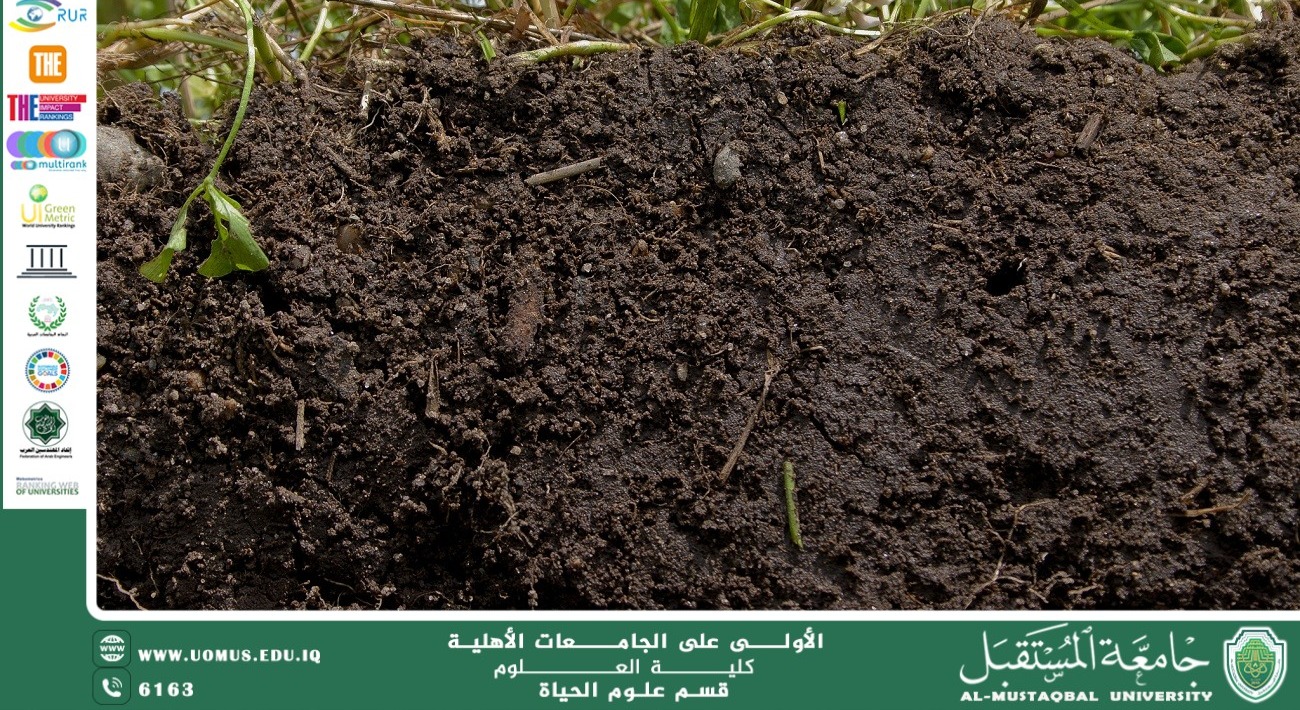
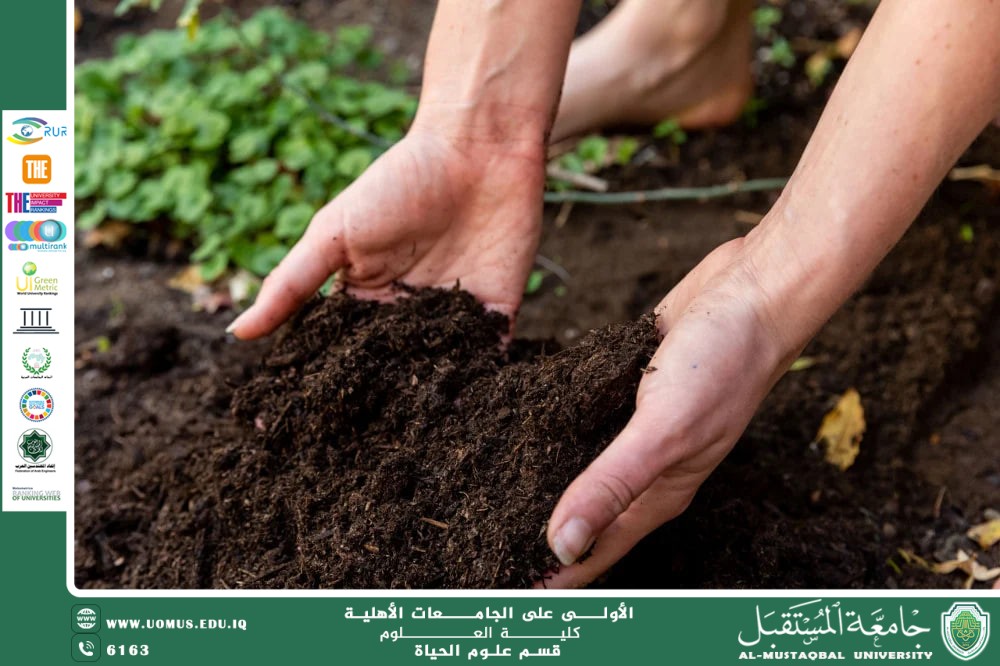
"A scientific article by Assistant Lecturer Ola Adel Rasmi entitled: Clay Soil"
27/02/2026 Share :
Clay soil is characterized by its fine particles and high water retention capacity, making it rich in nutrients necessary for plant growth. This soil is suitable for many agricultural crops, such as wheat, rice, and vegetables. The density of clay soil makes root movement difficult, so proper aeration is needed before planting to ensure drainage of excess water. Overwatering may lead to root rot, so water management must be careful. Adding organic fertilizers and compost helps improve its fertility and structure. Clay soil withstands drought better after repeated watering. It provides strong support for plants due to its high density. It can be cultivated in seasonal farmland and regions with moderate rainfall. It resists desertification if its organic content is maintained. This soil helps produce high-quality crops with good yield. It can be mixed with sandy soil to facilitate water management and improve aeration. It also plays an important role in both traditional and industrial farming. Clay soil provides an ideal environment for microorganisms that enhance nutrient cycling. It is an important choice for farmers in wet and moderate climates.